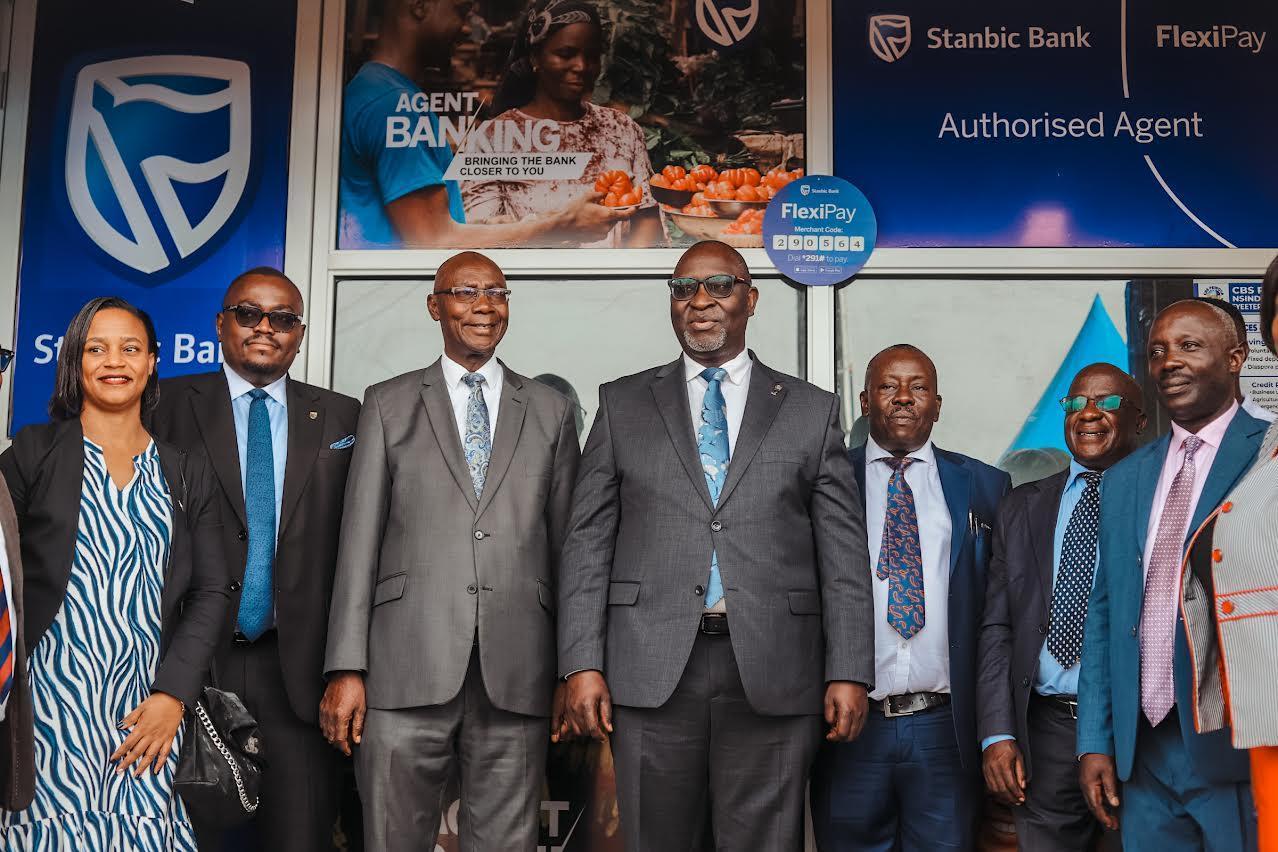
Africa-Press – Uganda. In a move aimed at transforming agricultural financing across the region, Stanbic Bank Uganda and the Buganda Kingdom have launched Ssemaduuka, a one-stop agricultural business centre designed to expand access to structured credit, strengthen SACCO governance, and formalise coffee value chains.
The initiative, implemented through the Buganda Cultural and Development Foundation (BUCADEF), seeks to support farmers like Frank Nyanzi, a 57-year-old coffee farmer from Madudu Sub-county in Mubende District, who has struggled with declining yields for over a decade.
Nyanzi attributes his falling production to prolonged dry spells, rising temperatures, and persistent pest and disease outbreaks — particularly coffee wilt disease and the coffee berry borer beetle. These challenges, compounded by limited access to affordable long-term financing, have made it difficult for him to invest in irrigation systems and quality farm inputs.
“We have been trying our best to manage our farms, but we have been limited by a lack of long-term, reliable financing. We have struggled to access important investments like irrigation systems and often end up buying substandard inputs,” Nyanzi said.
Speaking at the launch held at the Mayors Gardens in Mubende Municipality on Monday, February 23, Tunde Thorpe, Head of Business and Commercial Banking at Stanbic Bank, described Ssemaduuka as a transition from fragmented agricultural interventions to a coordinated economic partnership.
“Ssemaduuka allows us to finance the entire value chain from inputs to export. It strengthens SACCO governance, improves farmer productivity, formalises payments, and expands access to markets. This is ecosystem banking designed to deliver measurable impact,” Thorpe said.
Under the model, BUCADEF will recommend qualifying SACCOs for structured banking support. Stanbic will then assess and extend credit facilities tailored to agricultural production cycles.
According to Emmanuel Naigombe, Head of Agribusiness at Stanbic Bank, farmers will access quality inputs through Masaza stores, while produce will be aggregated and linked to organised buyers. Transactions will be digitised via Stanbic’s One Farm platform to facilitate trade finance solutions and support export flows.
Robert Waggwa Nsibirwa, the Second Deputy Premier (Katikkiro) and Minister for Finance, Investments, Planning and Economic Development in the Buganda Kingdom, described the initiative as a transformative step toward modernising agriculture and strengthening household incomes.
“Wealth will not find you in your house; it finds you in the garden. Agriculture is the backbone of our people’s prosperity, and through initiatives like this, we are not just establishing a structure here in Buwekula, but we are planting a future where every household is self-reliant,” Nsibirwa said.
He urged residents to embrace the initiative, noting that it aligns with the Kingdom’s broader vision of transitioning farmers from subsistence production to sustainable agribusiness.
Ssemaduuka aligns with Stanbic’s Positive Impact Agenda, which focuses on financial inclusion for women, youth, and farmers through enterprise-led job creation, climate resilience, and infrastructure strengthening.
Research shows that more than 70 percent of PEWOSA SACCO members are women, underscoring the initiative’s potential to advance women-led enterprises and inclusive growth.
As Stanbic Bank Uganda approaches 35 years in 2026, the launch reinforces its commitment to driving Uganda’s economic growth under its purpose: “Uganda is our home, we drive her growth.”
For farmers like Nyanzi, the initiative offers renewed hope.
“With better access to quality inputs, organised markets, and financing, I believe we can recover and grow again,” he said.
With coffee remaining a cornerstone of Uganda’s rural economy, Ssemaduuka aims to shift farming from vulnerable subsistence activity to a resilient, commercially viable enterprise.