Africa-Press – Uganda. The 2026 NRM Policy Retreat, billed as a platform to chart Uganda’s path to high middle-income status, has instead been overshadowed by petty political exchanges that distract from the country’s real challenges.
In my New Vision piece during the January 2015 NRM victory celebrations, I posed a $64 million question: has President Museveni tamed the so-called ungovernable Ugandans, or have they, in turn, tamed him?
In other words, has General Museveni, once a no-nonsense revolutionary who promised fundamental change, reached a point of equilibrium in co-existence with the very forces he once sought to reform?
Why does this question remain relevant today?
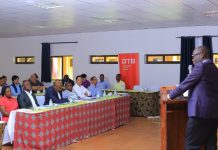
Media headlines are not focused on the forward-looking theme of the 2026 NRM retreat, billed as “Protecting the Gains and Ensuring a Qualitative Leap into High Middle–Income Status.” Instead, attention has shifted to a juvenile quarrel involving Parliamentary Speaker Anita Among and her perceived rival, Justice and Constitutional Affairs Minister Norbert Mao.
“We do cooperate with different political parties,” said Anita Among, “but that cooperation does not mean you come into my bedroom. Don’t enter my bedroom—stay in the compound.”
Mao responded sharply: “This is not just bad politics. It is bad manners. Only the head of the family has the final word on who can access which room in the home. He doesn’t need lectures from a recently adopted child. Above all, when you insult your father’s visitors, you’ve insulted your father.”
If this exchange sounds like an April Fool’s Day story that arrived late, one cannot help but sympathise with government spokesperson Alan Kasujja, a seasoned professional navigating the complexities of Uganda’s political arena.
Yet, had I been consulted on the retreat’s theme, I would have proposed a more grounded focus: tackling corruption, tribalism, and population growth as prerequisites for achieving a truly qualitative and inclusive leap into high middle–income status.
The operative word here is inclusive.
Rather than inviting political figures like Mao, organisers might have considered inviting at least two unemployed graduates—especially young women—from each district to share their lived realities of poverty, exploitation, and systemic neglect.
Few factors undermine government efforts to deliver inclusive basic services more than corruption, tribalism, and unchecked population growth. Indeed, these remain the most significant obstacles to Uganda’s aspirations of broad-based prosperity.
While a small, well-connected segment of Ugandans enjoys a high standard of living both at home and abroad, the majority struggle to meet basic needs—food, clean water, healthcare, education, and personal security.
In effect, Uganda risks evolving into a deeply divided society, where wealth and poverty are inherited across generations, reinforcing structural inequality.
Such disparities are not only unsustainable; they are a potential trigger for long-term instability.
Whether it is the Speaker of Parliament or the Head of State, no leader can sidestep this looming challenge without confronting corruption, tribalism, and population pressures head-on.
Ultimately, responsibility rests with President Museveni. The conduct witnessed at Kyankwanzi—exemplified by the exchange between Anita Among and Norbert Mao—suggests a broader political culture that prioritises personal rivalry over national priorities.
In the process, a retreat intended to shape Uganda’s future risks being reduced to little more than political theatre.
I rest my case.
Sam Akaki
Source: Nilepost News
For More News And Analysis About Uganda Follow Africa-Press