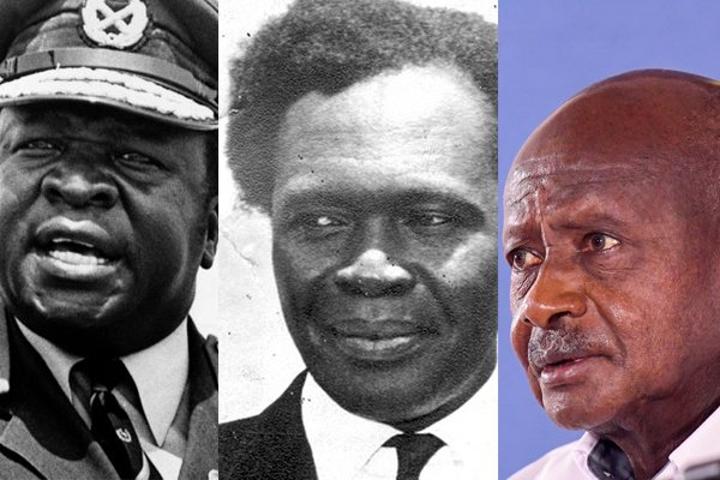
Africa-Press – Uganda. Fifty years ago, Uganda found herself grappling with runaway inflation. President Idi Amin, fresh from expelling tens of thousands of Ugandan Asians, needed little invitation to pass the buck to an external factor—an oil shock that teed off in October of 1973.
While Mr Amin had little sense of his own limits, which were considerable, empirical evidence suggested in the starkest of terms that economic mismanagement and a near collapse of Uganda’s productive sectors contributed to her inflation surge then.
ALSO READ:
Don’t take Ugandans’ resilience for granted
Five decades on, any claims that not enough has changed seem a stretch. Yet with commodity crises threatening to create major upheavals in the economic markets, passing-the-buck parallels are terrifyingly being drawn.
At the start of this workweek, opposition party Forum for Democratic Change (FDC) ratcheted things up by stating that inflationary pressures were being felt long before the Russia-Ukraine war blipped on the radar.
There must have been rich resonance in the message for Uganda’s inflation-weary consumers. Many of them seem to believe that the government is holding a blank sheet of paper where it should have answers.
ALSO READ:
Hard economic times in East Africa as commodity prices go through the roof
The Central Bank has been quick to label the current inflationary pressures as transitory even as the overall indices of commodity prices soar to unprecedented levels. The Secretary to the Treasury offered reassurances last week by insisting that this is both “a temporary shock and…an external shock…caused by disruptions in the global supply chain by Covid-19 as well as the geopolitics we are seeing in different parts of the world.”
There is more than a modicum of truth in that line of thought. But then again this was also the case when an oil embargo proclaimed by the Organisation of Arab Petroleum Exporting Countries put a cat among the pigeons in 1973. Mr Amin had every right to shift the blame.
ALSO READ:
Is it inflation or reduction in incomes: What is pushing up prices of goods, services?
The manner in which things would go on to implode on his watch, however, underscores the self-defeating quality of self-serving propaganda. When the mirror is held up, it’s barely helpful to adopt an ostrich policy or shift goalposts for that matter. What most certainly helps is if the powers that be grasp the urgency for action.
What conflates the passing-the-buck episodes from 1973 and 2022 is the almost palpable breakdown in the concept of separation of powers. We saw an admission to the executive and legislative branches overlap when a report of the Parliamentary Committee of Commissions, Statutory Authorities and State Enterprises (Cosase) was tabled and discussed in the House last week.
To summarise the back-and-forth from the debate, we ended up with a predatory deal that has Entebbe International Airport facing an existential threat because two branches of government were uncomfortable doing what they ought to do.
ALSO READ:
War, inflation threaten world economy
The discomfort they felt might not be instantly familiar with what the executive and judiciary grappled with under Mr Amin, but it is gradually getting there. An overbearing presidency is already seeing us address an economic problem with political tools. This will only add to the inflationary woes. The current malaise merits nothing more than a monetary policy response.
[email protected]
For More News And Analysis About Uganda Follow Africa-Press