Africa-Press – Uganda. The Sahara and Sahel Observatory (OSS), an international scope organisation, has announced a disbursement of $630 million to provide alternative livelihood for people affected by the restoration of the degraded wetlands, riverbanks and lakeshores in Uganda.
Ms Khaoula Jaoui, the coordinator of the Climate Department Climate Finance and Natural Resources Management Expert, confirmed the development.
She said the money is already with Uganda’s Ministry of Finance, Planning and Economic Development and that it will soon reach the target beneficiaries.
At least 21 water and environment cooperatives within Aswa catchment in Upper Nile water management zone, Awoja catchment in Kyoga water management zone and Maziba catchment in Victoria water management zone are expected to benefit from this financial support.
The intervention is part of the project dubbed, “Enhancing Resilience of Communities to Climate Change through Catchment Based Integrated Management of Water and Related Resources in Uganda” (EURECCCA).
Funded by Adaptation Fund (AF) through Sahara and Sahel Observatory, the five-year project started in 2017 and will expire in April 2023.
The project is executed by the Ministry of Water and Environment through the Directorate of Water Resources Management.
The overall goal is to increase resilience of communities to the risk of floods and landslides in the three catchments through promoting catchment based integrated, equitable and sustainable management of water and related resources.
“So, the money now is coming, maybe in a few weeks. I don’t know exactly when but it has already been disbursed from our end, now it is with the Ministry of Finance… You know we can’t send money directly to the communities. So, it is in the process. So, shortly it is coming,” Ms Khaoula told the beneficiaries at Orom Sub-county headquarters, Kitgum District, last week.
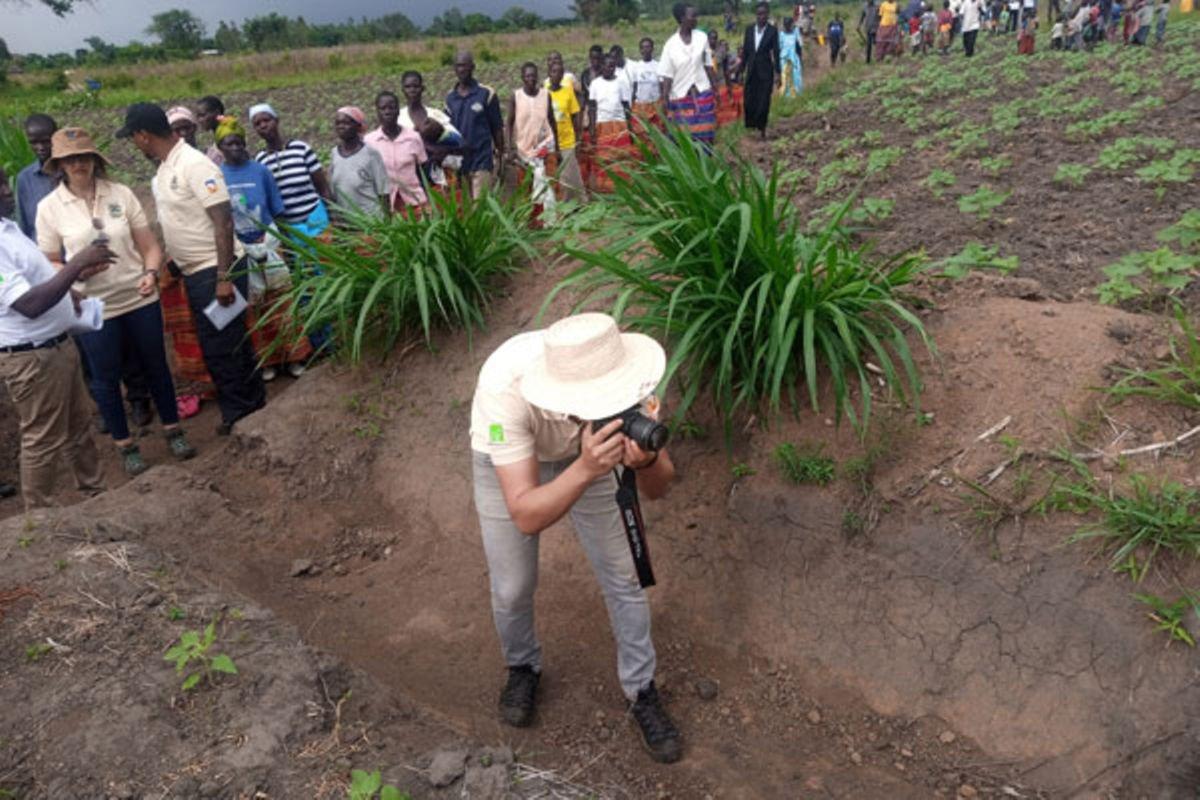
A team from Tunis-based international scope organisation was in the area for their supervision mission in Aswa Catchment.
They were led by the team leader for Upper Nile Management Zone at the Ministry of Water and Environment, Mr Richard Musota. The exercise started on May 24 through May 26.
Orom Sub-county officials guide their guests during the tour of Karakilet riverbank on May 25, 2022. PHOTO/ BILL OKETCH
Project justification
The impact of climate change, coupled with other human and environmental stressors, is increasing degradation of wetlands and their associated ecosystem services in Uganda. This is negatively affecting the livelihoods of approximately 4 million people living in and around wetland areas.
Over 80 percent of the people living adjacent to wetland areas in Uganda directly use wetland resources for their household food security needs (UNDP, August 2017).
In Aswa catchment, for instance, the demarcation of Adungo riverbank in Kapeleyong and Amuria districts has affected the livelihood sources of 546 households, according to the project document.
The demarcation of the Ogwete wetland system has affected the livelihood sources of 338 households in Otuke District.
Also, demarcation of Karakilet riverbank affected livelihood sources of 651 households in Orom Sub-county, Kitgum District.
For More News And Analysis About Uganda Follow Africa-Press