Africa-Press – Uganda. Civil society organisations (CSOs) in Uganda have asked the government to cap on borrowing non-concessional loans so as to ensure prudent debt utilisation and discretionary spending reduction.
In a joint call made to the Finance ministry, CSOs urged for only financial and economically viable public investments projects to be approved for financing.
Mr Patrick Rubangakene, an Economist at the Civil Society Budget Advocacy Group (CSBAG), joined entities such as the Southern and Eastern Africa Trade Information and negotiations Institute (SEATINI) and Uganda Health Systems Strengthening Activity (UHSS) in commending this reform.
The entities had gathered on Sunday to share perspectives on the National Budget Framework Paper (NBFP) of the next financial year, 2023/24, which was tabled by the Minister of Finance, Planning and Economic Development to Parliament in December, last year.
Other CSOs that gathered at CSBAG headquarters at Ntinda included Africa Youth Development Link; Action Against Hunger Uganda; World Vision and The Centre for Health, Human Rights and Development (CEHURD).
Mr Rubangakene emphasised that the government should reconsider the types of loans it acquires by borrowing those which attract low interest rates.
“As a country, we have been focused more on the non-concessional (loans), that’s why if you look at close to Shs5 trillion of the interest payments are going for domestic interest payments, which means we borrowed heavily on non-concessional loans,” he explained.
He added that even the cost of debt servicing is so high, which means the resources that are available for service delivery have reduced in size.
“Our call is that the government should put a cap on borrowing non-concessional loans and also ensure prudent debt utilisation,” he added.
For example, he explained, the issues of public investment management in this country are one of the most focused ones.
“We have been borrowing money for public investments, however, most of this money that we borrow comes in for projects that are not ready,” he said.
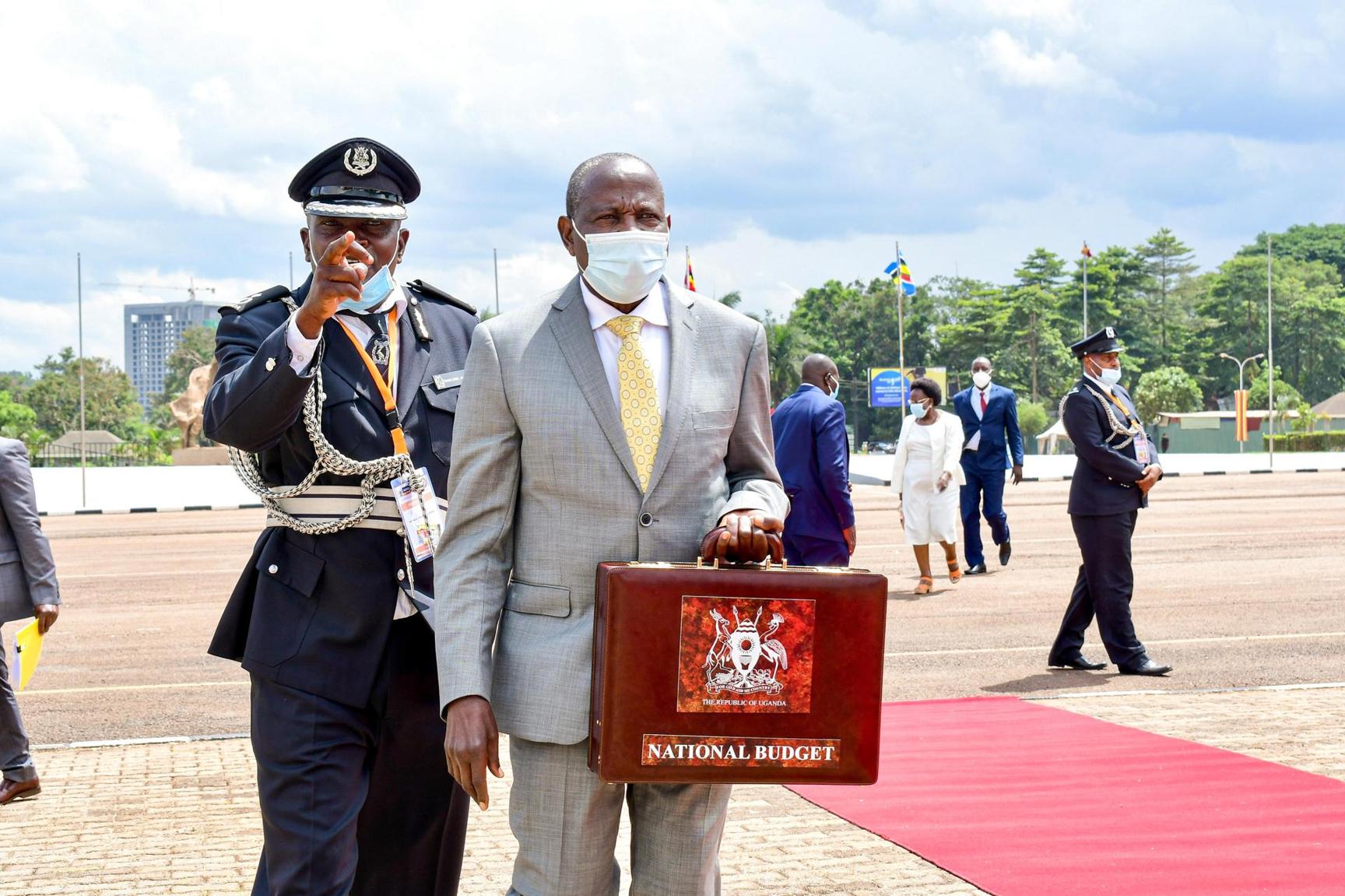
CSOs furthermore asked Finance minister Matia Kasaija to only approve projects that are financially and economically viable so that this also helps the country to reduce the appetite to borrow.
As of June 2021, the share of public debt stock to the Gross Domestic Product (GDP) had increased from 46.90 percent (US$ 19.54 billion) to 48.4 percent (US$ 20.99 billion) in June 2022.
This is partly driven by Uganda’s appetite to borrow on non-concessional terms, according to CSOs, which ultimately increases the cost of borrowing and high cost of debt servicing and further reduces discretionary spending.
Finance Ministry spokesperson Jim Mugunga said: “Not all projects that government undertakes will pass a direct commercial viability test. Some are conceptualised because they are a necessary public good while others are purely strategic. In these two situations, both commercial and economic benefit may be delayed and indirect. It does not make the projects irrelevant or of minimal interest. The solution is to try and find appropriate money and smart mechanisms to fund them.”
For More News And Analysis About Uganda Follow Africa-Press