Africa-Press – Uganda. The Inspectorate of Government (IG) has commenced investigations into claims that Kampala Capital City Authority (KCCA) mismanaged Shs4 billion meant for fighting the Covid-19 pandemic in 2021.
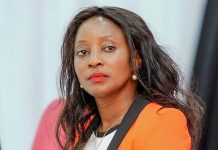
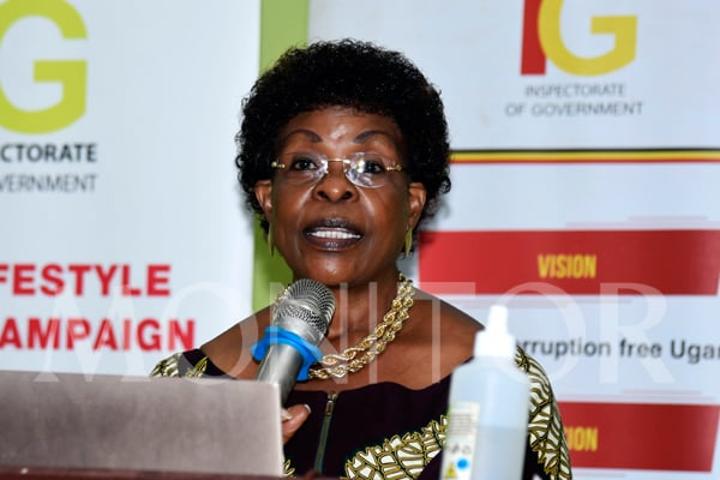
Ms Beti Kamya , the Inspector General of Government, made the revelation in a January 6 letter to Rubaga North Councillor III, Mr James Mubiru.
She was responding to Mr Mubiru’s October 31, 2022 letter. In the letter, Mr Mubiru asked the inspectorate to investigate possible mismanagement of the funds.
“This is to acknowledge receipt of your written complaint and to inform you that this office has commenced investigations into the matter. We shall inform you of our findings and decisions as soon as possible,” Ms Kamya said.
Accusations
Mr Mubiru, also the chairman of the treasury of the council, claimed KCCA did not utilise the funds as planned. He said the funds were released to curb the spread of Covid in the second wave from May to early August 2021.
“Under my role of oversight and monitoring service delivery within the capital city as stipulated under section 6 of the KCCA Act, 2022, it has come to my notice that the funds that were allocated to fight Covid-19 were misappropriated,” he said.
He noted KCCA planned to buy 10 ambulances at Shs1.5 billion, mobile lab testing vehicles at Shs400 million, and spend Shs500 million in allowances for the authority’s task force and management.
Mr Mubiru also said the authority planned to spend Shs320 million in each of the five divisions, Central, Nakawa, Rubaga, Makindye and Kawempe, totalling Shs1.6 billion for Covid-related activities in the same period.
Also more than Shs2 billion was allocated, with guidance from Cabinet, to City Hall and the divisions for allowances of the taskforces, conducting division and city taskforce meetings, emergency response coordination teams, inland travel and surveillance.
Other activities in the same budget included facilitating the village health teams to track and support the home-based care management model.
But Mr Mubiru said, “Unfortunately with the above fund’s allocation, only 7 ambulances were purchased recently with an unclear cost figure yet we passed [approved] 10 ambulances,” Mr Mubiru said.
He added, “Therefore, I request the IGG to carry out investigations on the three unpurchased ambulances and mobile laboratory/ testing vehicles, Authority Taskforce and management funds how they were spent, and Shs2.2 billion that was based on conditional parameters set by Cabinet.”
Mr Mubiru asked the ombudsman to look into the matter, to ensure accountability of public funds.
KCCA speaks out
On Monday, Mr Simon Kasyate, the authority’s spokesman declined to discuss the details of the matter on grounds that it had become the subject of investigations by the IG.
“As per the particulars of the allegations, I don’t want to preempt what the investigation is going to come up with, but the move is welcomed and we are open to that level of public scrutiny,” Mr Kasyate said on telephone.
He stated that they are ready to comply with the IG during the investigations.
Background
Uganda has experienced three waves of Covid-19. The first wave was in mid-late 2020, the second wave in April 2021–August 2021, and the third wave in December 2021–February 2022. However, the second wave has been dubbed the deadliest so far.
In June 2021, Health Minister, Dr Jane Ruth Acheng noted that Uganda was dealing with five major variants including Delta, Beta and Alpha, which she said were fuelling Covid transmissions. The Delta variant was however cited as the most aggressive, leading to more than one thousand new infections recorded per day and dozens of deaths weekly.
Monitor reports showed that the second wave got the government without adequate oxygen cylinders at hospitals, without enough admission beds at intensive care unit facilities, and generally a weak logistical muscle even after soliciting resources from the public and receiving money from donors.
Citizens struggled to cope with the overstretched health facilities and huge bills at private facilities mostly due to the high demand for oxygen cylinders and other ICU services.
In response to the crisis, Parliament allocated Shs 600 billion to several ministries, departments and agencies and local governments to curb transmission in the second wave. But KCCA was not among the beneficiaries.
Later, KCCA council approved Shs4 billion as a supplementary for the authority to end the second wave.
For More News And Analysis About Uganda Follow Africa-Press