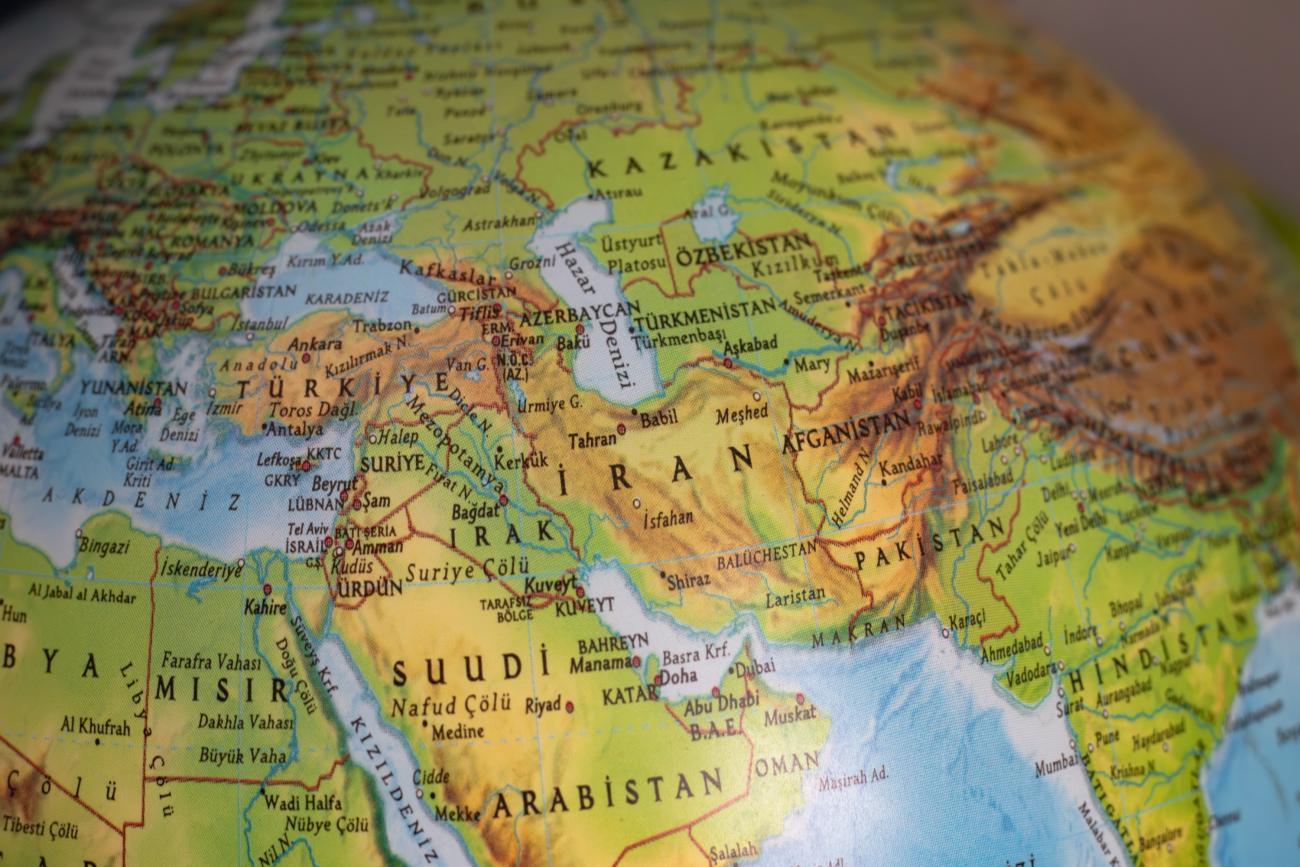
Africa-Press – Uganda. At first glance, a conflict involving the United States, Israel, and Iran appears geographically removed from the continent. In economic terms, however, distance offers no protection. What is unfolding is a systemic global shock transmitted through energy markets, trade routes, and financial flows.
The Strait of Hormuz carries roughly one fifth of the global oil supply, and the conflict has driven a sharp increase in oil prices. Costs have risen from £49 per barrel on 27 February 2026, a day before the conflict, to a peak of £84 per barrel on 6 April 2026.. For Africa, where most economies are net oil importers, this is not a marginal development. It is a direct deterioration in the terms of trade, a fresh inflation shock, and a tightening of already constrained fiscal space.
The effects are already visible. In Kenya, fuel shortages have affected a significant share of independent retailers. In Somalia, fuel prices have more than doubled in some areas, disrupting transport and livelihoods. In South Africa, the central bank has warned that fuel inflation could exceed 18 per cent in the second quarter, forcing a more cautious monetary stance.
A multi-layered shock across interconnected systems
The shock is not confined to energy. It is operating simultaneously across trade, agriculture, finance, and domestic production systems.
The United Nations Conference on Trade and Development estimates that more than 80 per cent of global trade by volume is transported by sea, a share that is even higher for developing economies. Disruptions to shipping routes, rising insurance costs, and longer transit times therefore translate quickly into higher import costs for African countries that depend heavily on imported fuel, machinery, and intermediate goods.
Agriculture is equally exposed. The World Bank has shown that fertiliser prices are closely linked to energy costs, with its fertiliser price index rising by more than 20 per cent since the start of the war. For African farmers, this means reduced fertiliser use, lower yields, and rising food prices. In economies where food accounts for a large share of household expenditure, this becomes not only an inflation problem but a social risk.
A compounding shock in an already fragile global environment
This conflict is not occurring in isolation. African economies are still adjusting to the aftereffects of the pandemic, tighter global financial conditions, declining aid flows, and increasing trade fragmentation.
Recent tariff measures introduced by the United States have already disrupted trade patterns and weakened export prospects for developing economies, signalling a shift away from preferential trade arrangements that once supported African exports. At the same time, the global economy is slowing. The Organisation for Economic Cooperation and Development projections indicate global growth moderating to around 2.9 per cent, while inflation remains elevated.
For Africa, this creates a difficult combination. Export demand weakens just as import costs rise. Foreign exchange earnings come under pressure at the same time as external financing needs increase.
The debt constraint and shrinking policy space
These pressures are arriving at a particularly difficult moment. ODI Global notes that Africa’s debt challenge has intensified after successive shocks, with median public debt rising from about 49 percent of GDP in 2019 to around 57 per cent five years later.
While debt levels have begun to stabilise, debt service burdens remain elevated. African governments now spend over 12 per cent of revenues on interest payments on average, and more than 25 per cent in some countries. At the same time, more than half of low income countries in Sub Saharan Africa are at high risk of or already in debt distress, according to the International Monetary Fund.
The shift toward more expensive commercial borrowing, combined with persistently high global interest rates, has reduced fiscal space and constrained development investment.
This sharply limits policy options. Governments face growing pressure to respond to rising fuel and food prices, yet their capacity to do so is constrained. The result is a tightening policy dilemma between maintaining fiscal discipline and addressing urgent social needs.
The risk of postponing economic transformation
The implications extend far beyond short-term stabilisation. Africa’s development strategy depends on structural transformation through industrialisation, value addition, export diversification, and technological upgrading. These objectives require sustained investment in infrastructure, energy systems, and productive capacity.
External shocks of this magnitude risk diverting both financial and political resources away from these priorities. When scarce fiscal resources are redirected toward crisis management, investment in transformation is delayed. When energy costs rise, manufacturing competitiveness weakens. When borrowing costs increase, infrastructure projects are postponed.
The most significant cost is not only slower growth in the near term. It is the loss of time. Delayed investment today translates into weaker productivity, lower export capacity, and fewer jobs tomorrow.
Pressures on remittances, tourism, and connectivity
The external sector adds further vulnerability. Remittance flows to Africa exceed 75 billion British pounds annually and, in many countries, surpass foreign direct investment and official development assistance. These flows are relatively stable, but they remain sensitive to global economic conditions. A slowdown in advanced economies could reduce these inflows, with direct consequences for consumption and poverty.
Tourism faces similar risks. Higher aviation fuel costs translate into higher airfares, reducing travel demand. For countries that rely on tourism as a major source of foreign exchange and employment, this represents a significant shock. Rising transport costs also weaken business connectivity and regional integration.
Declining productivity
Less visible, but equally consequential, is the impact on productivity. Rising input costs, disrupted supply chains, and heightened uncertainty reduce efficiency across sectors.
Firms face higher production costs and delays in accessing inputs. Households experience declining real incomes, affecting labour productivity and human capital investment. Farmers reduce input use. Manufacturers face reduced competitiveness. Service providers scale back expansion.
Over time, these effects accumulate. The result is not only slower growth, but weaker productivity growth, which is central to long-term development.
A stagflationary environment with structural roots
The combined effect is a stagflationary environment characterised by rising inflation and slowing growth. For African economies, this is particularly challenging given limited policy space, high import dependence, and ongoing fiscal pressures.
This is not a conventional demand cycle. It is a supply side and external financing shock. Monetary policy must preserve credibility and prevent second round effects, but it cannot offset higher global energy prices. Fiscal policy must protect the vulnerable, but without undermining sustainability.
From crisis management to structural resilience
The immediate priority is stabilisation. This requires credible monetary policy, targeted fiscal support, and preservation of external buffers. It also requires clear communication to anchor expectations.
But the deeper lesson is structural.
Africa’s vulnerability reflects dependence on imported energy, limited diversification, fragmented regional markets, and underdeveloped financial systems. Addressing these challenges requires sustained commitment to transformation.
Energy diversification, investment in domestic and regional energy systems, strengthening agricultural productivity, and deepening regional integration are essential. Improving financial infrastructure and reducing the cost of cross border transactions can further enhance resilience.
The present shock does not weaken the case for transformation. It strengthens it.
A moment of reckoning
This conflict has exposed, with unusual clarity, the cost of structural weakness in a fragmented global economy. Africa is not merely experiencing an external shock. It is confronting the consequences of an economic structure that leaves it repeatedly exposed to distant crises.
The question is whether this moment will be used to change course. Deeper regional integration is now essential. A fragmented continent cannot build resilience or sustain transformation. The African Continental Free Trade Area must move from promise to practice.
In a world defined by uncertainty, Africa’s resilience will be built from within, through integration.
LSE
For More News And Analysis About Uganda Follow Africa-Press