Africa-Press – Uganda. The Aga Khan Foundation says they hope that last Saturday’s inaugural health camp in Kampala for people living with albinism will become a rallying point for other individuals and organisations to start supporting the group.
In an interview yesterday, Ms Olga Daphine Namukuza, the programme manager at Aga Khan Foundation Covid-19 relief support for the Albinism Umbrella, said they have earmarked €40,000 (about Shs156m) into an eight-month programme targeting an estimated 300 people living with albinism to primarily address the effects of the Covid-19 pandemic on their lives.
“We are excited about the work we are starting and we hope that in future, this work will be a form of advocacy that other partners can look at and also realise that people with albinism in Uganda have a need for services, information and most importantly not for them to be discriminated against, otherwise this drives the inequalities they are already dealing with,” she said.
Ms Namukuza said the Albinism Umbrella will use the funds to organise more medical camps for people with albinism and also disseminate information about the condition.
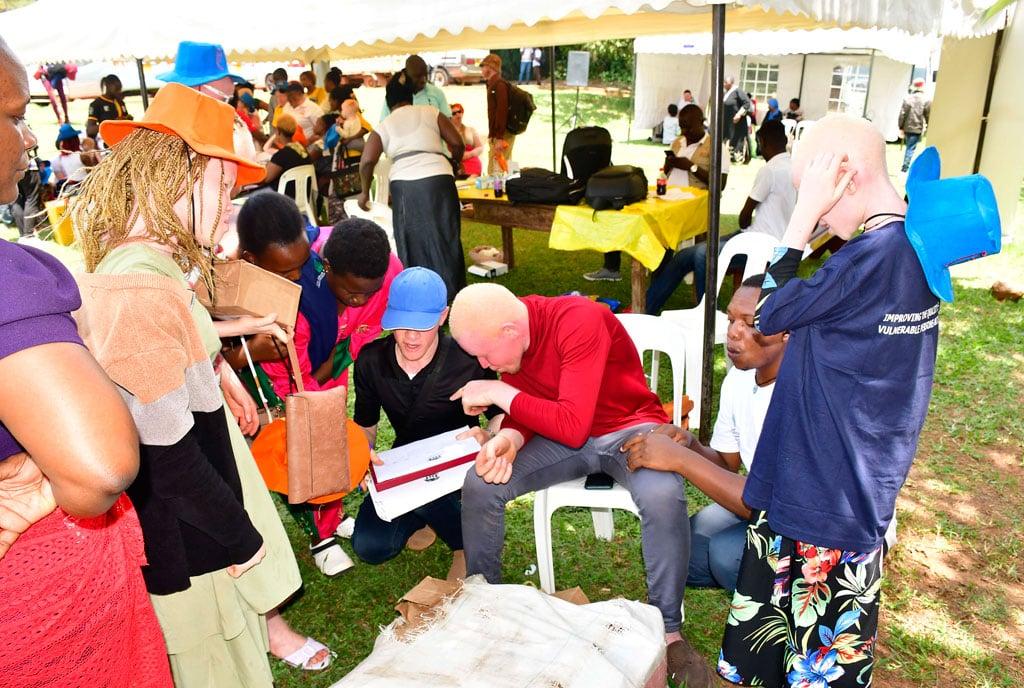
She said at the medical camp, they screened for eye diseases, blood pressure and HIV/Aids among the people living with albinism.
Ms Olive Namutebi, the executive director Albinism Umbrella, said during the health camp at the Uganda Museum, they did a needs assessment on the people living with albinism and the exercise yielded a lot of feedback.
“Many people with albinism in Kampala are not at school due to poverty and discrimination. In school, many can see with varying degrees, they need to be as close as possible to the black board, they need huts to protect them from the sun and the parents also need counselling, guidance and psychosocial support,” she said.
Mr Joseph Ssebwana from the Mengo hospital eye department, said of the 45 people living with albinism screened at the health camp, most of them were found with low vision due to refractive errors associated with albinism, thereby affecting their ability to read and write.
At the end of the health camp, most of the people were given sun screens and reading boards.
Albinism is a genetically inherited condition which occurs worldwide regardless of ethnicity or gender. It most commonly results in the lack of melanin pigment in the hair, skin and eyes, causing vulnerability to sun exposure
Trend
According to the World Bank report and the World Report on Population, Uganda is estimated to have around 20,000 people living with albinism, with 60 percent of them being children.
For More News And Analysis About Uganda Follow Africa-Press