Africa-Press – Uganda. Mid-Western Uganda districts Ntoroko and Kabarole have received funding for multi-billion projects to address pressing problems ranging from value addition to infrastructural and market limitations.
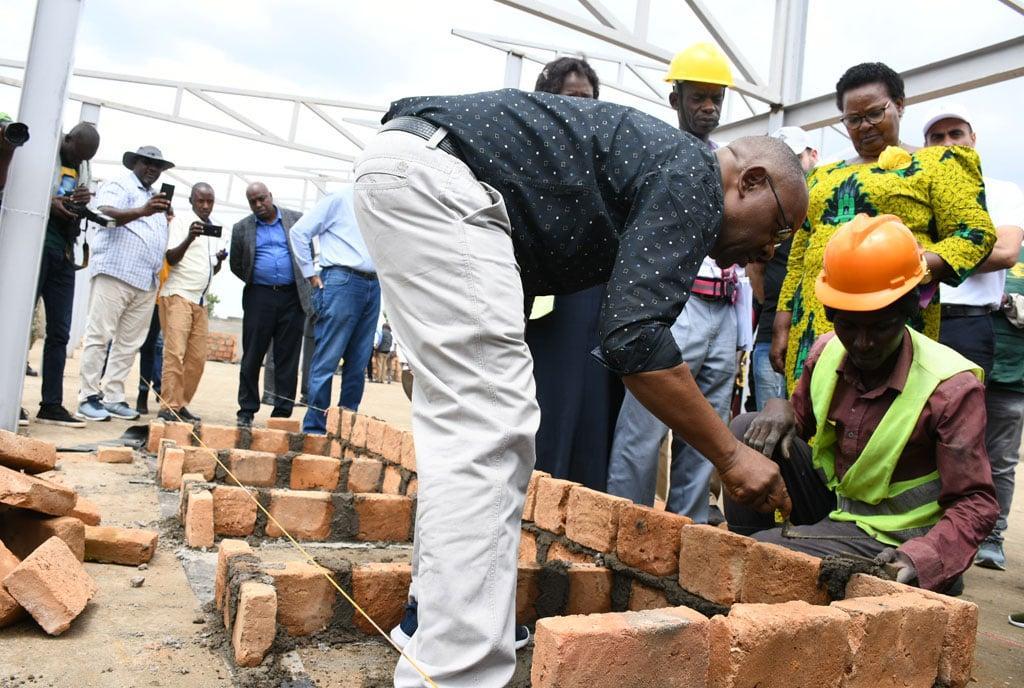
On Wednesday, a delegation from the Lives and Livelihoods Fund and the Islamic Development Bank led by the Minister for Local Government, Mr Raphael Magyezi, alongside leaders from the two districts inaugurated ambitious projects viewed by experts to be “transformational.”
The projects collectively valued at over Shs6billion are under the Local Economic Growth Support (LEGS) Project, an initiative that is co-financed by the Ugandan government and development partners Lives and Livelihoods Fund plus the Islamic Development Bank.
The projects involve construction of facilities such as processing factories for coffee, rice, and maize, livestock markets, food markets, road infrastructure, and gravity-based water flow systems.
“The projects will bolster local economies, enhance water access, and improve vital infrastructure to pave the way for improved livelihood,” Magyezi observed.
He emphasized that farmers in the districts will, through the projects, have access to processing facilities- allowing them to add value to their produce and access fair markets.
This publication understands that Ntoroko District is set to benefit from two nearly complete processing factories for rice and maize, collectively valued at Shs907.4million.
Additionally, the Nombe Coffee processing factory, costing Shs888.5million is in operation, and the Nyakatoke water gravity flow scheme, with an investment of Shs1.2billion is under construction.
The district is also constructing the Rwebisengo livestock market for Shs440million, Rwebisengo-Kiranga 7-kilometer road (Shs1.6billion). Besides, the Shs1.2billion Kisembo-Muleju road is in use even as the government is planning its rehabilitation.
In Kabarole District, projects under the same arrangement include construction of the 7.4kilometer Harugongo-Kakundwa-Busoro Road (Shs450million), Kihondo vendors market (Shs590million), Mugusu water gravity flow scheme Shs880million, and the distribution of coffee and tea seedlings.
Also, a total of Shs1.2billion through the rural financing credit scheme from the Microfinance Support Center has been disbursed to smallholder farmers in districts of Kabarole, Ntoroko, Bunyangabu and Kyenjojo.
Ntoroko District chairman William Kasoro expressed gratitude for the projects, emphasizing the historical “water stress faced by the area, especially in the dry cattle corridor.”
Kasoro highlighted that since the initiation of the LEGS program, the new 8.4kilometer Kisembo-Mureju Road, has been constructed- connecting Kabarole and Ntoroko districts.
“All past years, our district had only one access road. In case of any blockage on the road, there would be no other escape route but now we have constructed a new road which will boast local business,” he said.
Ms Evelin Kobugabe, a vendor at Kihondo market, shared her excitement about the improved market infrastructure.
She noted that previously, vendors operated in challenging conditions, exposed to harsh weather.
The Kihondo market, designed to accommodate over 200 vendors, is expected to be completed by October 2023.
Eng Paul Kasule Mukasa, the National Coordinator of the LEGS project, said the total budget for LEGS project is $43 million from the Lives and Livelihoods Fund and the Islamic Development Bank, $30 million is invested across ten districts in Uganda, with each district receiving Shs10billion for investment.
Richard Rwabuhinga, the chairman of Kabarole District, acknowledged that the ongoing projects will contribute to the district wash master plan which targets that all people should have access to safe water by 2030.
“In the district, we had budgeted for a total of 99-kilometer roads and one road has been worked, we plan to do irrigation and others and we request those that are not yet worked on can be considered in phase II of the project,” he said.
For More News And Analysis About Uganda Follow Africa-Press