Africa-Press – Uganda. Communities in Eastern Uganda have been urged to adopt zero waste management practices as a key strategy to boost climate resilience and improve agricultural productivity.
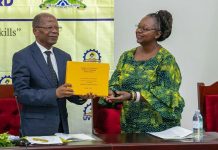
Speaking during the Uganda Law Society’s weekly press briefing on Thursday, Okiria Ateker, Project Manager of the Promoting Integrated Landscape Management Approach for Conservation of the Mt Elgon Ecosystem in Eastern Uganda project under the National Environment Management Authority (NEMA), emphasized the critical link between waste management and sustainable agriculture.
“To ensure resilience and survival, communities need to have multiple streams of income. This is especially important in the current era of climate change, where agriculture is largely rain-fed. Income will be subsistence in financing reduction of waste and research to boost recycling. Rains may come, but farmers need to make sure they find clean and ready grounds for agriculture,” he said.
Focusing on rural areas, which he described as Uganda’s “food basket,” Ateker highlighted that poor waste management significantly undermines agricultural productivity.
“The land largely contaminated by waste demeans all the diversified farming systems. Crops yield low, although some provide meagre harvests. In this way, we are helping to cushion communities against the adverse effects of climate change where poor waste management contributes,” he said.
The project aims to enhance soil health, restore degraded landscapes, and promote sustainable land management practices.
“Proper waste management promotes sustainable land management and soil health in the mountain landscape,” Ateker added.
Sustainable land management and efficient resource use, including nutrient recycling, were identified as key strategies for reducing waste and environmental impact.
“We should therefore focus on reducing waste by promoting practices such as nutrient recycling and efficient resource use. This ensures that agricultural by-products are reused effectively rather than being discarded, thereby minimizing environmental impact,” he said.
The Promoting Integrated Landscape Management Approach for Conservation of the Mt Elgon Ecosystem project seeks to transition the Mt. Elgon region to a sustainable, climate-resilient landscape. Through restored forests, wetlands, and riverbanks, the initiative aims to protect biodiversity while enhancing the value chains of coffee and staple crops.
Ateker concluded by calling on all stakeholders to take personal responsibility for land conservation.
“We cannot achieve this with poor waste management in the area. The responsibility now turns to everyone to understand that conservation of land, protecting its nature, and using environmentally friendly farming methods is the way to go, for all of us,” he said.
This appeal was made in commemoration of the International Day of Zero Waste, a global initiative encouraging communities to rethink waste management, recycling, and sustainable resource use to protect the environment.