By Fredrick T. Musiimenta
Africa-Press – Uganda. Over the years, challenges emanating from Climate Change have literally shot through the roof culminating into despicable catastrophes that have left many lives and livelihoods shattered. Governments all over the world are waking up to the rude shock of the climate crisis.
Climate change education refers to the vital part of environmental education, education for sustainable development and eco-social competence. The main goals of climate education include building a sustainable future, inspiring action and practicing influencing skills at the social and personal levels. It is imperative not only to learn to understand climate change in-depth but also to change one’s own behaviour and actions. In this context, behaviour refers to action people take to tackle climate change. In addition to active citizens, many social institutions are developing mitigation and adaptation techniques, and climate education should provide at least basic information on these agents. This kind of arrangement has had successful stories in countries like Finland.
In Uganda, a National strategy to strengthen learning and skills development on the subject of climate change with support from the United Nations Institute for Training and Research (UNITAR) and the United Nations Children’s Fund (UNICEF) code named UN CC Learn was launched.
The strategy included mainstreaming Climate Change in the education sector for upper primary classes, with support from the Royal Danish Embassy (RDE). The main streaming of climate in the lower secondary school began in 2012.
Even when this was a very brilliant idea, eleven (11) years later, there is little or nothing to show for it. It was not until recently that organisations like Food and Agricultural Organisation (FAO) with support from the Embassy of Sweden and through Vision Group embarked on the campaign GREEN SCHOOLS where students in various schools across the country (10 regions) competed in designing the best project that best addresses the climate change crisis. However, not all hope is lost. There is still room for improvement as long as the Government of Uganda expresses unwavering to this noble cause. The projects range from use of best agricultural practices, use of technology, reduction of Green House Gases among others.
This has ignited students’ creativity and enabled them to do further reading as well as improvise and with local solutions been able to prove that indeed with some government support, climate change challenges can be minimized and at best mitigated.
Recently, the ministry of education and Sports through the National Curriculum Development Centre (NCDC) revised the secondary school curriculum but fell short of making climate change a compulsory subject. Although agriculture is the back bone of Uganda’s economy and employs about 80% of the population, it was not made a “core” subject.
In my opinion, this is a mistake that ought to be corrected because we have capacity to leverage on agriculture and compete internationally as earn very handsome foreign exchange given our favourable weather throughout most months of the year. Egypt, Israel, Republic of South Africa are reaping big from agriculture despite not having the best weather but because they embraced best agricultural practices, technology and food value addition, their economies and GDP have exponentially grown.
During colonial times, local people were trained to becomes clerks/messengers and other peripheral roles in administration but never encouraged through institutionalized marginalized for an empowered local community would immediately demand for independence and proper utilisation of all their resources. It is now 61 years since they left but we haven’t fully embraced vocational and other practical skills. Unless a paradigm shift is made, we are likely to continue producing “fluent English speakers” who will sleep hungry and angry.
Students in Primary and Secondary schools should be taught about the repercussions of climate change and supported to venture into viable projects from which they will learn to safe guard the environment.
Temperature and weather changes
Since the 1960s, the average temperature in Uganda has increased by 1.3 °C, minimum temperatures have increased by 0.5–1.2 °C, and maximum temperatures have increased by 0.6–0.9 °C. Average temperatures have been observed to be increasing at a rate of 0.28 °C per decade, and daily temperature observations show significantly increasing amounts of hot days and nights every year. Climate change and changes in temperature is also affecting the Rwenzori Mountains, by causing glacier melting, increasing water levels in the Nyamwamba, Mubuku, and Rwimi Rivers. This has led to frequent flooding across the Rwenzori region.
Adverse Effects
The effects of climate change in Uganda are increasingly severe, affecting the lives of the country’s citizens and its environment. It has led to extreme weather events such as unpredictable, prolonged drought and rainfall.
Uganda’s climate is mostly tropical with regular rainfall and sunshine patterns. Due to climate change the seasons have changed, with the rainy season becoming more variable in length and droughts more ubiquitous, especially in eastern and northeastern Uganda. Climate trends have the potential to affect development of Uganda, due to the vulnerability of Uganda’s diverse environment.
In January 2022, intense rain around Mount Muhavura damaged buildings and roads in Kisoro District, especially affecting Nyarusiza, Muramba and Bunagana. Nine people were reported to have lost their lives and thousands of people were displaced or otherwise affected by this disaster.
On 1 March 2010, landslides occurred on the slopes of Mount Elgon, in the Bududa district, that killed 50 people and left thousands displaced. In 2018, there was another landslide on Mount Elgon, that killed 28 people, and left thousands displaced once again. As of 30 September 2021, a total of 20,739 people had been internally displaced. All landslides were caused by unusually prolonged rains.
Greenhouse Gas Emissions in Uganda
Fortunately, Uganda’s Greenhouse gas emissions rate is very low, with carbon dioxide having never exceeded 150 kg per person per year, and totaling about 5 million tonnes per year. As of 2022, over 90% of Uganda’s electricity comes from hydroelectricity but many rural areas lack electricity and burn wood for cooking. The government has been criticized for indirectly propagating deforestation. There is urgent need to subsidise on the cost of hydroelectricity as well as solar system imports if forests are to be spared.
Whereas Uganda takes credit for low rates of Greenhouse emissions, the government ought to resoundingly support Green/ Clean technology which is the application of one or more of environmental science, green chemistry, environmental monitoring and electronic devices to monitor, model and conserve the natural environment and resources, and to curb the negative impacts of human involvement.
Poverty
Climate change and poverty are inextricably linked. Between 1970 and 2019 more than 11,000 natural disasters were reported causing over two million deaths. 91% of the deaths were in developing countries, such as Uganda. The daily struggles of these communities are not always making the headlines.
Relocation to Uganda’s cities has increased by over 5% per year, that’s a rapid rate that means by 2035 30% of Uganda’s population will be urban dwellers. Kampala’s growth rate is bigger and faster than any other city in Uganda.
The devastation that climate change is causing and will continue to cause means it is code Red for humanity. But there is still time. The world’s leading scientific body for the assessment of climate change – the Intergovernmnetal Panel on Climate Change (IPCC) – warns that global greenhouse gas emissions must ‘peak before 2025 at the latest, and be reduced by 43% by 2030 if we are to limit climate change to 1.5°C and avoid complete catastrophe.
Charity begins at home
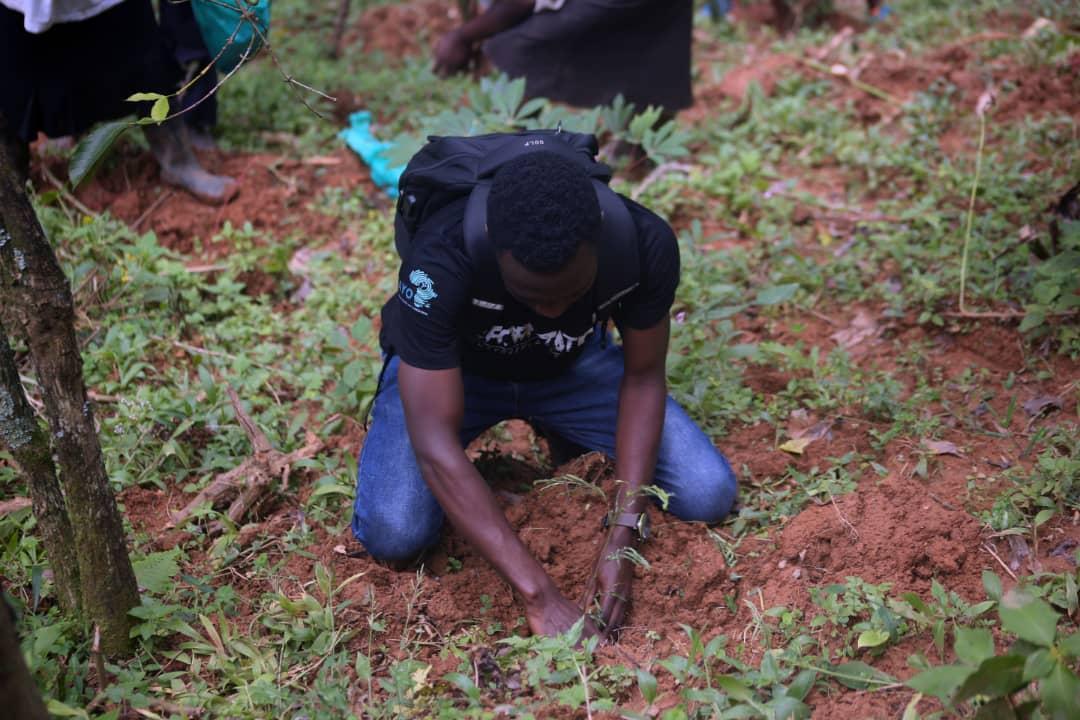
The basic unit of education is a home. The clarion call is there for all of us parents and guardians to ensure that children are taught right from home not litter, properly dispose off waste, planting of trees and flowers; this is when government will find it easy to compel school going children to join the fight against climate change. Parents littering the environment, burning bushes, cutting down trees (without replacing) etc. will not be a good example to their children and they will most likely find a mountain to climb to be convinced that climate change is real and will have far outreaching consequences.
It is now or never. The Ministries of Education, Water and Environment and Agriculture Animal Industries and Fisheries must liaise with the National Curriculum Development Centre (NCDC) and ensure that Climate Change becomes an integral part of the curriculum even when it will not be examined. Climate Change is here and indeed it will be around for a long haul; it is high time all the key players embraced adaptation and sustainability tactics.
Education institutions should lead by example and come up with innovations to address problems locally. Tertiary institutions have no option but to walk the talk of “research, innovation and knowledge creation” if they are to be a true definition of the Beacon of Hope and reclaim their positions.
The Writer is a Climate Change Enthusiast & Co-Founder of the Uganda Dialogue Arena (UDA)
Source: Nile Post
For More News And Analysis About Uganda Follow Africa-Press