Africa-Press – Uganda. The Minister of Water and Environment Sam Cheptoris has decried Uganda’s growing population, something he observed is a threat to maintaining Uganda’s green economy.
Minister Cheptoris also noted that ensuring a green economy will contribute to eradicating poverty as well as sustaining economic growth, enhancing social inclusion, improving human welfare and creating opportunities for employment and decent work for all.
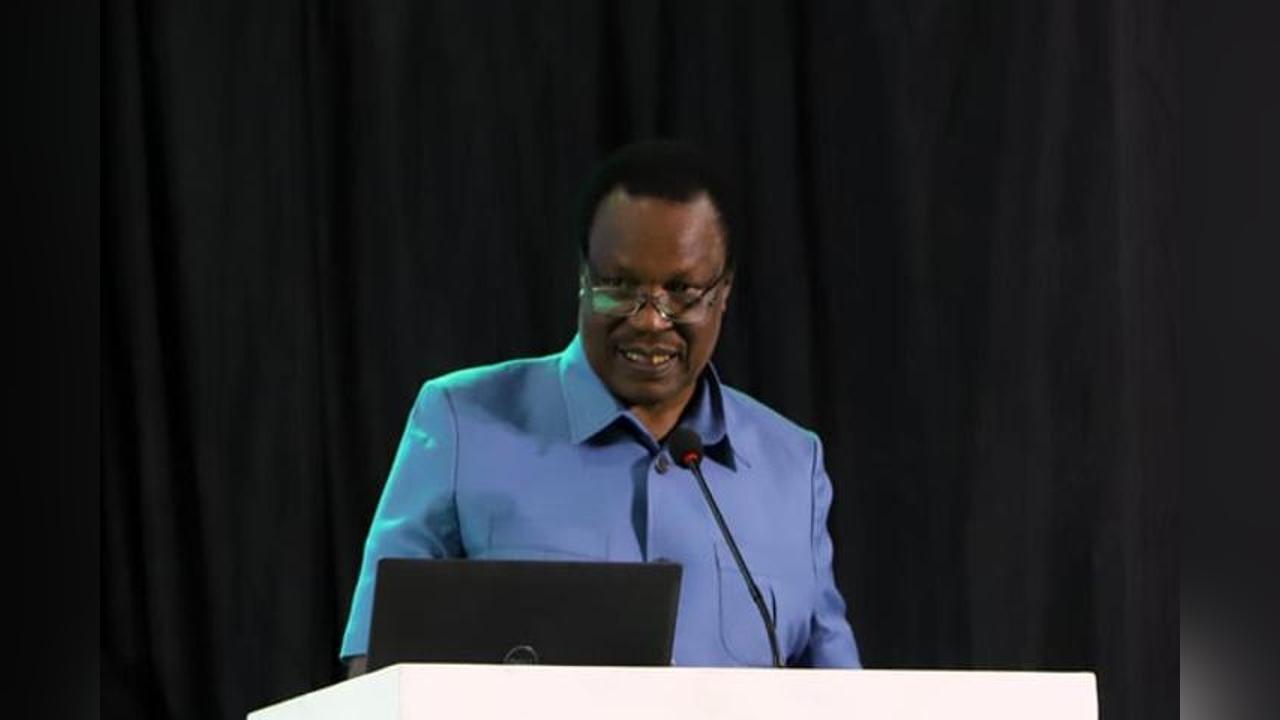
“Uganda is well endowed with vast natural resources constituting water bodies, wetlands, forests and rich biodiversity. Unfortunately, these resources are facing increasing pressure from high population growth, economic activities, and poor disposal of solid, and liquid waste from industries, human settlements, and frequent floods and droughts as a result of climate change. These challenges demand a robust system to collect, process and analyse data to support timely decision-making,” Cheptoris said.
The minister made these remarks during the launch of the water and environment information system (WEIS) yesterday at the headquarters of the Ministry of Water and Environment at Luzira in Kampala.
“The development of the water and environment information system aims at ensuring that we effectively utilize digital technology in everything the ministry does. The system comes in handy to improve the management of all the data that has been previously scattered to support decision-making but also provide online access to water and environment data, information and knowledge products within the ministry, its de-concentrated structures and the wider water and environment sector,” Cheptoris added.
While representing the World Bank Country Manager, Harriet Nattabi, the Senior Water Resources Specialist at the World Bank said that when used in an appropriate and timely fashion, the water and environment information system will enable the government to monitor water quality and quantity, track usage patterns and predict potential challenges, providing the opportunity to mitigate challenges in advance
“By using data, the ministry can proactively address issues, allocate resources efficiently and work towards achieving water security. Data is only as useful as it is up to date, made easily accessible to and consistently used by stakeholders,” Nattabi said.
Previously, the Ministry of Water and Environment had 19 separate databases under different departments that didn’t speak to each other. The ministry’s newly designed water and environment information system is a web-based system and will provide a central secured access point for the water and environment data, information and knowledge products within and outside the ministry. The system provides a platform to manage data and information through the collection, integrations, processing, storage and dissemination via a centralized interface, where otherwise, the different data sets would remain in the hands of the different departments, rather than being aggregated into a common database.
With support from the World Bank to the tune of $280m under the water management and development project, the water and environment information system will undergo a testing phase of three months where stakeholders are requested to review its functionality and propose any adjustments to make before it is fully rolled out.
For More News And Analysis About Uganda Follow Africa-Press