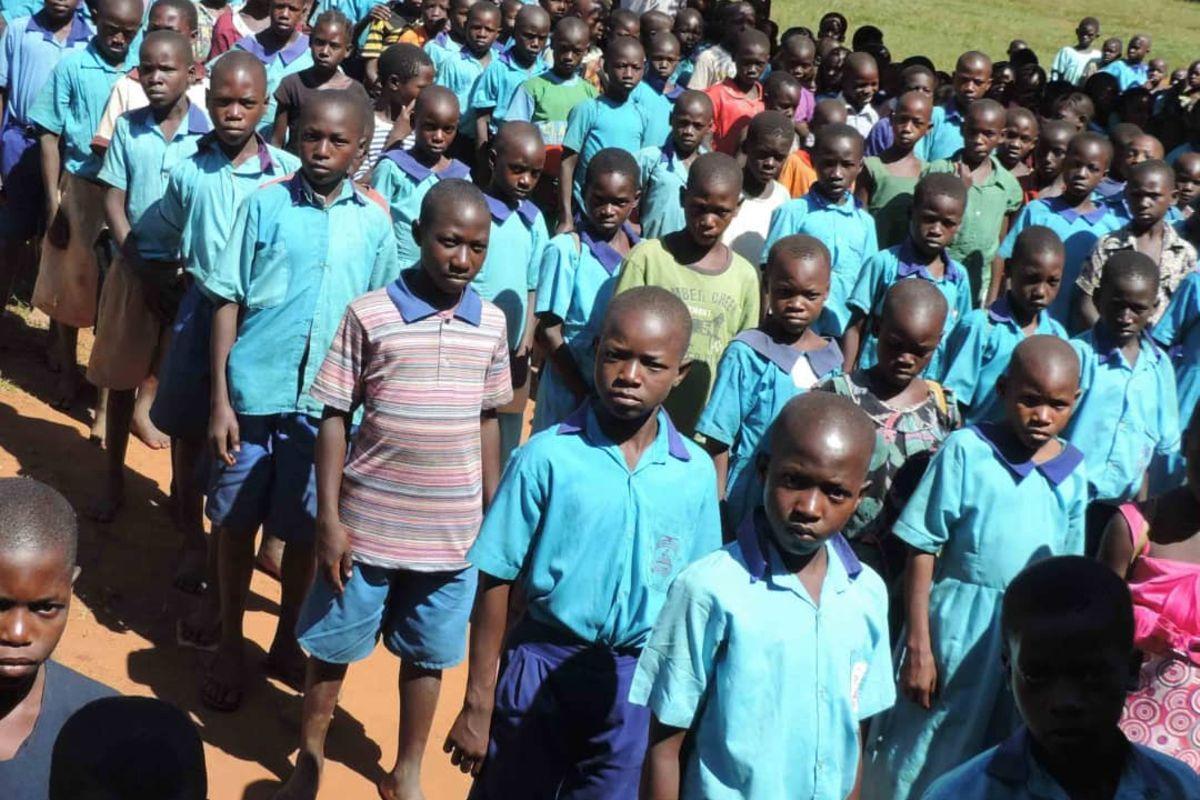
Africa-Press – Uganda. Teacher absenteeism and high rates of school dropout among learners in Uganda are a challenge that many schools still grapple with.
Records in the Ministry of Education and Sports estimate that about 1.9 million children are enrolled in Primary One every year but, less than 700,000 pupils sit for Primary Leaving Examinations (PLE) while over a million children drop out along the way.
Mr Ismail Mulindwa, the Director of Basic and Secondary Education in the Ministry of Education and Sports acknowledges that the motivation of teachers is key to addressing absenteeism and keeping learners in school until they complete their education cycle.
He revealed that Performance Based Financing (RBF) which was implemented in 50 public primary schools in Kamuli District recently, motivated teachers to perform beyond their capacity, but also attracted learners back to school.
“Our teachers who were struggling financially were bailed out because the best performers were given a token of appreciation every month. We thank Cordaid for the initiative. How I wish all the districts could benefit from this programme,” Mr Mulindwa said during a stakeholders’ end-of-project meeting held in Kampala.
Cordaid is an international and emergency relief organization that supports communities to improve justice, education, health, and economic opportunities.
Mr Mulindwa said the government is overwhelmed by so many responsibilities and that partnering with the private sector and development partners was critical to changing the face of the education sector in the country.
Mr Joseph Waibi, the Kamuli District Education Officer said Performance Based Financing motivated teachers to be punctual, consistent, and hardworking in addition to improving enrolment in Universal Primary Schools in the district.
“The more teachers were involved, the more they were motivated financially. When you are slow, you get less. So everybody worked hard,” he said.
“There was also a condition for schools. A school that enrolled children and retained them was given a bonus for that. When teaching is effective, children don’t drop out.
They drop out of schools where teaching is not effective, he added.
Mr Waibi said the support rendered by Cordaid saw enrolment of learners double in all the targeted schools.
Ms Jessica Mukyala, the head teacher of Nawansaso Primary School said by the time her school joined the project in 2020, the population had dropped from 700 to 400 pupils.
“Through this project, we were able to enroll more than 200 learners, increasing the school population to 600. Scholastic materials were given to needy learners and camps were constructed in classes to ease access to classrooms by learners with disabilities, “She said.
She also said that the monthly token given to the best performers motivated teachers to teach and to be punctual.
Ms Esther Kale, the head teacher of Bugulusi Primary School in Buluya Parish, Mbulamuti Sub-county said at the end of the program in October 2023, the school population stood at 580, up from 430 learners.
“We were following up on absentees. We could talk to children and parents. Child labour and hunger kept most of them away from school,” she said.
“Scholastic materials were given to needy learners and camps constructed to ease access to classrooms by learners with disabilities,” she added.
Ms Kale said 60 percent of the money that they used to receive from Cordaid on a termly basis could be spent on teachers’ motivation.
She said the amount depended on performance and ranged between Shs4.5M and Shs5M.
“I’m very worried because I don’t know what will happen without this kind of support. The feeding programme has helped to keep the children in school,” Ms Kale said.
While appearing before the Education Review Commission early this year, the Manager of Research, policy, and innovation at Uganda National Planning Authority (NPA) Mr Hanis Mugendawala noted that a recent study by United Nations Children’s Emergency Fund (Unicef) in Karamoja indicated that 94 percent of learners in schools with a feeding programme can stay in school and complete their studies.
Mr Joseph Musoke, Kamuli Municipal Education Officer told journalists in Kampala that whereas enrolment at the primary level is high, the completion rate especially among girls is still low.
According to district authorities, most children who are not consistent at school are engaged in sugarcane cutting, charcoal burning, and bricklaying.
The majority are from homes where they have been turned into breadwinners or where parents don’t value education.
Another reason children are forced out of school is rampant teenage pregnancy in the district.
Mr Hussein Mitala, the Chairperson of Kamuli District Head Teachers Association said poor remuneration of teachers and lack of proper follow-up of absentee learners was fuelling teacher absenteeism and poor retention of learners.
Mr Mitala revealed that most teachers were struggling to pay back loans and had opted for businesses like Bodaboda, to make ends meet.
“They come with these motorcycles to school and after break time, they disappear and return to school at 3:00 pm after making some money. Salary enhancement is key. We cannot hide away from it,” he said.
Ms Brendah Nanyonga, the Systems Strengthening Manager at Cordaid says the project aimed at boosting enrolment and retention of pupils, checking teacher absenteeism, and creating a conducive learning and teaching environment among others.
Ms Brenda says before setting targets for schools, school visits were made to detect the hurdles that administrators were grappling with.
They could then hold planning meetings with the district and municipal council leadership and agree on how the set targets for schools should be met and demand results from respective schools before funds were released.
Each school was allocated between Shs1M and Shs5M per term.
Ms Heleen Van Der Beek, Cordaid County Director says the PBF model would not be rolled out as requested by some schools due to financial issues but encouraged the government to take over.
“We appreciate the fact that this system has transformed education in Kamuli but we cannot promise now that the program will be rolled out due to limited funding,” she says.
She urges stakeholders and the public to work with the government to sustain the program and contribute to the attainment of Sustainable Development Goal 4, which advocates for equitable and quality education.
Mr Philips Lokwang, a member of the Education Committee in Parliament, says if teachers and learners are not motivated to stay in school, resources invested in schools will be wasted.
For More News And Analysis About Uganda Follow Africa-Press