Africa-Press – Uganda. Uganda’s global trade with Europe faces premiums and delays as maritime operators halt shipments due to Houthi rebel attacks on ships passing through the Red Sea.
This poses a risk to cargo sent by the country to Europe and nearby locations, such as the Middle East, causing disruptions in global trade, a situation that world economic managers have managed to bring under control after a long and difficult battle.
Now, industry players predict a spike in imported inflation in the medium term as a result of ship congestion caused by several ships halting movements through the Red Sea.
Approximately 10 percent of the world’s goods pass through the Red Sea, which stretches from the Bab el-Mandeb Strait in the south to the Suez Canal in the north.
Due to shipping lines avoiding the shorter route to avoid attacks by Iran-backed Yemeni rebels, traders using the ports in Mombasa and Dar-es-Salaam are incurring higher costs to reach their destinations.
Car imports affected
Many ships carrying automobiles for the East African market have been redirected to the longer route, which adds an extra 3,500 miles and ultimately raises transportation costs, according to local operators in international logistics.
The cost of cargo on board has increased as a result of several large shipping companies being forced to reroute ships from the Red Sea and Suez Canal to the Cape of Good Hope at the southern tip of Africa.
Shippers Council for Eastern Africa (SCEA) CEO Gilbert Lagat told that members anticipate cargo bound for the region’s ports to be impacted not least because the organisation depends on transshipment.
“The return of containers and our exports will be delayed. But for imports, the supply chain will be affected for transshipment since most of the mother ships pass through the channel [in Yemen] to other ports where medium vessels pick cargo to Mombasa and Dar-es-Salaam ports,” he said.
The Red Sea attacks primarily impact Uganda’s trade with Europe, from which the country imports cars, specialised machinery, pharmaceutical products, vegetables, coffee, tea, cocoa, oil seeds, and scientific instruments.
Bank of Uganda data shows that the country exports goods valued at Shs734.7 billion to Europe in exchange for an average of Shs671 billion in imports from the European Union each quarter.
“We anticipate premiums on this imported cargo in a period of approximately three to four months. This is because there is a congestion of ships mounting primarily for new orders and old orders even though some old orders are already on the waters,” said Mr David Kasingwire, the CEO of Daks Courier Ltd and the country manager of UPS, a global shipping and logistics company.
He did, however, note that there have been some adjustments in the price of oil, with a two-dollar increase in the price of an oil barrel already realised.
Stray punches
The Red Sea is one of the most important shipping routes for oil and liquefied natural gas, as well as consumer goods. It is bordered by the Suez Canal in the north and the Bab al-Mandab Strait, popularly known as the Gate of Tears, in the south, which is close to Yemen’s coast.
The Yemeni rebels say they are attacking ships they think are going to Israel, and have stated that they support Hamas in its conflict with the Israelis. However, some other ships not related to Israel have come under attack from drones and rockets.
The alternative route, around the Cape of Good Hope, adds about 3,500 nautical miles to the journey.
Fears of a disruption in the supply of goods passing through the Suez Canal have arisen as a result, and prices have increased to offset the higher transportation costs.
According to Ugandan economists, gold, which has recently been the country’s second-largest export and, eventually, its largest, will be unaffected because it is transported by air to the Middle East.
“There are drone attacks in the Indian Ocean, which tells us that we could see an escalation outside the Red Sea,” said Mr Fred Muhumuza, an economist.
After a drone struck an “Israel-affiliated” merchant vessel off its western coast last week, which was thought to be connected to Israel, India announced that it was sending three warships to the Arabian Sea. The attack triggered a fire but it was quickly extinguished by the crew, with no casualties.
Indian media reports noted that the ship was carrying oil from Saudi Arabia and was en route to the Mangalore Port in southern India at the time of the attack.
“We have to rely on global powers to fight the Yemeni rebels because they are being hurt more than us. The good thing is because our coffee has inelastic demand. But our imports will be greatly affected as shipping companies incur additional insurance and transportation costs,” Mr Muhumuza said.
“The company that will handle Uganda’s petroleum products imports will be making purchases from the Middle East. It uses that route which is marred by the Yemeni attacks. This means we are going to see delays in shipments, which could pose another damage,” he added.
Fightback
The US launched Operation Prosperity Guardian, an international naval operation, to protect ships after learning that shipping companies were avoiding the Red Sea route.
With this initiative underway, Maersk stated in a statement released on Sunday that “we are preparing to allow for vessels to resume transit through the Red Sea both eastbound and westbound.”
It added: ”We are currently working on plans for the first vessels to make the transit and for this to happen as soon as operationally possible.”
Even with the security measures in place, the second-largest shipping company in the world stated that “the overall risk in the area is not eliminated at this stage.”
“Maersk will not hesitate to re-evaluate the situation and once again initiate diversion plans if we deem it necessary for the safety of our seafarers,” it said.
Attack sea
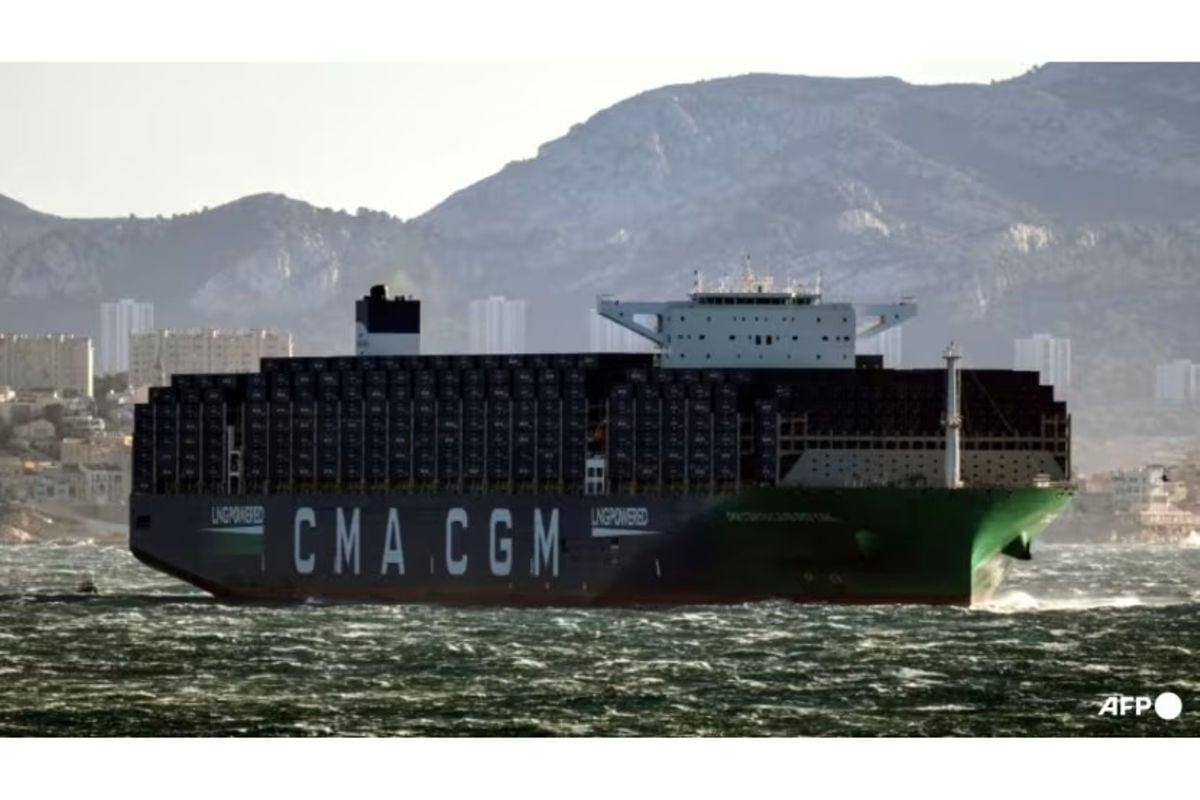
The heightened risk of attacks has also caused other major shipping companies such as Mediterranean Shipping Company (MSC), CMA CGM, and Hapag-Lloyd, to steer clear of the Red Sea route. Hapag-Lloyd stated on Tuesday that it would re-evaluate the Red Sea situation on Wednesday prior to making a decision as it looks to redirect 25 ships by the end of the year.
The nations bordering the western Indian Ocean have long struggled with maritime piracy; 10 years ago, ships operating in these waters had to obtain insurance coverage against ransom attacks by Somali pirates. The threat was neutralised in part by an EU-led multinational naval operation.
For More News And Analysis About Uganda Follow Africa-Press