Africa-Press – Uganda. Experts advised government to channel more resources to small businesses and households involved in subsistence agriculture.
Uganda’s economic growth declined from 7.5 per cent in 2019 to 3 per cent in 2020 due to the effects of the Covid-19 pandemic.
In the coming financial year, the country’s economy is, however, projected to grow by 4.5 per cent, even as experts question slow recovery efforts amid rising debt and its adverse consequences.
Tourism and hospitality sector, the country’s top foreign exchange earner, was severely hurt by global travel restrictions and other domestic containment measures.
Other sectors that were adversely affected include agriculture, manufacturing, retail and wholesale trade, and education.
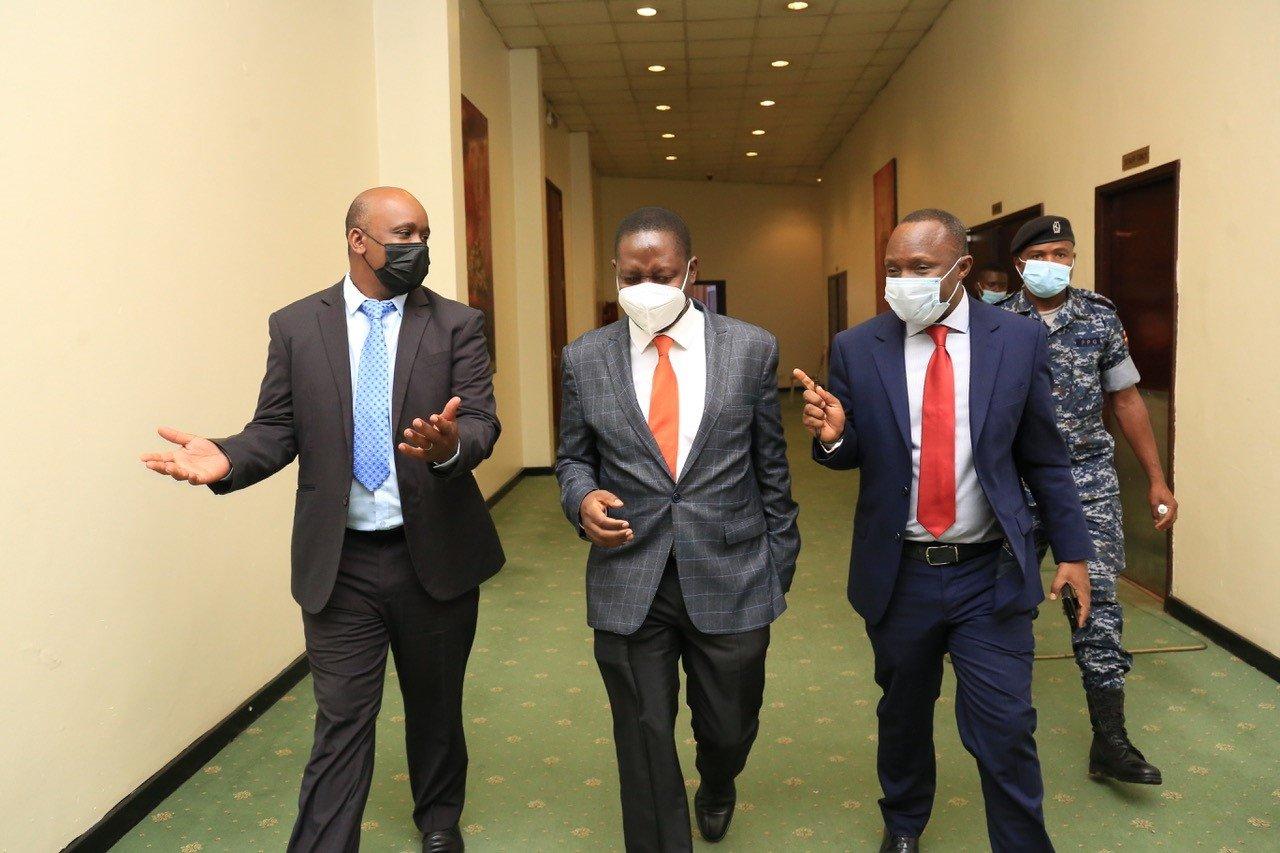
As government struggles to jump-start an economy on its knees, experts gathered at Kampala Serena Hotel yesterday to diagnose the country’s economic challenges, and prescribed practical solutions needed to speed up recovery efforts.
Under the theme: “Economic Recovery and Reigniting Economic Growth”, the high-level policy dialogue organised by Advocacy Coalition for Development and Environment (ACODE) painted a picture of how quickly — or not — the economy is recovering from pandemic job losses.
To accelerate recovery efforts in the country, a panel of independent economists advised government to channel more resources to small businesses, households involved in subsistence agriculture, and productive sectors of the economy to reignite the economy which has been battered by Covid-19.
The country exhibited very good resilience in preventing impacts of Covid-19 on health, but the economy was disproportionately hit due to Covid-19 preventive measures such as lockdown, according to the experts.
More than 600,000 Ugandans lost their jobs due to Covid-19 and the economic growth is projected to slow down further from 5.2 to 3.1 per cent in the next financial year, according to information from government and Acode.
“For the economic recovery to work, we need to realign our priorities and focus on converting the cities that have been established by the government into strong development units,” Dr Arthur Bainomugisha, the executive director of Acode, said.
“We also need to focus on financing gender and equity interventions to empower women because they are very important in the recovery,” he added.
Proposal
Dr Ramathan Ggoobi, an economist at Makerere University Business School, asked government to put in place a minimum of Shs100b for small and medium enterprises (SMEs) to borrow at low-interest rates.
“We need to leverage private sector financing by [government] investing not less than Shs100b because when we [ team of researchers] consulted banks, they agreed to add more Sh100b so that at least Shs200b are availed to small and medium-sized enterprises to get capital at less than 12 per cent interest rate per annum,” he said.
Up to 60 per cent of micro, small and medium enterprises are facing business closure, and an estimated 1.9 million people in the country fell back into poverty in the first two months of lockdown, according to an earlier analysis by United Nations Development Programme.
Dr Ggoobi said the loan should be accessed by businesses that employ five people and above in commercial institutions and not Uganda Development Bank.
“Instead we hear government talking about Uganda Development Bank, but it is not accessible to some of these SMEs. We also hear about Emyooga but it doesn’t work for SMEs. It works for micro-scale businesses in villages or politicians. We need a special fund for these SMEs that drive the economy,” he said.
The economist asked government to address the problem of “elite capture” where resources meant to lift people who are struggling economically end up going to politicians and other people who are established as it has been witnessed in Operation Wealth Creation and other programmes.
But the State Minister for Planning (Finance), Mr David Bahati, said they have already put more than Shs600 billion of the planned Shs1 trillion stimulus package that accessible by business owners in UDB. But most business owners say they didn’t access the said money.
“In the FY 2021/2022, we are expanding economic base through investing in productivity enhancement in agriculture, exploitation of oil and gas resources, industrialisation and creating economic opportunities for young people,” he said.
“We are addressing high cost of capital and electricity, and supporting the manufacturing sector and SMEs by providing affordable credit and skills development,” he said.
Commenting on the concern that Finance is channeling excess money to security, the minister said without peace and security, the planned economic recovery cannot be achieved.
The 2021/2022 national budget is at 44.7 trillion, and that most money will go to peace and security, roads and infrastructure, energy, petroleum sector, education and health, according to Finance Ministry.
Dr Fred Muhumuza, an economist and senior lecturer at Makerere University, said the current plan by government is inefficient in kick starting the economy.
He asked government to put money in areas that will solve immediate problems and give immediate results by providing affordable credit to restart economic activity at household levels and SMEs.
“We have been talking about building roads and infrastructure in the last 15 years and up to today, we are still talking about them. The private sector is saying that at 22 per cent interest rate per annum and the economy growing in the negatives, they can’t risk to borrow and lose my assets,” he said.
Dr Muhumuza said if the households can’t create demand for products being produced in the country, no one is going to borrow.
By Tonny Abet, Ismail Ladu & Martin Luther Oketch