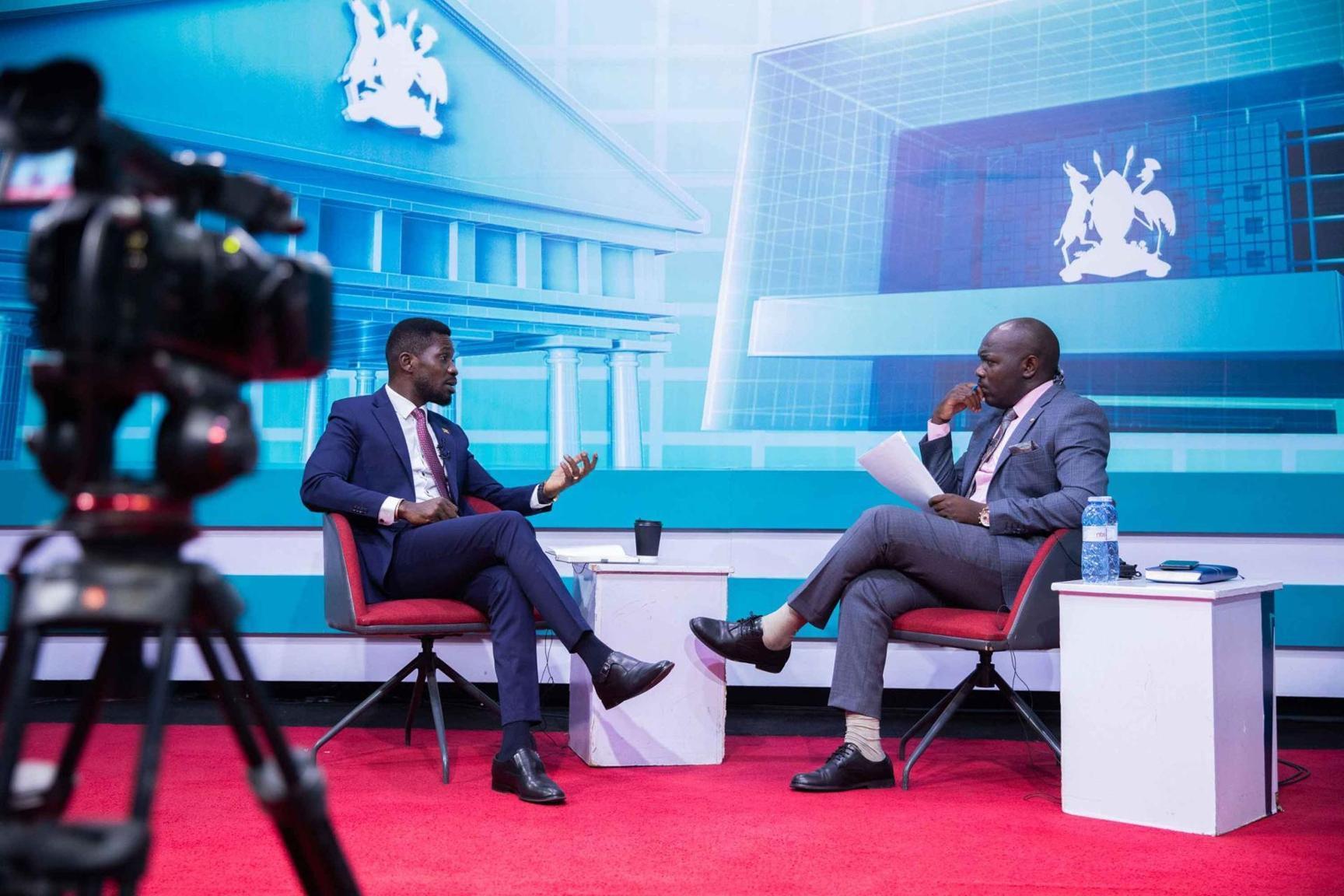
Africa-Press – Uganda. The National Association of Broadcasters (NAB) has formally petitioned the Uganda Communications Commission (UCC) to withdraw its recent directive barring broadcasters from airing content that disputes declared election results without prior court adjudication.
In a letter dated February 12, 2026, addressed to the UCC Executive Director, NAB described the directive — Ref: UCC/LA/35 issued on February 10 — as unconstitutional and dangerous to democratic discourse.
“We affirm our shared commitment to lawful, ethical and professionally responsible broadcasting. We equally affirm our respect for the Commission’s statutory mandate,” NAB wrote.
“However, we must respectfully and firmly state that this directive, as drafted, sets a dangerous and unconstitutional precedent. It undermines the very democratic principles our regulatory framework exists to protect.”
The dispute follows a public notice issued by UCC Executive Director Nyombi Thembo warning broadcasters against hosting unsuccessful candidates who challenge officially declared results on radio and television.
Nyombi said the Electoral Commission is “the sole constitutional authority responsible for declaring election results in Uganda” and cautioned that “broadcasting unverified results, parallel tallies, or speculative allegations is unlawful.”
UCC directed all broadcasters to refrain from airing content disputing declared results without verification and warned of “decisive enforcement action” against violators.
But NAB argues that the directive imposes unlawful prior restraint in violation of Article 29(1)(a) of the Constitution, which guarantees freedom of speech and expression.
“By prohibiting broadcast of any dispute regarding declared election results unless such dispute has first been adjudicated by a court of law, the Commission imposes a general, preemptive and content-based ban on an entire category of political speech,” the association stated.
“Such prior restraint is manifestly unconstitutional.”
NAB further contends that the directive conflates legal adjudication with democratic discourse. While agreeing that media houses are not courts of law, the association said reporting on grievances raised by political actors is distinct from litigating election petitions.
“The media is not an alternative judicial forum. It is the principal arena for public discourse,” NAB wrote.
“Citizens are entitled to hear from those who seek to lead them, including when those leaders challenge electoral outcomes. That entitlement does not dissolve upon the declaration of results.”
The broadcasters’ body also rejected what it described as the presumption that dissatisfied candidates must exclusively channel grievances through court petitions.
“A candidate may simultaneously pursue legal redress and exercise their right to address the electorate through the media. These are not mutually exclusive avenues,” NAB stated.
It criticized the directive for creating what it called an ambiguous enforcement regime by failing to define key terms such as “disputing,” “unverified,” and “sensational.”
“This ambiguity is not accidental. It is the mechanism by which broad prohibitions are rendered maximal,” the letter reads.
“Broadcasters are left with no choice but to self-censor… for fear that a regulator’s ex post characterization may differ from an editor’s ex ante judgment.”
NAB further argued that the directive contradicts the Commission’s own Minimum Broadcasting Standards, which already require verification, balance, and the right of reply.
“The directive does not supplement these standards. It suspends them. It replaces professional editorial discretion with a blanket prohibition,” the association said.
Beyond legal concerns, NAB warned that suppressing discussion of election grievances could harm Uganda’s democratic standing.
“The directive communicates, to Uganda and to the international community, that grievance against official outcomes must be suppressed until a court permits its expression. This is not a hallmark of democratic maturity,” the letter states.
The association is now demanding three key actions: the immediate withdrawal of the directive; an urgent consultative meeting between UCC and NAB to develop constitutionally compliant guidelines; and a commitment that no enforcement action will be taken against broadcasters complying with existing Minimum Broadcasting Standards during the consultation period.
“We do not seek confrontation with the regulator. We seek coherence between regulatory power and constitutional principle. We seek clarity, not ambiguity. We seek partnership, not imposition,” NAB wrote.
UCC had earlier defended its position, arguing that strict editorial oversight is necessary to prevent public panic, confusion, and loss of trust in democratic institutions.
As tensions mount between the regulator and broadcasters, the outcome of the proposed consultations could shape how election-related disputes are covered in Uganda’s media landscape going forward.
Tags: Uganda Communications Commission, National Association of Broadcasters, Election Disputes, Media Freedom, Nyombi Thembo, Article 29, Broadcasting Standards, Electoral Commission