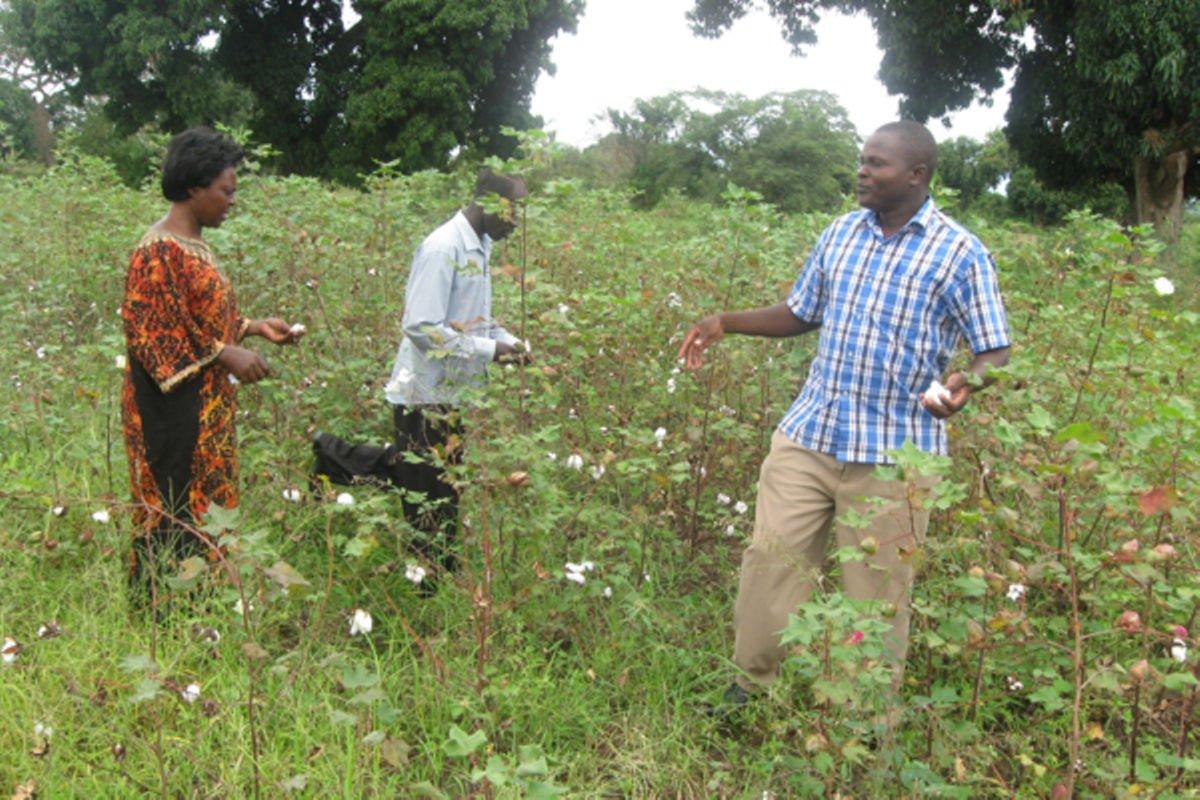
Africa-Press – Uganda. For decades, Bukedi Sub-region was best known for growing cotton but the trend has since changed as farmers opt to grow other crops, citing poor prices.
The farmers and local leaders attribute poor prices to lack of financially stable cooperatives unlike in the early 1970s and 80s, when North Bukedi Cooperative Union and others were the lifeline of cotton farmers.
Farmers say they are being offered Shs1,500 per kilogramme by the middlemen.
The North Bukedi Cooperative Union (NBCU) chairperson, Mr Farouk Gundi, in an interview on Monday said cooperatives used to buy tonnes of cotton from farmers.
“The farmers were paid for their cotton there and then by the cooperatives. There were also other incentives like free hoes, fertilisers and insecticides given to the farmers to cultivate cotton on a large scale,” Mr Gundi said.
Mr Gundi said primary societies would get loans from the cooperatives to support farmers.
“But between 1995 and 2003, the production of cotton was slightly high but from 2003 to 2017, it has declined drastically, especially in Bukedi, which was ideally the region with the highest cotton production,” Mr Gundi said.
Mr Francis Mwanika, the technical advisor of farmers under their umbrella, Namusita growers cooperative Association, said government should rejuvenate cooperative unions.
“The best way government can fight poverty at the grassroots is through reviving cooperatives because agriculture forms the backbone of this country,” he said.
Mr Mwanika said government is paying little attention to the sector that is why it is dying out slowly.
“The price of cotton has been declining each passing season and this has demoralised farmers greatly,” he said.
Mr Mwanika said farmers are planning to form Bugwere Cooperative Union to sell their produce at reasonable prices.
Mr Sam Mulomi, a former Budaka District chairperson, blamed low production on fluctuating prices of cotton.
“This has rendered the cultivation of cotton a waste of time and resources. This also explains why unions have completely collapsed due to lack of raw materials,” he said.
Ms Suzan Logose, the chairperson of Namusita grower’s cooperative association, said farmers need to be united to ensure development of agriculture and improved households.
“Through cooperatives, members can meet and share knowledge and ideas on how to improve socially and economically,” she said.
Mr Vincent Kalama, a farmer, said: “We are being cheated by middlemen yet its farmers who do the donkey’s work of preparing the gardens, planting and harvesting.”
He added that the prices of cotton should be increased to at least Shs4,000 a kilogramme.
A mini-survey conducted by Daily Monitor indicates that farmers in the sub-region have now turned to rice growing.
“We are distressed because we are making losses since we spend a lot of money planting cotton and instead earn little profits,” Ms Oliver Naula said.
Ms Naula complained about poor seeds, which has further discouraged the growing of cotton.
Mr Duncan Kabera, 84, who used to work as production manager in North Bukedi Cooperative Union, said before independence, cotton was named “White Gold” since it increased government revenue and improved people’s livelihood.
“This crop remained the main cash crop of Uganda at that time because of the huge income it generated. Uganda was the leading exporter of this crop in East Africa,” he said.
Mr Joseph Mukanja,74, a resident of Bunyolo A, Jami –Kamonkoli Sub-county, blamed the liberalisation of the economy, saying it caused low production of cotton.
“When government liberalised the economy, things started going astray and the situation has been worsening up-to-date,” he said.
Mr Arthur Mboizi, the MP for Budaka County, said the cotton industry was messed up the administrators of the unions.
“The administrators ate co-operators’ money. They were not paying the farmers promptly,” Mr Mboizi said.
The District Agricultural officer, Mr Abner Botiri, acknowledged that the declining cotton production is due to fluctuating cotton prices and poor soils.
Cotton production
The North Bukedi Cooperative Union chairperson, Mr Farouk Gundi, says statistics indicate that between 1980 and 1995, the total production of cotton in Bukedi Sub-region stood at 1,000 bales and in 1995, the production went up to 1,500 bales.
In 1996, cotton production at 18,500 bales but from 1996 to 2001, production was 15,000 bales and in 2005 to 2013, cotton production declined to 1,800 and later to 1,000 bales.
For More News And Analysis About Uganda Follow Africa-Press