By Faridah N Kulumba
Africa-Press – Uganda. Last week the Central Bank of Uganda management issued a statement warning the government of Uganda against looming debt distress as the public debt hits the 80 trillion mark and the 50 percent threshold of GDP.
The revelation
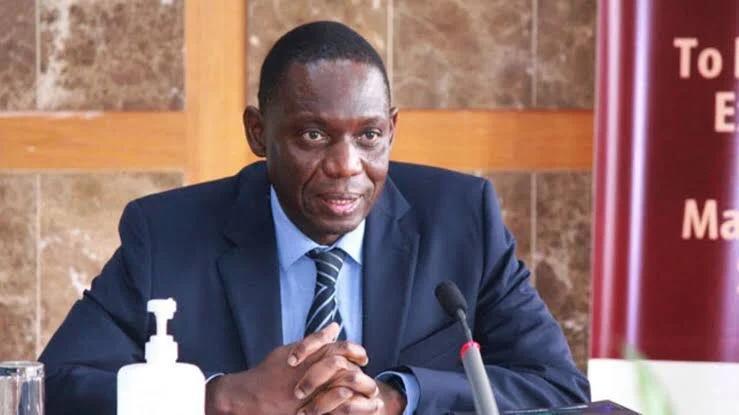
Ugandan economist Machael Antingi-Ego the Deputy Governor of Uganda while appearing before the Parliament’s Finance Committee to explain the current high financial inflation revealed that servicing the foreign component of the debt now at 59 percent of the debt (47 trillion) is already dangerously eroding the foreign reserve, which has dropped from USD4.54 billion at the end of April 2022 to USD3.65 billion at the end of October.
The warning
Mr. Antingi-Ego warned Uganda that borrowing more money will cripple the country’s capability to continue serving the foreign debt. He also cautioned the legislators against approving loans that do not spur the growth of the economy.
The governor further warns that the debt service/export ratio is also projected to increase beyond the 20 percent threshold between the financial year 2021-2022 to the financial year 2025-26.
Be to do with
Central Bank’s revelation raises concerns about whether Uganda is able to meet its debt repayment obligations.
What is required
According to an economist and Governor Bank of Uganda Mr. Antingi-Ego in FY 2022-23, Ugandan government imports plus foreign debt servicing require about USD1.8 billion, owing partly to the maturity of non-concessional loans.
CB’s advise
The Central Bank’s advice to the government of Uganda is to suspend non-concessional external borrowing that has servicing obligations that would commence in less than five years.
Dissatisfaction
One legislator Muwanga Kivumbi questioned the figures given by the Deputy Governor Bank of Uganda arguing that the figure doesn’t contain the domestic arrears government owes to its suppliers and the Shs4 trillion.
He also questioned the sustainability of the current public debt, claiming that the government is not sure of the source of funds to repay back the loan.
State of Uganda
According to Human Development Index (HDI) data for 2019, by the United Nations, Uganda’s value is 0.544, ranking at 158 out of 189. which puts the country in the low development category. In Uganda, per capita income is 800 USD, which is extremely low by global standards. The cost of living is well below the global average, indicating massive socio-economic problems.
Some factors that are attributed to the debt increase
Miss-allocation of resources
Uganda has a low absorption capacity of allocations and slow implementation of government projects and the duplication of roles by multiple- government agencies which leads to the over-allocation of resources.
Corruption
Corruption is in every government sector in Uganda. The Transparency International report on corruption challenges in Uganda showed that the country increased to 142 in 2020 from 137 in 2019. This rank is based on how corrupt Uganda’s public sector is perceived to be. There are many factors that contribute to this challenge such as economic hardship, lack of assertiveness, weak and ineffective judicial system, lack of visible corruptible role models, nepotism, and many more. Global integrity’s 2006 report on the country estimates that more than half the government’s annual budget is lost to corruption each year, amounting to 950 USD million. Public procurement is one of the sectors most affected by corruption in Uganda. According to the 2007 African Peer Review Mechanism report, Uganda loses 258.6 USD million annually through corruption and procurement malfeasances.
The Covid-19 pandemic has driven 4 percent of Ugandans back into poverty, posing the toughest challenge ever for the country’s budgeting process. The year 2021 ended with 25 percent of Ugandans that is a quarter of the population going back to living below the poverty line an increase to 21 percent at the beginning of 2020, according to the 2021/2022 national budget which was launched by the government of Uganda last year. Before Covid-19 economic growth for 2020, was forecast at 6.7 percent, but has since been revised downward to 3.1 percent.
Debt challenges
Uganda can expect to experience further increase in its fiscal deficit and public debt that will undermine its economic potential. This challenge is attributed to fiscal complacency, profligacy, and incomprehensive debt sustainability diagnostics that mainly rely on ambiguous concepts such as the net present value of debt.
Pressure from politicians, overly optimistic forecasts, and pandemic-induced uncertainties also play a prominent role in explaining these dismal fiscal outcomes. This makes it hard to reconcile the alleged safety of Uganda’s public debt with a sharp rise in the debt stock.
Both in the short and long-run periods, an increase in Uganda’s public debt will lead to a decrease in the country’s economic growth. To overcome this challenge the government of Uganda needs to undertake measures to improve the revenues collected to reduce debts incurred and adoption of more prudent macroeconomic policies like the attraction of foreign direct investment to build a private-led economy.
For More News And Analysis About Uganda Follow Africa-Press