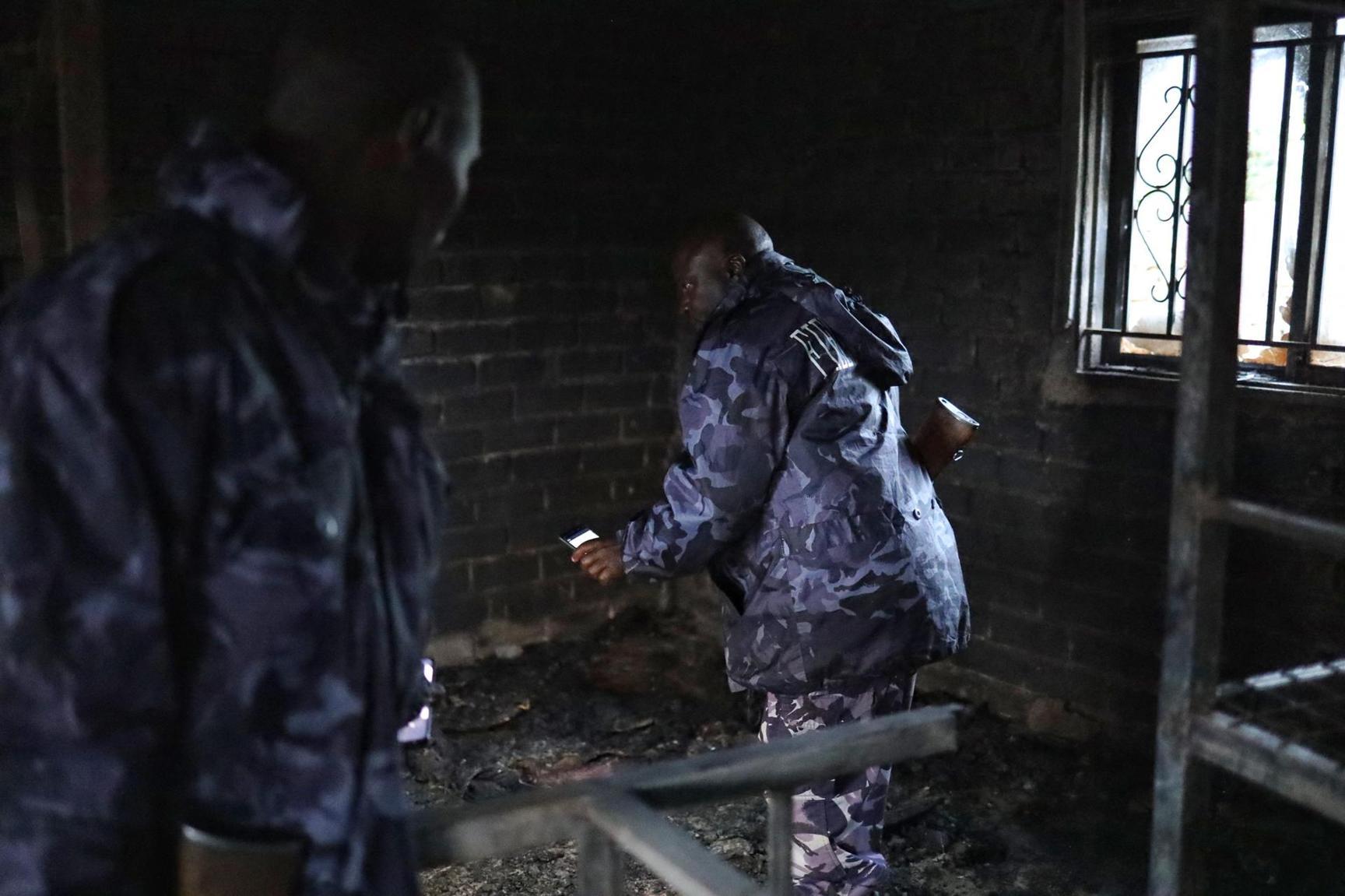
Africa-Press – Uganda. A section of relatives of students killed in the gory night raid on Lhubiriha Secondary School in Kasese District that left 37 students dead 10 days ago only received DNA test results on June 26.
The tests were done after some of the students were burnt beyond recognition while the Allied Democratic Forces rebels allegedly abducted others.
DNA (deoxyribonucleic acid) is the chemical or nucleic acid in the cells of humans, animals and plants that carries their genetic information.
First, we are glad that some parents were able to finally collect the remains of their loved ones for a decent burial.
The delay, however, is where we put emphasis.
Yesterday, this newspaper quoted the police spokesperson Fred Enanga saying the results had been delayed because the government had to carry out tests on all the bodies to ascertain the actual relatives.
“The process for DNA takes a long, it involves getting a single sample and you run it all across many samples of parents and we are trying our best and we expect the results to come out this weekend, the parents need to be patient,” he said.
The explanation is granted. And we thank the authorities for the efforts put into the process.
However, for an anxious parent who does not know whether their child died in the horrendous raid or was taken into captivity, the suspense is heart wrecking.
Now that 11 of the 17 results matched those of relatives, we request that further thorough investigations are done on the rest to rule out elements of infiltration in the school.
The DNA results delay – much as it is for accuracy – also reflects a lot on the manner in which investigations are done generally in other cases.
Investigation into a litany of murder cases has never been concluded years after the crimes were committed, yet the relatives and loved ones still hope for justice.
The delay often leads to closure of cases or an open-ended lull without definite answers.
States world over delight in quick turn-around of service provision and on instances such as investigations into murder and others.
We take this opportunity to request that authorities put more attention to forensic investigations if they seek to deal with crime and enjoy the public trust.
This is because an investigation aims to assess, among other things, if the alleged facts can be substantiated, check what supporting documentation or other materials can be found, preserve and secure basic evidence, and determine whether, or not, an investigation is justified.
For More News And Analysis About Uganda Follow Africa-Press