Africa-Press – Uganda. Land administration in Gomba and Mityana districts continues to face deep-rooted challenges ranging from corruption and inefficiency to weak institutional capacity and limited access to information. These gaps have fueled land tenure insecurity, social injustice and recurring conflicts most severely affecting small-scale farmers, women and other vulnerable groups.
In response, the Eastern and Southern Africa Small Scale Farmers’ Forum (ESAFF) has, over the past three months, been engaging local governments, community leaders and farming communities in both districts to promote transparent, accountable and inclusive land governance.
initiative focused on capacity building, community sensitisation and policy analysis, targeting long-standing weaknesses in land service delivery.
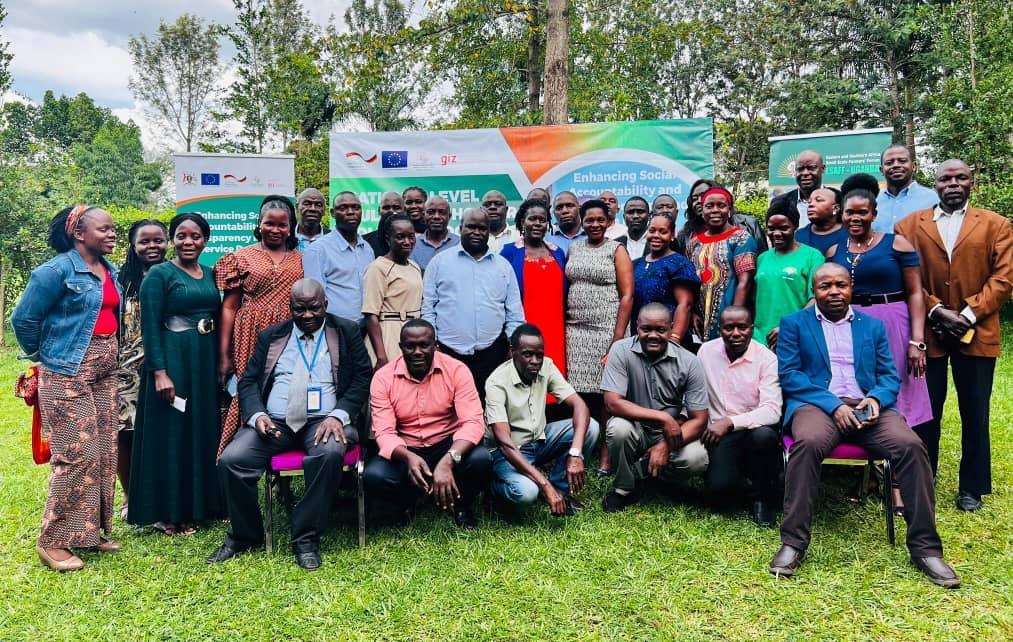
Following an in-depth assessment into why many farmers struggle to secure land ownership rights, ESAFF today officially presented its findings to key stakeholders. The findings were shared during a multi-stakeholder engagement aimed at fostering collaboration between government institutions and farming communities to address land governance challenges.
ESAFF Uganda National Chairperson Hakim Baliraine said the research was intended to help stakeholders understand the practical steps required to protect farmers’ land rights.“These findings are meant to guide institutions on how best they can work with farmers to ensure access to secure land ownership and fair land services,” Baliraine noted.
Discussions during the engagements revealed widespread concern over informal and largely unregulated land transactions at the grassroots level. Participants cited weak oversight and abuse of authority as major contributors to corruption.
Kyobutungi Winnie, the Gomba District Natural Resources Officer, raised alarm over the role of some local leaders. “Some L.C.1 chairpersons are deciding how much to earn from land transactions, with charges ranging between 10 and 30 percent,” she said.“The big question is whether government is aware of these practices or whether this is outright corruption.”
Participants also highlighted limited access to clear and accurate information on land processes an issue that continues to disadvantage small-scale farmers and expose them to exploitation.
“Most small-scale farmers do not understand land procedures or the role of Area Land Committees,” said Irene Nakijoba, a farmer from Mukono District.
“Many people do not know how to process land titles, which shows the urgent need for community sensitisation.”
Stakeholders noted that this lack of information has enabled brokers and middlemen to flourish, often misleading land users and charging excessive fees.Experts attending the engagements pointed to deeper institutional challenges undermining effective land governance.
“Access to accurate land information remains limited in many communities,” explained surveyor Judith Atukunda.“Over-reliance on brokers, restricted access to officials and weak institutional capacity continue to deny citizens timely and fair land services.”
She called for stronger coordination with traditional authorities, improved grievance-handling mechanisms, whistleblower protection and expanded land rights and anti-corruption awareness campaigns.
Gender inclusion emerged as a central theme throughout the discussions, with participants emphasising that meaningful land reform cannot be achieved without women’s active involvement.
“Transparency in land service delivery is impossible without women’s participation,” said Akumu Christine Okot, Principal Gender Officer.“District local governments must integrate land rights awareness especially for women into their annual work plans and budgets.”
She further stressed the need for continuous capacity building for institutions involved in land governance, including mediation and arbitration committees.
Officials from the Ministry of Lands underscored the need for practical measures to curb corruption and improve access to information.
“All land-related information should be translated into local languages so communities fully understand land procedures, requirements and their rights,” said Tweteise Angello from the Ministry of Lands.
“District Land Boards should also publicly display standard land processing fees to prevent bribery and informal payments.”
As part of the engagement, Hakim Baliraine formally handed over a policy brief titled “Strengthening Transparency and Accountability in Land Service Delivery in Mityana and Gomba Districts: Addressing Corruption Risks, Institutional Gaps, and Inequities in Land Governance” to representatives from the Ministry of Gender, Labour and Social Development and the Ministry of Lands, Housing and Urban Development.
The brief outlines key findings from community engagements and presents practical recommendations aimed at improving integrity, efficiency and inclusiveness in land governance.
Stakeholders believe that if implemented, the proposed reforms will strengthen land tenure security, reduce land-related conflicts, boost agricultural productivity and safeguard the rights of women and marginalised groups—contributing directly to Uganda’s broader goals of good governance, inclusive development and social justice.
For More News And Analysis About Uganda Follow Africa-Press