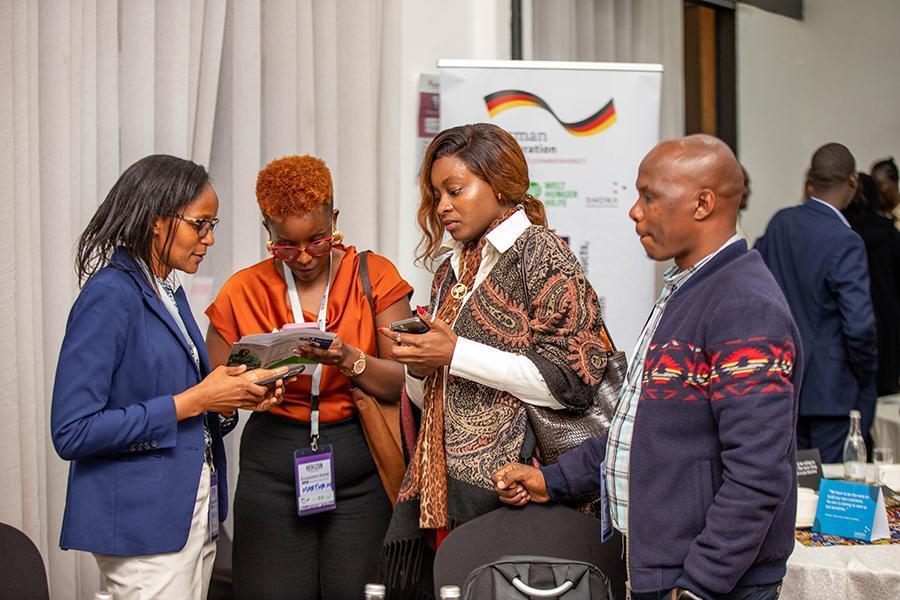
Africa-Press – Uganda. Women-driven enterprises from Kenya and Uganda gathered at the Swiss Belinn Hotel in Nairobi on February 24, 2026 for a regional convening organized by SHONA Group in partnership with Welthungerhilfe (WHH) and supported by the Federal Ministry for Economic Cooperation and Development (BMZ) Germany.
The event, held under the theme “Building Bridges for Business & Impact,” brought together entrepreneurs, gender-lens investors, ecosystem players, and business development leaders to strengthen collaboration and unlock new pathways for growth across East Africa.
The gathering marked a critical milestone in the Herizon project, a strategic initiative aimed at creating economic opportunities for women while increasing access to products and services that improve the quality of life for women in Kenya and Uganda.
Herizon intentionally connects founders to investors and ecosystem actors across the two countries, reinforcing regional value chains and supporting enterprises capable of sustainable scaling.
During the convening, 41 enterprises operating across agriculture, climate-smart food production, nutrition, climate resilience, water and sanitation, digitalisation, skills development, and economic empowerment showcased their businesses.
Participants engaged in discussions focused on three key levers for growth: driving sales, including women in value chains, and increasing access to investment within East Africa’s business landscape.
Gloria Achiro, CEO of Jather Farmers in Uganda, emphasized the value of cross-border engagement.
“Platforms like Herizon shift the conversation from survival to scale. When you step into a room where investors, partners, and fellow entrepreneurs are actively looking for collaboration, you begin to think beyond local limitations. Cross-border learning is powerful because it expands both your market and your mindset,” she said.
Jovia Nampiina, WHH Sector Advisor for Economic Empowerment and Youth Skills, highlighted the strategic importance of supporting women-led businesses in critical sectors.
“Through the Herizon Program, we focus on enterprises driving innovation in climate-smart food production, nutrition, and WASH. Strengthening these businesses generates economic returns, builds community resilience against climate change, and ensures sustainable, inclusive growth for the region,” she said.
SHONA Group CEO Joachim Ewechu stressed the importance of bridging gaps between capital, markets, and regional networks.
“When women-led enterprises are connected to affordable capital and strategic networks, the result is not incremental growth; it is structural transformation. Herizon underscores a clear proposition: sustainable economic development in East Africa will not be achieved through isolated interventions but through intentional ecosystem building, disciplined capital deployment, and cross-border collaboration,” he said.
The Herizon project continues SHONA Group’s commitment to building “Good Businesses” — enterprises that create value for owners, employees, communities, and the environment — and advancing inclusive, resilient, and scalable economic growth across East Africa.