By Faridah N Kulumba
Africa-Press – Uganda. The Governments of Uganda, South Sudan, and the Central African Republic (CAR) recently signed a landmark agreement to enhance regional trade and connectivity through a massive infrastructure development project and new aviation ties.
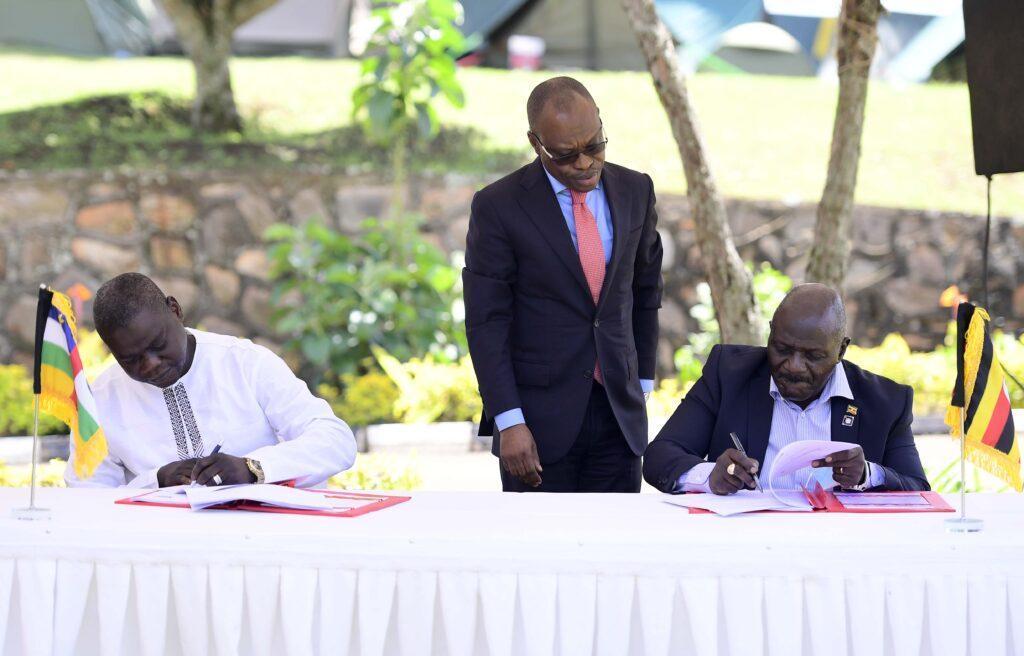
The signing of this deal followed a three-day Tripartite Ministerial Meeting in Kampala that was held from 12th to 14th May 2025. The meeting brought together ministers and technical teams from the three countries, focusing on cross-border road infrastructure development and trade promotion.
The inked pact
According to Uganda’s Minister of Works and Transport, General. Edward Katumba Wamala, who presided over the meeting, the agreement was a bold step towards opening up the region to trade, security cooperation, and economic integration.
“This project speaks directly to our shared vision of a better-connected and economically stronger region. With improved roads and air services, we’re setting the stage for long-term growth,” Gen. Wamala said.
In October 2024, the president of Uganda Yoweri Kaguta Museveni revealed plans to partner with neighbouring countries the Democratic Republic of Congo (DRC), and South Sudan, to construct roads that will connect to the CAR. He said that plans are underway to build a mega highway that will link the landlocked countries.
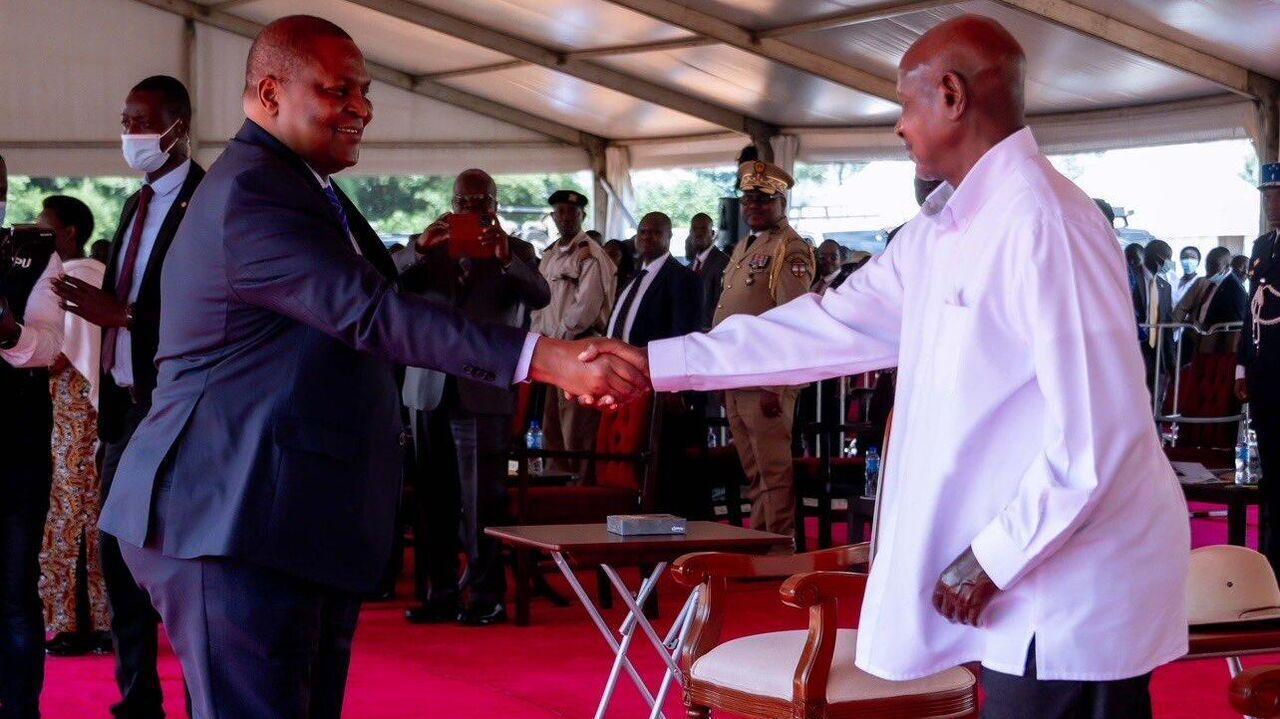
The announcement followed a three-day official visit of the CAR President Faustin-Archange Touadéra to Uganda where he participated in the 62nd Independence Day Anniversary celebrations of Uganda. that took place on 9th October at the invitation of President Museveni.
The project work plan
The road infrastructure plan, set to be rolled out in phases, will see a network connecting Uganda through Kampala-Karuma-Arua-Oraba to Kaya and Yei in South Sudan, and eventually to the CAR via routes such as Juba-Mundri-Maridi-Yambio-Yubu-Ezo-Bambouti-Obo-Sibuti. Another option being considered includes the Kampala-Karuma-Nimule-Juba corridor.
The three countries’ ministers agreed to jointly mobilize funding from development partners, branding the venture a “regional trade corridor” meant to unlock the region’s vast economic potential.
Implementation
To oversee implementation, a Tripartite Technical Committee (TTC) was formed, comprising experts from the participating countries’ ministries of Works and Transport, Defense, Foreign Affairs, Internal Affairs, and legal departments. This will conduct joint route inspections, finalize feasibility studies, and guide the technical rollout. South Sudan’s Minister for Roads and Bridges, Hon. Simon Mijok Mijak, welcomed the deal, noting that improving transport corridors would also serve as a peace dividend by strengthening cross-border cooperation and stability.
The importance of the road project link
Last year President Museveni said the Central African Republic will become a good trade partner for East Africa. He believes that the road network will facilitate multilateral trade and influence economic growth in the African continental bloc. Also in October 2020, during celebrations marking Uganda’s 58th Independence Day anniversary, President Museveni revealed that Uganda, DR Congo, and South Sudan reached an agreement to construct and develop a number of roads to improve trade.
He elaborated that the three East African countries have poor infrastructure connecting to their trade partners in the region. According to Museveni Uganda earns about 500 million U.S. dollars annually from the DR Congo, noting his government will soon start selling electricity to the vast central African country.
Aviation cooperation
During the meeting between Uganda and CAR ministers, they signed a Bilateral Air Service Agreement (BASA) and a Memorandum of Understanding (MoU) aimed at enhancing aviation ties. The agreement paves the way for Uganda Airlines to commence direct flights to CAR, easing travel and cutting transit time for passengers and cargo. According to CAR’s Minister for Transport and Civil Aviation, Hon. Herbert Gontran Djono-Ahaba, the BASA agreement is a breakthrough for regional mobility.
“This is a major shift in how we think about connectivity in our region. Direct flights and better roads will change how people and goods move across borders,” he said. Also, CAR’s Minister for Equipment and Public Works, Hon. Eric Mathieu Rokosse-Kamot, said the collaboration would help tackle long-standing transportation bottlenecks that have hindered trade and movement.
Uganda’s leader has always encouraged Uganda Airlines to consider establishing a direct flight to the CAR capital Bangui. “As we are working on that (road transport), I invite the Uganda Airlines and our air cargo companies to look at the possibility of flying to Bangui a few times so that we can link up with our brothers and sisters,” said Museveni.
Why East African countries want to connect with CAR
Situated on a fertile plateau and abundant in water resources, the Central African Republic has a wealth of mineral resources, including diamonds, which account for nearly half of the country’s total export earnings. Gold, uranium, iron ore, copper, and manganese are mined in smaller quantities.
The country’s waterfalls are sources of hydroelectric power, and dams located on the Mbali Lim River northwest of Bangui produce about four-fifths of the country’s electricity.Despite the abundance of natural wealth, these countries grapple with poor road infrastructure and conflicts that affect regional trade, interconnectivity and movement of persons.
For More News And Analysis About Uganda Follow Africa-Press