Africa-Press – Uganda. The Uganda Free Zones Authority (UFZA) has said Uganda must be deliberate about creating large scale industrial zones as way of reducing the country’s trade deficit, especially with some of the member states within East Africa.
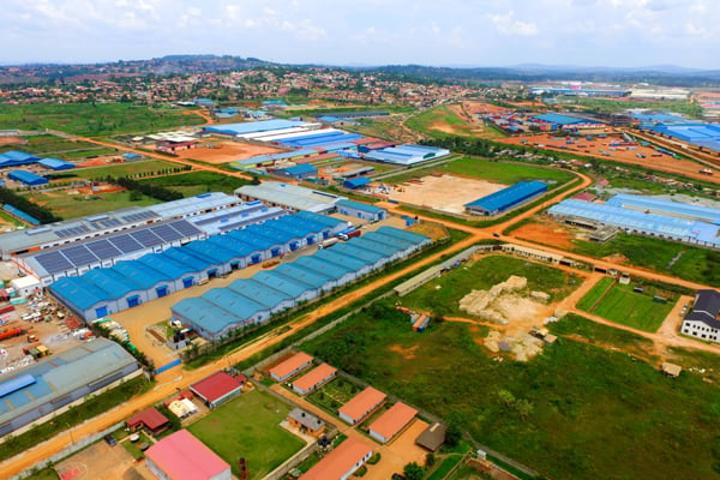
Speaking during the inspection of the free trade zone in Entebbe, Wakiso District at the weekend, Mr Hez Kimoomi Alinda, the Uganda Free Zones Authority executive director, said Uganda can only reduce its trade deficit if it pursues the East African strategy of creating free zones as a special export promotion programme.
Free zones are designated areas that provide a transnational business environment outside of a country’s customs territory in an effort to encourage domestic manufacturing and value-added investment.
Mr Alinda said Uganda needs to operate in a global environment, which is the new model of global capitalism, in order to draw foreign capital.
“We have to be deliberate about creating large-scale industrial zones to support the private sector because they provide that international space through regulation,” he said, noting that for this to happen, industrialisation-promoting utilities such as electricity, whose portion should be increased for use in industrial zones, must be sustainable.
Uganda’s share of exports in the global market is relatively small.
The World Bank estimates that in 2020, Uganda’s total exports stood at $6.8b, or under 0.1 percent of global exports.
Uganda primarily exports to neighbouring countries such as Kenya, Tanzania, and South Sudan, as well as parts of Europe, US and China.
Uganda’s main export commodities include coffee, gold, tea, and fish.
Therefore, Mr Alinda said there is need to create free zones to compete favourably.
Uganda currently operates two different kinds of free zones, including export processing zones and free port models.
Free zones are exempt from customs that apply to exportation of output.
In December last year, EAC agreed to implement Uganda’s EAC Special Economic Zones Policy, which increases the number of models the country implements from two to more than 10.
Ms Rebecca Nalumu, the UFZA director of business development and investor support, said the free zone in Entebbe, which is still under construction, will target horticulture, beef and dairy and fish, because of the cold storage facilities planned to be embedded in it.
“If any company is capable of providing the service of cold storage, it should approach us,” she said.
Infrastructure challenges
Trade Minister Francis Mwebesa, said lack of export infrastructure facilities such as the Entebbe International Airport Free Zone, is among the challenges facing exportation of competitive goods to regional, continental and international markets.
“This has subsequently affected our trade balance and balance of payments current accounts,” he said, noting that the implementation of the Entebbe International Airport Free Zone, and the anticipated high value exports are expected to support growth of exports in the medium to long term.
During the inspection, Mr Alinda noted that about 80 percent of the funding has already been secured, adding that Uganda already has private free zones of 31 developers and two operators.
According to feasibility studies, the Entebbe free zone will employ about 200 people directly and 600 indirectly once construction is completed.
“We haven’t gazetted this as a free zone yet, but the process is in high gear. Once this place is gazetted in terms of customs management, it will be deemed to be outside of Uganda. That is how free zones operate,” Mr Alinda said.
For More News And Analysis About Uganda Follow Africa-Press