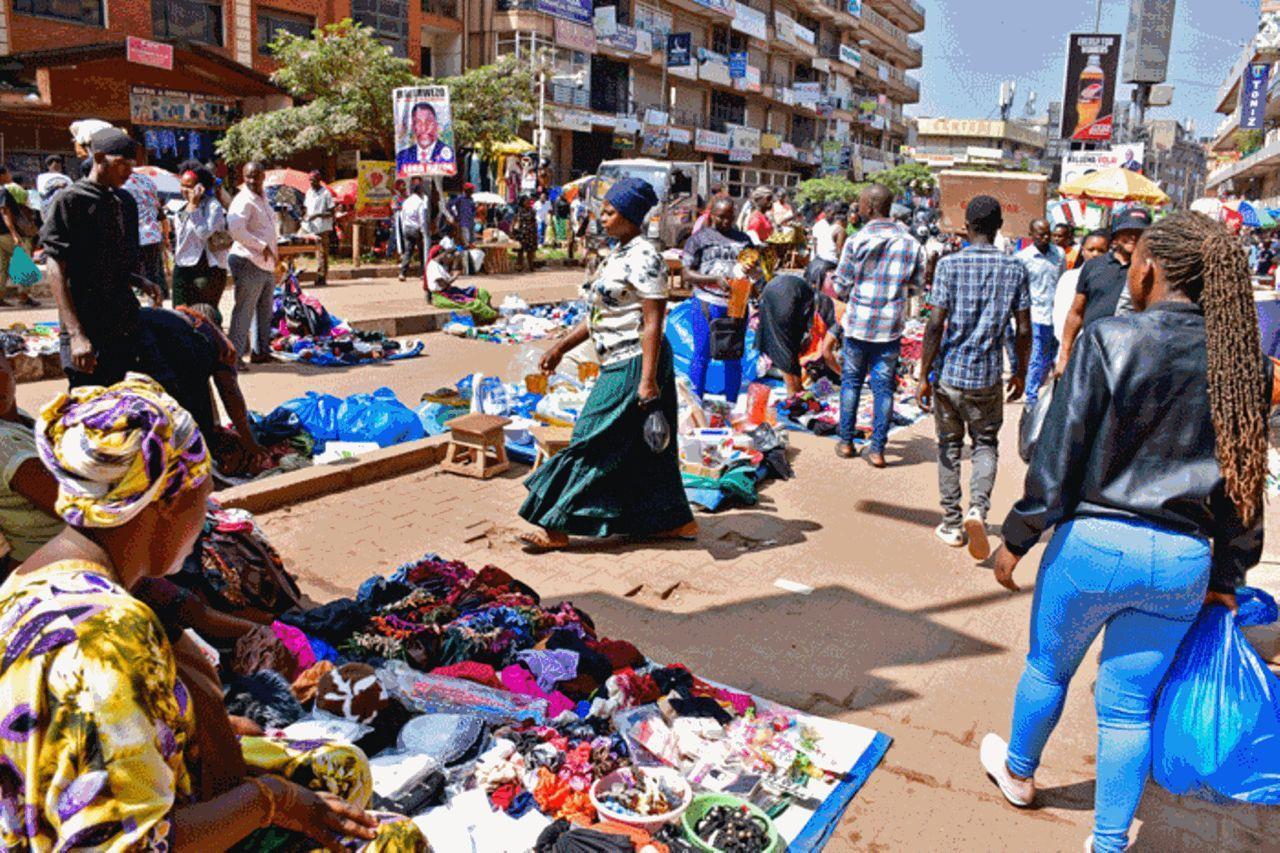
Africa-Press – Uganda. A cloud of uncertainty hangs over Kampala’s central business district as thousands of street vendors prepare to vacate the city this Friday.
Following a definitive directive from the Minister for Kampala Capital City and Metropolitan Affairs, Hajjat Minsa Kabanda, the grace period for informal traders to vacate the streets expires on February 20, 2026.
The move is part of the Kampala Smart City initiative, aimed at restoring trade order, improving sanitation, and decongesting pedestrian walkways.
While the government maintains that the relocation is necessary for a modern and clean capital, the voices on the streets tell a story of desperate survival.
Chairman Mubiru Nsubuga, who leads a section of the vendors, expressed gratitude for the two-month extension previously granted by the Ministry and believes many are prepared for the shift, hoping for a transition that avoids the tug-of-war seen in past enforcement operations.
“We are grateful for this given to us by the minister to organize ourselves and believe the vacation will be smooth without any pushing or pulling with the authorities,” said Nsubuga.
However, this optimism is not shared by all. For many, the streets are a safety net against poverty.
Ms Rose Nanyonjo, a vendor who turned to the streets after struggling with low wages in a shop, argues that the high cost of formal shop rentals, often reaching Shs500,000, is impossible for someone with capital of just Shs200,000.
Like many of her colleagues, Rose plans to “gauge the situation” on Friday, displaying only a small portion of her stock to avoid total loss if KCCA enforcement teams begin confiscating goods.
“How can we rent shops in buildings when our capital is Shs150,000 and rent alone is almost 1 million? The cheapest is Shs500,000,” Nanyonjo said.
The Kampala Capital City Authority (KCCA) has stated it has secured approximately 4,500 stalls in various city markets and surrounding districts to accommodate those displaced.
Despite these claims, vendors and boda boda riders who also face eviction from street sides in places like “Gazaland” remain skeptical about the suitability of these areas.
Many argue that markets like Usafi and Wandegeya lack the foot traffic found on the streets, where customers often buy on impulse.
Others point out that for such a large community of vendors, the few thousand stalls will not be enough.
Beyond financial hurdles, there is a deep sense of displacement. Many vendors have vowed not to leave the city for villages, insisting that their livelihoods depend on the urban economy.
Some have even appealed for a longer transition period of up to two years to save enough capital for formal shops.
A common compromise suggested by vendors is for KCCA to allow them to operate during evenings or on weekends, such as in the proposed Sunday Market, to ensure they can still feed their families.
As the deadline approaches, the fundamental question remains whether a “Smart City” can coexist with its most vulnerable residents.
While authorities emphasize the need for a clean and orderly Kampala, one wonders if the livelihoods of these vendors are the price that must be paid.
Whether Friday brings a smooth transition or renewed conflict will depend on how the authorities balance their vision for order with the economic realities of the people who call the streets their workplace.