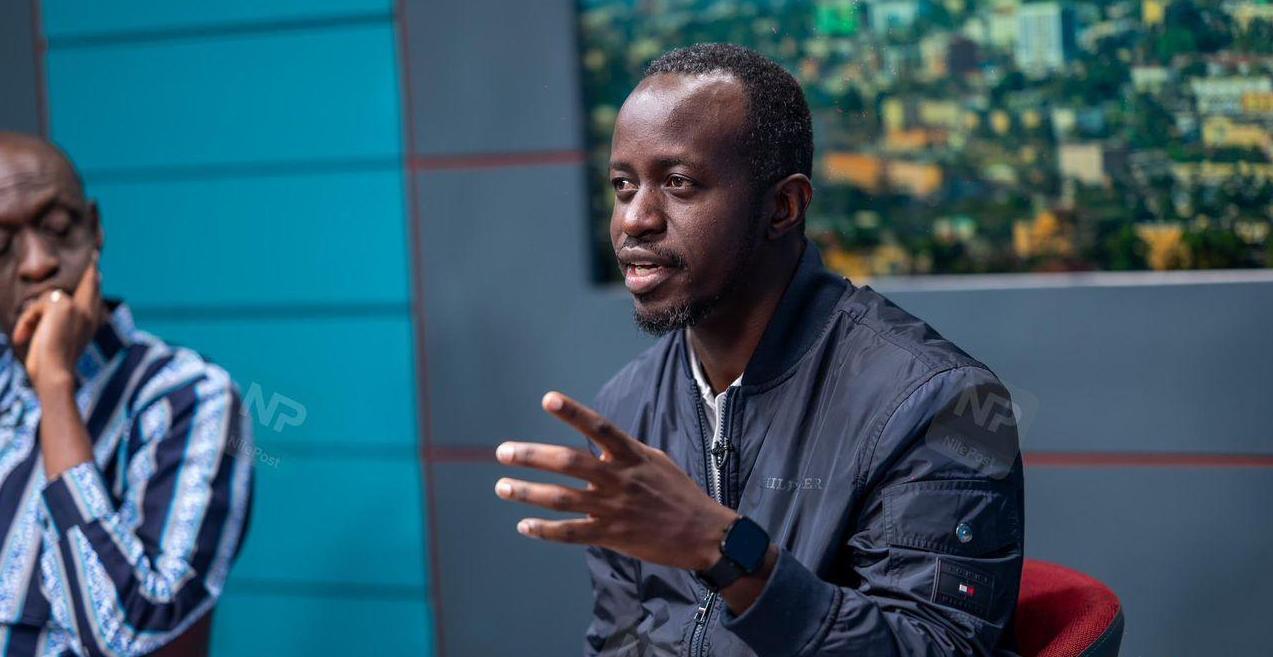
Africa-Press – Uganda. Journalist Nelson Bwire, popularly known as Nelly Kapo, has identified the completion of the Hoima City Stadium and the political fallout between Nyendo-Mukungwe Member of Parliament Mathias Mpuuga and the National Unity Platform (NUP) as two of the most significant national stories that defined Uganda’s political and governance landscape in 2025.
Speaking during NBS Media Roundtable on Friday, Kapo described the Hoima City Stadium as a rare and refreshing success story in public infrastructure delivery, noting that it stood out for meeting both timelines and quality expectations.
“The Hoima City Stadium was a big story for me in 2025. For the first time we had a project that started and ended on time. This is a project where the artistic impression looks like the exact thing,” Kapo said.
He added that the professionals behind the project deserved further opportunities, arguing that the stadium demonstrated what is possible when planning, execution and accountability align.
“The people who worked on that project need to be given many more projects,” he said.
The Hoima City Stadium was officially opened by President Museveni on Wednesday, December 24, 2025.
Constructed by Turkish firm Summa Group, the stadium was completed in 12 months, ahead of schedule, and fully funded by the Government of Uganda.
Built to FIFA standards, the facility positions Uganda to host international football matches and other major sporting events.
With a seating capacity of 20,000 and a reported construction cost of $129 million, the stadium is among Uganda’s flagship facilities earmarked for the 2027 Africa Cup of Nations, which the country will co-host with Kenya and Tanzania.
Beyond football, the complex includes a 2,000-seater indoor arena, a semi-Olympic-size swimming pool, a training pitch, parking space for more than 1,000 vehicles, outdoor sports courts, administrative offices and a fully equipped gym.
The project has been widely cited as a benchmark for timely execution, quality workmanship and effective use of public funds.
Alongside the stadium, Kapo pointed to the fallout between Mpuuga and NUP as another defining political story of 2025, particularly for its impact on opposition dynamics in Parliament.
“The story of Mathias Mpuuga and the fallout with NUP was another big story of 2025. It gave NUP a different face in Parliament,” Kapo said.
Mpuuga served as Leader of the Opposition in Parliament and Deputy President of the National Unity Platform from 2021 to 2024 under party leader Robert Kyagulanyi Ssentamu, popularly known as Bobi Wine.
His relationship with the party leadership deteriorated sharply in early 2024. On January 9, 2024, Mpuuga was removed as Leader of the Opposition after two and a half years in the role and replaced by Nakawa West MP Joel Ssenyonyi.
Tensions escalated further on March 6, 2024, when NUP accused Mpuuga of corruption over a Shs500 million service award and demanded his resignation as a parliamentary commissioner. Mpuuga rejected the allegations, describing them as blackmail.
By mid-2024, internal party disagreements had become increasingly public, with senior figures, including Medard Sseggona, voicing concerns about decision-making processes and alleged marginalisation within the party.
In May 2025, months after launching the Democratic Alliance pressure group, Mpuuga announced the registration of a new political party, the Democratic Front (DF). A certificate from the Electoral Commission dated May 6, 2025 confirmed the party’s registration.
The Democratic Front emerged from the rebranding of the Green Partisan Party, originally registered in 2009 but largely inactive. The intention to change the party’s name, constitution, symbol and colours was published in the Uganda Gazette on April 25.
Although Mpuuga has avoided directly linking the formation of the Democratic Front to his fallout with NUP, he has said the party is composed of “new fresh minds” seeking to contribute to Uganda’s political future.
The party has attracted several former NUP and Democratic Party members, including Abed Bwanika, Michael Mabikke and former NUP parliamentary aspirants such as Winifred Nakandi.
The Democratic Front has since fielded parliamentary and local council candidates ahead of the January 15 polls but did not present a presidential candidate, arguing that presidential elections overwhelmingly favour the incumbent and that participation would legitimise what it described as a flawed process.
For More News And Analysis About Uganda Follow Africa-Press