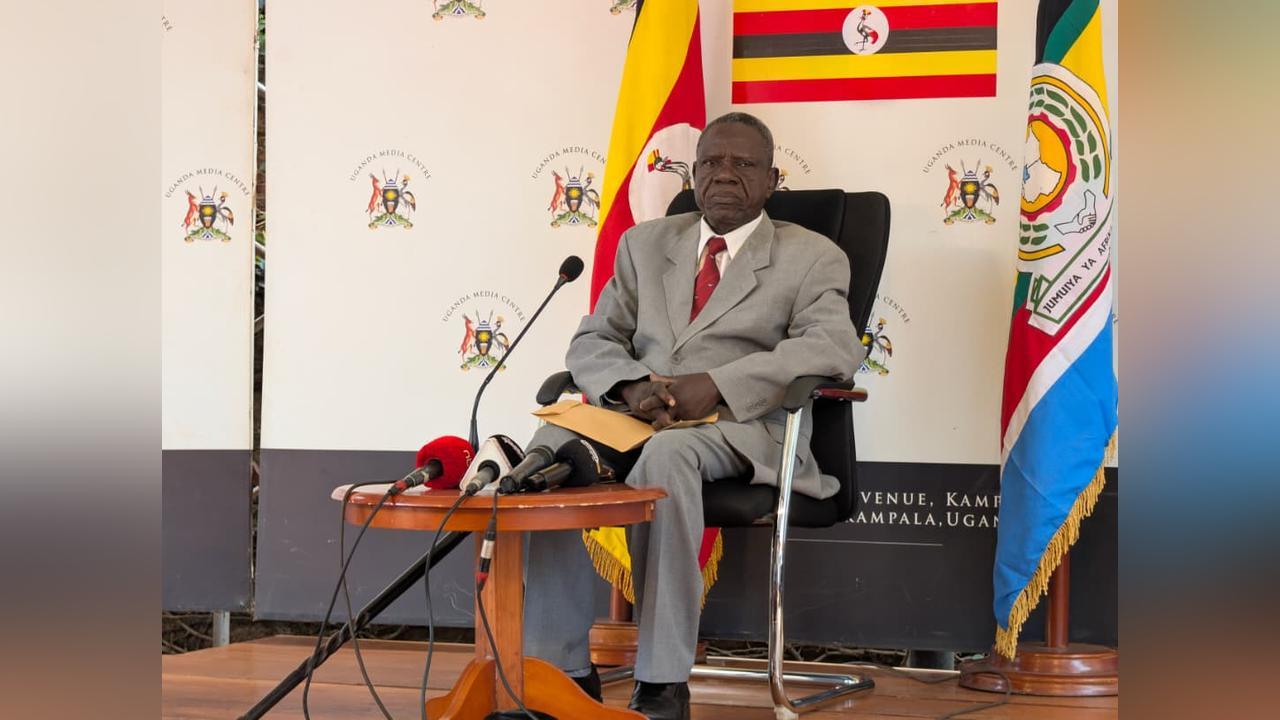
Africa-Press – Uganda. The Uganda Amnesty Commission has granted amnesty to more than 28,340 Ugandans who participated in insurgencies against the NRM government since 1986.
According to Commission Chairperson Justice Peter K. Onega, beneficiaries include individuals who directly engaged in combat, financed rebel groups, collaborated with insurgents, or supported rebellion in other ways.
The largest share of beneficiaries comes from the Lord’s Resistance Army (LRA), with 13,605 former combatants granted amnesty under the Commission’s demobilization programme.
The West Nile Bank Front (WNBF) follows with 6,580 former fighters, while the Uganda National Rescue Front II (UNRFII) accounts for 3,250.
The Allied Democratic Forces (ADF) has contributed 2,764 former combatants to the amnesty process, while 2,140 reporters are drawn from 26 smaller rebel groups that are no longer active.
Justice Onega explained that demobilization involves formally releasing individuals from armed groups to allow them to begin civilian life.
Beyond demobilization, the Commission implements resettlement and reintegration programmes.
Under resettlement, the Commission has so far reinserted 24,003 reporters into their communities, providing basic household items and garden tools to help them restart their lives.
Reintegration focuses on restoring access to social and economic opportunities. To date, 25,337 reporters and victims have benefited from skills training in carpentry, tailoring, agricultural management, entrepreneurship, soap making, bicycle repair and apiary, among other trades.
The Commission has also engaged in dialogue and reconciliation initiatives. Notably, it chaired peace talks in 2002 between the Government and UNRF II, which resulted in the demobilization of 2,500 reporters in the West Nile region.
In addition, the Commission continues to sensitize the public about the amnesty process through radio programmes, prison visits, workshops and community outreach.
Initially established for a six-month period in 2000, the amnesty framework was later extended to two years and has now been expanded to a three-year operational period.
Justice Onega says the Commission remains focused on reconciliation, rehabilitation and long-term peacebuilding across the country.