By Busein Samilu
Africa-Press – Uganda. Amid escalating levels of unemployment in the country, 66 government ministries, departments and agencies (MDAs) are grappling with 8,353 staffing gaps.
According to the 2022 Auditor General’s report, different government MDAs are operating with a staffing gap of between 30 percent and 55 percent.
Of the total 27,302 positions that were approved in the affected MDAs, 1,349 were filled by the period of reporting, translating into a 39.2 percent staffing gap.
By the time Mr John Muwanga, the Auditor General, released his report in December 2022, Makerere University Business School (Mubs), which tops the staffing gaps, had only 1,274 personnel employed out of the total required 2,551, indicating a gap of 1,277.
He attributed this to funding gaps from the government which stifled the operations of the university. At the time of audit, the university had received Shs92.1b out of the budgeted Shs104.6b indicating a shortfall of Shs12.4b.
The AG report also indicated that 43 MDAs were grappling with 43 percent staffing gaps in their ICT and Governance departments. Of the available 1,200 jobs, only 689 positions had been filled up, including the ministry of ICT and National Guidance which had 63 positions out of 103 filled.
Mr Muwanga said this development implied that the ICT investments are not centralised and are implemented at a departmental level, exposing the ministry to the risk of duplication and wastage of resources.
“In addition, there is a misalignment of ICT development with ministry business functions. Management explained that the ICT ministry in consultation with the Ministry of Public Service and the Ministry of ICT will streamline the ICT staffing structure, as recommended,” the report adds.
Soroti University was also among the most hit entities with only nine percent of the required 1,312 positions filled by the time of reporting. A number of key positions including professors, associate professors, senior lecturers and lecturers had not been filled up at a time of audit.
The university had a staffing gap of 1,146 employees.
More staffing gaps
All the education institutions that were reviewed had a staffing gap of 3,241 vacant positions which translates into 39 percent of the total staffing gaps.
Of these, Mubs topped with 1,292, followed by Soroti University 1,146, Lira University (724), Uganda Management Institute (76) and Muni University with three staffing gaps.
A review indicates that all the affected institutions had gaps in vital positions including professors, associate professors and senior lecturers.
Likewise, the health centres that were audited reflected 1,568 staffing gaps, with Moroto Regional Referral Hospital reporting 155, Jinja (two), Mbarara (73), Butabika National Mental Referral Hospital (121), Kabale (247), Entebbe (383), and Kiruddu (537). Other health entities such as Uganda Blood Transfusion Services had 138 and Uganda Medical and Dental Practitioners Council (12).
Mr Muwanga noted that the national regional referral hospitals and specialised health facilities had staff structures that needed to be adequately filled for efficient and effective service delivery.
“I however noted that the facilities had staffing gaps with the critical gaps being in the national referral hospitals that were recently elevated from regional referral status and specialised facilities (UCI and UHI) [Uganda Cancer Institute and Uganda Heart Institute] whose staff structures are yet to be approved by the Ministry of Public Service. I also noted that for most of the facilities, funds for recruitment of staff were warranted and released in the last quarter of the financial year (May 2022),” reads part of the report.
“Inadequate staffing results in heavy workloads and exploitation of existing staff, creates job-related stress which negatively affects the quality-of-service delivery to the community. I advised management to follow up on the recruitment funding for re-voting and ensure completion of the recruitment exercise,” Mr Muwanga stressed.
Staffing gaps, he said constrain the entity in implementing its mandate effectively.
AG’s review of the entities further reveals funding gaps including Office of the President with 439, Ministry of Agriculture, Animal Industry and Fisheries (293), Office of the Director Public Prosecution (884), Uganda Business and Technical Examinations Board (108).
Public Service explains
When contacted to explain what government is doing or has done to close this understaffing gap, Ms Catherine Bitarakwate, the permanent secretary of the ministry of Public Service, said: “Wait for us to pronounce the matter publically at the right time. The next Auditor General’s report will as well give you more details about what we have done.”
Ms Bitarakwate’s ministry is mandated to provide strategic and managerial leadership on all matters of human resource in Uganda’s public service. The ministry is geared towards facilitating an efficient and effective public service through taking care of enabling policies, systems and structures.
Explaining the crisis of staffing gaps across government agencies, Finance ministry spokesperson Jim Mugunga referred Daily Monitor back to the Ministry of Public Service which he said is in position to provide more details.
“It is the Public Service [ministry] that should plan for the jobs and budget before we provide funding,” he said.
Ms Bitarakwate, however, insisted: “we shall give you an official statement at the right time.”
It remains unclear if there are any changes as far as government recruitment of new staff is concerned following the ban on new recruitment by the government in April this year.
Mr Ramathan Ggoobi, the permanent secretary of the ministry of Finance, Planning and Economic Development, while appearing on a local television station on April 27, said the move was aimed at eliminating the escalating numbers of ghost workers.
“I don’t need to say this, but we suspect many of the entities that are supposed to pay people are diverting the funds to pay ghosts instead of paying those who are working,” Mr Ggoobi said.
Unemployment crisis
In her speech during the first-ever National Labour Conference in Kampala on April 26, Gender Minister Betty Amongi said one of every two Ugandans in the working age brackets is jobless. Ms Amongi said648,000 jobs are required to be created annually to close this gap.
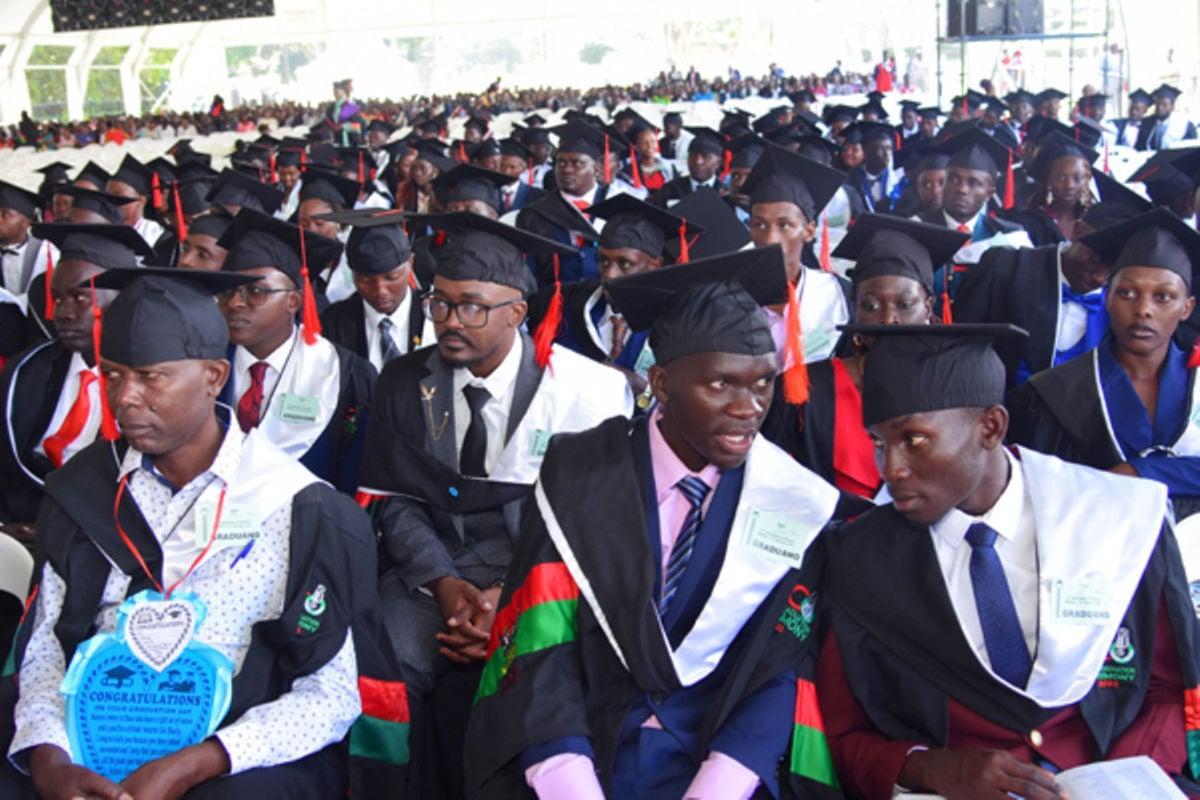
The National Planning Authority, a government agency, had four years ago reported that up to 40,000 graduates are churned onto the job market from universities and tertiary institutions a year, but 90,000 out of a cumulative 700,000 graduates get “something to do”.
The 2021 Uganda National Labour Survey by the Uganda Bureau of Statistics indicated that 9.3 million youth [aged 18-30] are unemployed.
The survey conducted for the period ended 2021 also found that unemployment had increased to 12 percent from nine percent in the 2019/2020 Uganda National Household Survey.
It revealed that 40 percent of children, which represents about 6.2 million aged between five and 17 years, were engaged in child labour excluding household chores while 40 percent of persons aged from five years and above were engaged in unpaid care work, 21 percent in subsistence agriculture, and 39 percent in other subsistence works.
Overall, the level of unemployment implies that much as government has put a lot of emphasis on industrialisation so that many Ugandans can get employed in factories and industries, the rate at which people are getting employed remains drastically low in a country characterised by a mismatch under-utilisation of the existing labour force.
For More News And Analysis About Uganda Follow Africa-Press