Africa-Press – Uganda. Leaders in northern Uganda have raised concern over the execution of the Project for Restoration of Livelihoods in the Northern Region (PRELNOR).
PRELNOR, an agricultural investment project, was launched on August 5, 2015, to help fight poverty in the region. The project is set to end in September.
The project, which is being implemented by the Ministry of Local Government, is expected to cost $70.9m (Shs262b). The project is being financed by the government ($9.2m (Shs34b)), International Fund for Agricultural Development (IFAD) ($50.2m (Shs185.5b) loan), Adaptations for Smallholder Agriculture Programme (ASAP) ($10m (Shs36.9b) grant) and beneficiary contributions ($1.5m (Shs5.5b)).
At least nine districts were set to benefit from the project. These include Agago, Amuru, Gulu, Kitgum, Lamwo, Nwoya, Pader, Omoro and Adjumani where 491 villages spread across 100 parishes in 25 selected sub-counties have benefitted.
Some of the projects included construction of access roads to ease the movement of farmers’ produce and markets where they can sell the produce.
However, while the government claims that the project has significantly enhanced agricultural production and boosted productivity among the communities in the north, local leaders say the intervention missed its targets.
Mr Ben Anyama, the Adjumani District chairperson, told the Daily Monitor that despite huge amounts of money being pumped into the project, PRELNOR achieved very little success.
“It is a dead thing. PRELNOR has not impacted the district because most projects failed, the contractors are imposed [by the government] and are very difficult to supervise. They don’t answer us, and it was a very disappointing project,” Mr Anyama said.
He added that they asked the government to redesign the programme a few years back but nothing was done.
Mr Anyama said the ministry dictated most of the components of the project instead of encouraging collective participation where the beneficiary communities participate in decision-making and appraisal.
“In the next intervention, the government needs to replan. Let the community decide what should be done for them. This thing of the central government imposing things and coming with their modules does not apply on the ground here,” he said.
Mr Thomson Obong, the Amuru chief administrative officer, said part of the project included the construction of community access roads, Elegu market, and a satellite market at Pabbo but some of the projects have stalled.
“The Elegu market and the Pabbo satellite market under PRELNOR are among the other projects including road works that we finalised with the design and submitted the reports to IFAD for approval.
But because of limited time and funding, we got communication that PRELNOR will not continue to fund the market,” he said.
“They wrote to us that they will only continue the works that are [currently] ongoing. We had two markets, one in Elegu and a satellite market in Pabbo, but Elegu failed and now the satellite market in Pabbo has also collapsed,” he added.
Mr Obong said the two markets will instead be constructed under the Trade Mark East Africa (TMEA) project.
“We have secured land for the markets and are making progress, but the roads, we gave up on them,” he said.
In Omoro District, Mr Douglas Peter Okello, the district chairperson, said they hope to complete some of the projects by September.
“The Project Management Unit said we should use force on account to complete the projects. The instruction applies to all the districts implementing the project where contractors have not completed the works, and we believe all the PRELNOR projects in Omoro will be completed on time,” he said.
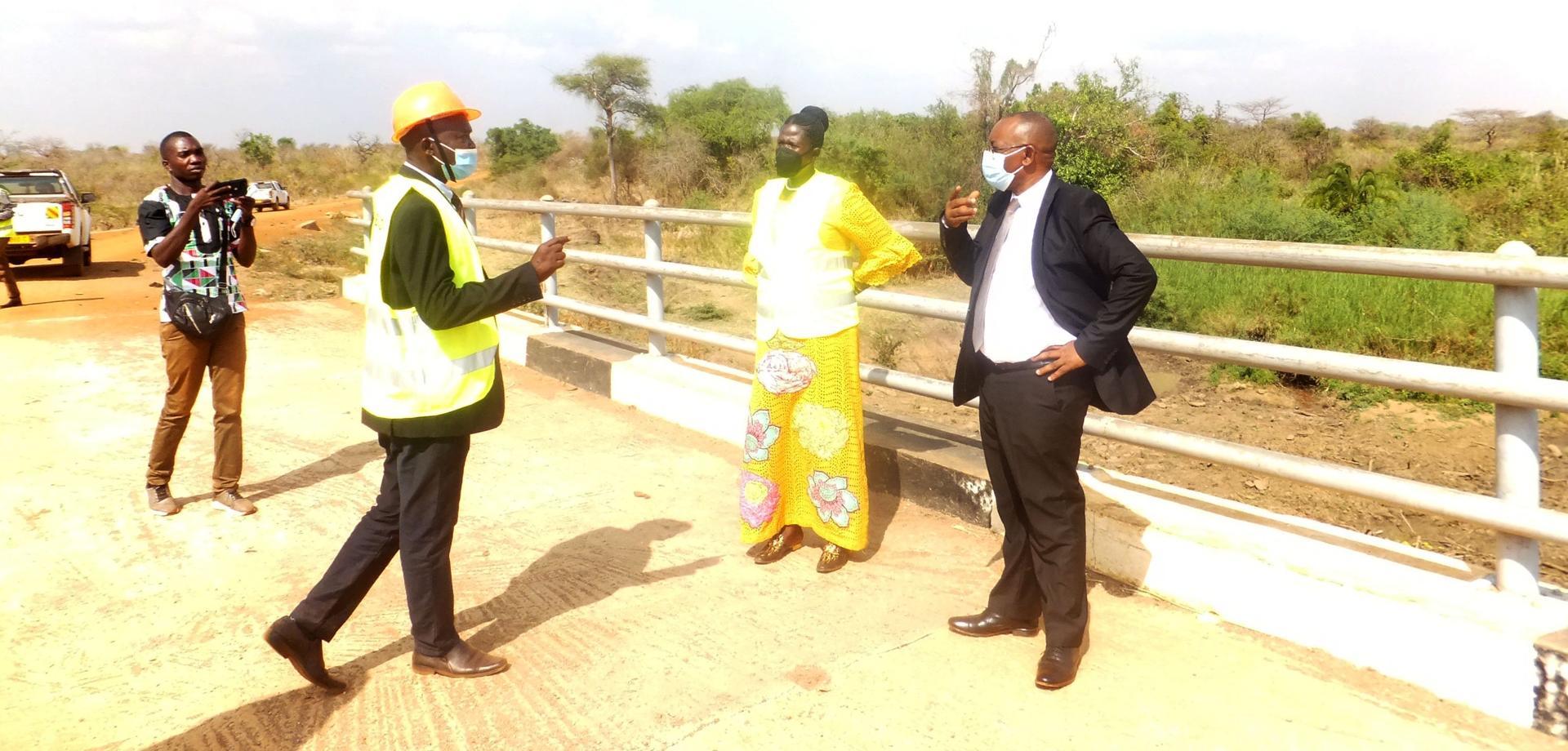
Currently, construction of three bridges on the 68km road stretching from Otema-Lakwaya-Lalogi-Orapwoyo and connecting to Lira, are being worked on at Shs1.8 billion.
“In terms of stalled or failed projects, Omoro with support from the Project Management Unit in Gulu City and the Ministry of Local Government will see that all the projects are completed before September. We are now sourcing the local materials and contractors to do the works,” he added.
Mr Okello said most PRELNOR projects in the district were delayed and failed due to laxity in procurement by the ministry.
“The problem was that the contractors who did the work did not have the capacity and did not follow a schedule,” he said.
A report by PRELNOR indicated that challenges such as delayed access to finances, poor delivery of extension services and lack of supervision frustrated the project.
“The major challenge in the delivery of extension activities has been untimely facilitation of extension personnel. This includes the delayed provision of fuel, field allowances and extension materials. Delayed access to financial resources at the district local governments to facilitate project implementation was a big challenge,” it stated.
For example, the document states that the allowed cash limit across all sectors is limited to Shs40 million only per month which affected access to funds for the implementation of PRELNOR activities whose expenditure per month is over and above this limit.
“The supervision of extension services under the project by the DLGs (district local governments) has generally not been adequate. The relevant district level technical staff are very busy officers handling multiple tasks and that makes it very difficult for them to devote adequate time for the supervision of extension activities,” it added.
While the project initially planned to construct three bulk markets and eight satellite markets during the second year of the project implementation, the project revised the scope of works to construct five satellite markets and cancel bulk markets.
This publication learnt that the action resulted from the delayed procurement of a consultant to undertake an Environmental Social Impact Assessment (ESIA) for approval by National Environment Management Authority (Nema).
Consequently, the following locations were selected for the construction of the five satellite markets; Mungula in Adjumani, Pabbo in Amuru, Cwero in Gulu, Opit in Omoro and Lukole in Agago.
However, only two markets, Opit in Omoro District and Lukole in Agago District, were procured and were under construction by the end of last year whereas the procurement of the other three markets was yet to be concluded.
PRELNOR respond
Ms Monica Akot, the PRELNOR project manager, in an interview with Monitor, said due to financial constraints, the project was only constructing two markets.
She added that construction and refurbishment of roads under Batch C had been called off.
“The project was meant to do about 1,550km of roads, but we could only manage 1,240km, all our roads had very heavy structures, bridges, and box culverts, and that consumed a lot of money, instead of a kilometre of road costing Shs50m, it shot beyond Shs100m and it reduced the number of kilometres we had to do,” she said.
“Batch A of road works are fully complete with 614km and is now being used and fully given to the communities. Our only challenge under that component is poor maintenance of the refurbished roads, the districts tell us that funds from the Uganda Road Fund are too little to do the work,” Ms Akot said.
The project manager further said most of the roads under the 508.3km for Batch B, were halfway done.
She added that they hope to finish on time after instructing the districts to apply the force on account mechanism to do the work.
She said works under Batch B were delayed because majority of contractors abandoned works and disappeared from the sites.
“This is a project running on a loan and had a one-year extension, so come September 30, the system will shut down automatically. If we don’t act quickly, it means we would lose the investments…,” she added.
In a 2022 audit report on PRELNOR performance, the Auditor General, while reviewing the project procurement documents and inspections carried out in October 2022 noted that with less than a year to close the project, many planned project activities had not yet been implemented.
It pointed to contracts for the construction of 199.90 km of community access roads and three bridges of Chome, Odek 1 and Odek 2 in Omoro District that were not yet awarded and hence works had not yet commenced.
“Some of the constructed roads were to connect to bridges, but because the bridges had not yet been constructed, failure to commence works on the planned project roads and bridges denies services to the intended beneficiaries and may affect the achievement of the project objectives,” the AG report stated.
OTHER PROJECTS
The Project for Restoration of Livelihoods in the Northern Region (PRELNOR) Project Management Unit said it employed several climate-resilient crop production systems to increase productivity.
Up to 646 community groups, implementing best practices in community-based natural resource management, are building the climate resilience of targeted agricultural livelihoods in water management, and afforestation, where 4.84 million tree seedlings (12 species) have been planted.
The trees cover an estimated 180,169 hectares of land. At least 19,960 beehives (18,960 traditional hives; 2,306 modern top bar hives) were also installed with an average colonisation rate of 80 percent while 316 bulls were integrated with the farm enterprises in Nwoya and Adjumani districts for land opening during farming activities.
The farmers are empowered to correctly diagnose pests, diseases and soil conditions.
“This is by enhancing their capacity through the household mentoring methodology and providing with food security grants worthy of USD 120 each per household to facilitate the purchase of agricultural inputs,” Ms Akot said.
In addition, she says 27,943 domestic cookstoves were distributed to 10,134 vulnerable households and volunteers.
For More News And Analysis About Uganda Follow Africa-Press