Africa-Press – Uganda. Stakeholders from the Rwenzori and Tooro sub-regions have urged the government to decentralize Anti-Corruption court sessions in order to reduce the financial burden for both complainants and defendants.
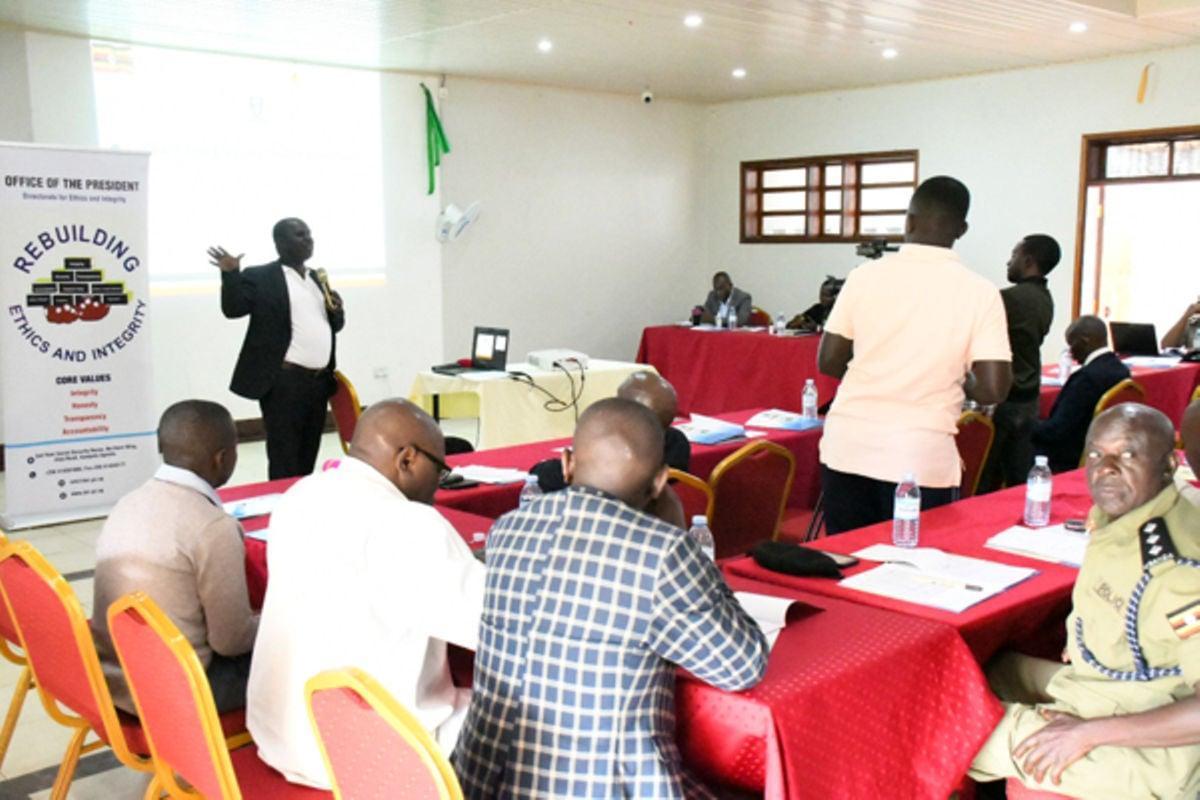
The recommendation was made by the Directorate of Ethics and Integrity during the validation meeting of the National Anti-Corruption Strategy assessment report in Fort Portal City on Friday.
Currently, there is only one Anti-Corruption division of the High Court which sits in Kololo, Kampala City.
Mr Robert Nangai, the Lead Consultant of Cardno Partners Consult, who presented the report findings, revealed that individuals reporting corruption cases often wait for over two years for a judgment, and in some instances, the accused is not convicted.
“When we interacted with anti-corruption institutions, they informed us that there is only one court mandated to handle such cases in Kampala. The complaint is then required to keep transporting witnesses, incurring significant costs. Moreover, when the case is delayed to be concluded, the witness loses interest,” he explained.
“We have concluded that Anti-corruption court sessions can be brought up country-like at a regional level. This will help witnesses and complainants to attend court sessions and reduce costs,” he added.
The Anti-Corruption Division of the High Court, established in July 2008, currently operates as a specialized division to adjudicate corruption and corruption-related cases.
The Principal Legal Officer for the Directorate of Ethics and Integrity, Ms Grace Atwongyeire, said the delays in court cases are due to prosecutors, investigators who at times fail to complete their work in time, and witnesses declining to appear in court.
Mr Eliphazi Muhindi, Kasese District chairman, stressed the importance of empowering statutory bodies in local governments by increasing funding and their independence, to be able to hold leaders accountable.
“What is hindering the fight against corruption in districts is a lack of coordination among district leaders, such as CAO, RDC, and district chairman. Some individuals prefer working alone instead of collaborating, and these leaders should be held accountable in case corruption cases are reported in their districts,” he said.
Ms Sarah Karamagi, a member of the Kabarole District Service Commission, said that there is a need to first address the issue of salary disparity between scientists and non-scientist civil servants arguing that it is one of the causes of corruption in local governments.
For More News And Analysis About Uganda Follow Africa-Press