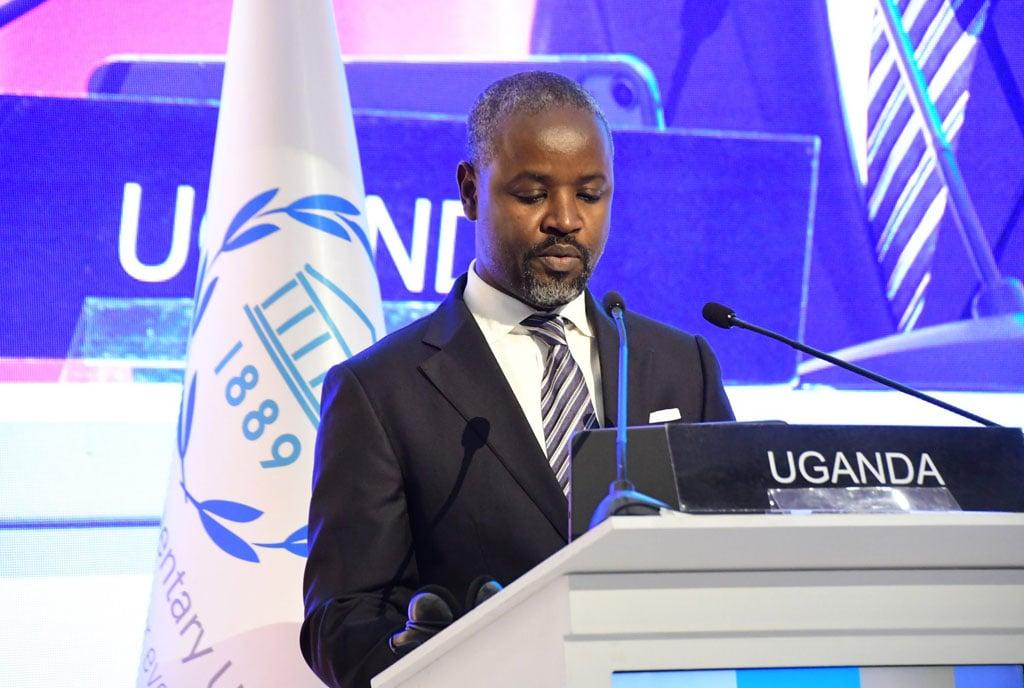
Africa-Press – Uganda. The Deputy Speaker of Parliament, Mr Thomas Tayebwa, has asked the Inter-Parliamentary Union (IPU) member states to remove all non-tariff trade barriers, saying they block the entry of goods from developing countries.
Addressing the 146th Assembly of the IPU in Manama, Bahrain, on Monday, Mr Tayebwa said the barriers are among the economic bottlenecks hindering the growth of some member states despite being endowed with natural resources.
“As Parliaments, we can and should ensure this stops,” Mr Tayebwa said.
He added: “We call upon the developed world to remove non-tariff barriers that are blocking the entry of goods, especially from developing countries. Sometimes your supermarket shelves are empty when we have fruits, vegetables, and other agricultural products rotting in our countries,” he said.
Citing Uganda as Africa’s largest coffee exporter, Mr Tayebwa noted that the country is earning a paltry $820m (about Shs3 trillion), which he said has kept the country in poverty without any intervention from the Western world apart from extending loans and aid.
“We need more of partnerships and fair trade than loans and aid, but the developed world should work with developing countries to add value to their products,” he said.
Non-tariff barriers arise from different measures taken by governments in form of laws, regulations, policies, conditions, and restrictions that aim at protecting domestic industries from foreign competition.
The barriers may include unjustified state restrictions, a complex regulatory environment, and additional trade documents, among others.
Currently, the IPU comprises 178 member Parliaments and 13 Associate members.
Equally, Mr Tayebwa also urged parliaments to review and strengthen laws and policies to protect minority rights and prevent discrimination and establish institutions to protect the rights of minorities. But he urged lawmakers to vehemently resist global pressures and trends that usurp their cultures and beliefs.
The assembly, which started last Saturday and ends today, is expected to adopt resolutions on climate change, cyber-attacks and cyber-crimes.
For More News And Analysis About Uganda Follow Africa-Press