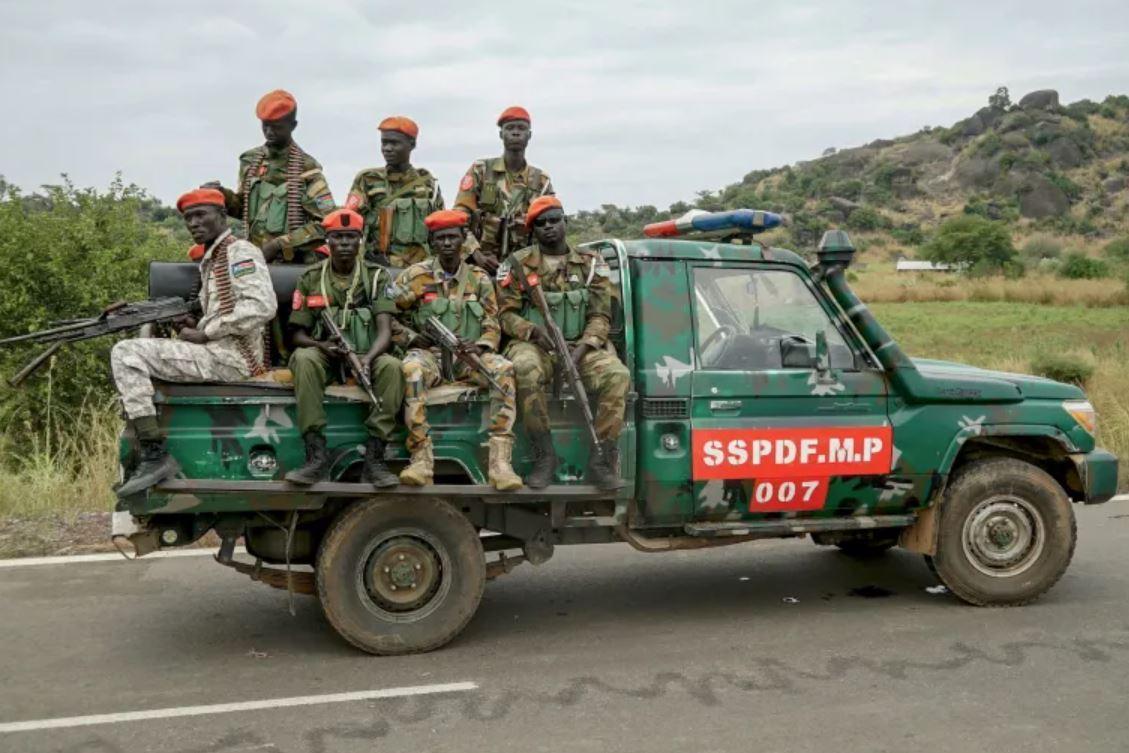
Africa-Press – Uganda. Military officials from Uganda and Burundi discussed the possibility of deploying forces in Gaza during a visit to Israel last week, as part of an international security force that the U.S. administration plans to establish to support a fragile ceasefire in the Gaza Strip.
An official from a local source stated that Ugandan officials joined a Burundian military delegation, while Uganda is working to finalize details of its participation after its parliament approved the contribution of troops this month.
Burundi’s participation has not yet been confirmed, but the official mentioned that the council is looking to initiate procedures for its involvement.
He added that both sides exchanged a “significant amount of knowledge,” and that representatives from Burundi expressed interest in the mission, speaking on the condition of anonymity due to the sensitivity of the negotiations with potential contributing countries before reaching an agreement.
A Burundian military official indicated that three other senior military officers led the delegation to Israel, noting that Burundi appears determined to join the force.
It remains unclear what Uganda and Burundi will contribute in terms of troops or what they will receive in return, as spokespeople for the armies of both countries did not respond to requests for comment.
The moves by Uganda and Burundi come at a time when the formation of the international force for Gaza is progressing slowly.
If Burundi proceeds with its participation, the two countries will become the latest African nations to join the force, following commitments from Morocco, Kosovo, Kazakhstan, and Albania to contribute troops.
Uganda has pledged around 1,200 soldiers, while Morocco has committed to sending up to 500 soldiers, and Kosovo, Kazakhstan, and Albania together have pledged about 80 soldiers.
Indonesia had previously announced its readiness to send 8,000 soldiers, the largest proposed contribution so far, but it suspended the plan following U.S. and Israeli attacks on Iran.
The international force aims to deploy around 20,000 soldiers, to be led by American General Jasper Jeffers, but the number of troops pledged so far remains significantly below the target.
Last month, the U.S. administration announced an agreement that includes the disarmament of Hamas and the withdrawal of Israeli forces from the Gaza Strip.
Under the agreement, international forces are set to be deployed in Palestinian areas that will be managed by an upcoming technocrat committee, coinciding with the withdrawal of Israeli forces.
The force will be tasked with monitoring the ceasefire, training Palestinian police, and ensuring the delivery of humanitarian aid, among other security duties.
However, the implementation of the agreement has stalled due to disagreements regarding Israel’s withdrawal from the territory and the disarmament of Hamas.
Paul D. Williams, director of the Security Policy Studies Program at George Washington University, stated that Uganda and Burundi have gained significant experience in peacekeeping operations through a long-term deployment in Somalia to counter the Al-Shabaab group linked to Al-Qaeda.
He added that the leadership of both countries has shown a willingness to endure significant human losses without withdrawal, considering that the end of their mission in Somalia drives them to seek financial and material support for their armed forces.
He viewed participation in the Gaza mission with U.S. support as one of these avenues.
In this context, a Ugandan army officer familiar with the upcoming deployment process indicated that the selection of soldiers to be sent to Gaza has already begun.