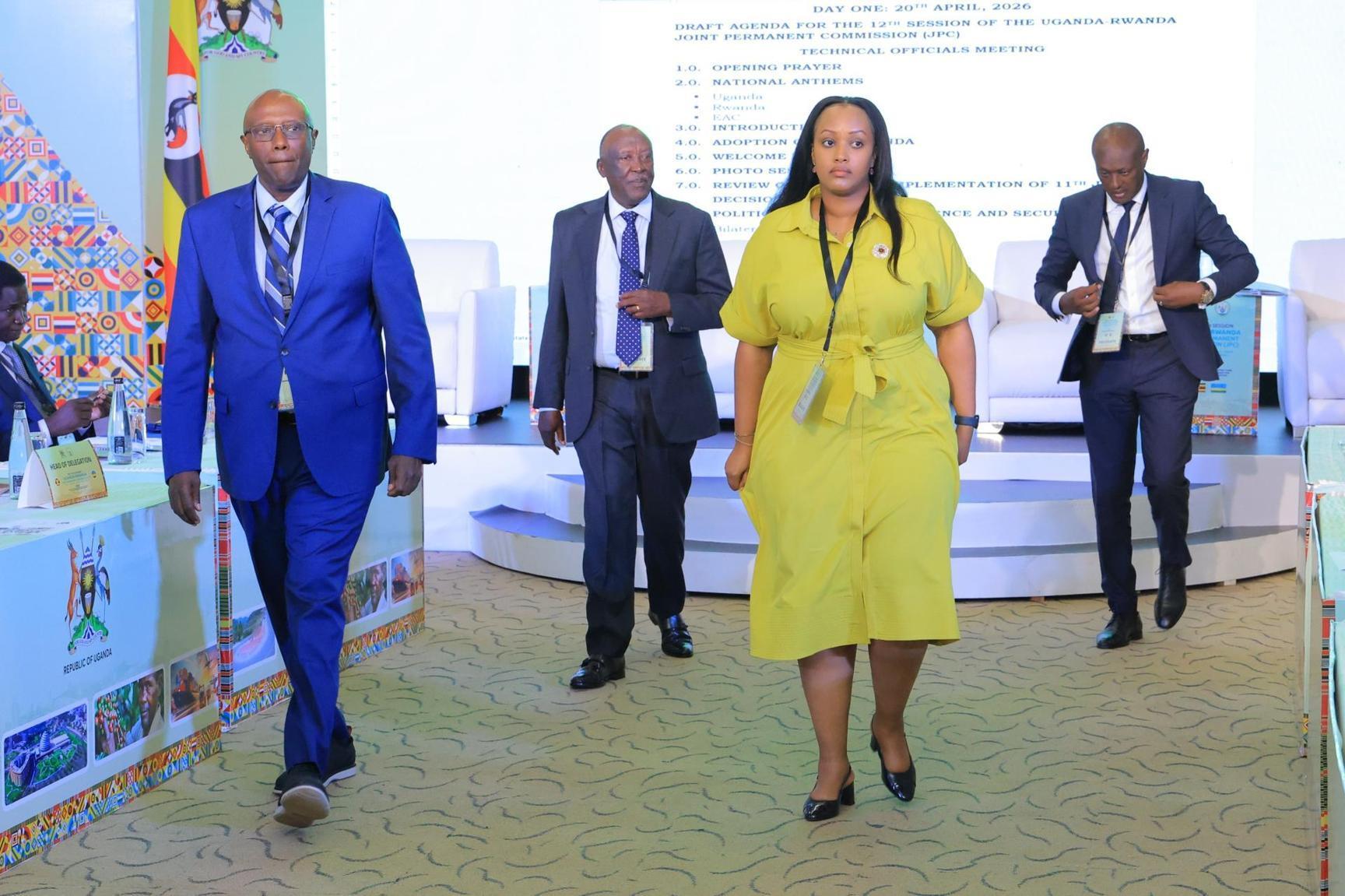
Africa-Press – Uganda. The 12th session of the Uganda–Rwanda Joint Permanent Commission (JPC) has opened in Kampala, bringing together officials from both countries to strengthen bilateral cooperation and review progress across key sectors.
The three-day meeting, running from April 20 to April 22, 2026, is being held at Mestil Hotel in Nsambya.
Speaking at the opening session, Richard Kabonero, head of the Ugandan delegation and Head of Regional Economic Cooperation at the Ministry of Foreign Affairs, described the meeting as a critical opportunity to further deepen ties between the two countries.
“The framework of our cooperation was last held three years ago in Kigali, and it is a testament to our desire to strengthen our cooperation that even without the JPC, our two countries have continued to enhance collaboration in various areas including defence and security, energy, infrastructure, local governments, and regional integration,” Kabonero said.
He noted that while the geographical, historical, and cultural ties between Uganda and Rwanda remain strong, both countries must continuously address emerging challenges and explore new opportunities.
“The challenges we face currently are what we call problems without passports. These include pandemics, zoonotic diseases, climate change, human and wildlife trafficking, as well as cyber crimes. The opportunities include science, innovation, technology, and aviation,” he added.
Kabonero emphasized that the 12th JPC should focus on identifying innovative ways to enhance cooperation for the benefit of citizens in both countries.
On the Rwandan side, Tesa Gisa, head of delegation, said the commission reflects strong political will and high expectations from both governments to deepen political and economic relations.
“Let us seize this opportunity to take stock of the progress achieved since the 11th JPC held in March 2023 in Kigali, Rwanda. We will review progress across our existing areas of cooperation in key sectors including political and diplomatic consultations, trade and customs, defence and security, immigration, justice, as well as infrastructure, energy, aviation, ICT, and more,” Gisa said.
She added that discussions during the Kampala session will also focus on renewing and expanding cooperation in critical areas such as health, education, agriculture, correctional services, and local government.
“Beyond reviewing the progress, this session should serve as a platform to generate tangible and implementable outcomes that respond to the aspirations of our citizens,” she said.
“Our cooperation must continue to translate into improved livelihoods, enhanced regional integration, and sustained socio-economic transformation for both of our countries.”
Trade remains a key pillar of the bilateral relationship. According to provisional figures from September 2025, Uganda’s monthly exports to Rwanda stand at about $22.37 million, compared to Rwanda’s exports to Uganda at about $1.2 million.
Uganda’s exports to Rwanda largely consist of agricultural commodities such as pineapples, Irish potatoes, mangoes, and sorghum, alongside manufactured goods including plastics and construction materials.
Rwanda, in turn, exports products such as sugar, cement, maize flour, as well as other agricultural and mineral goods to Uganda.
The 12th session of the Joint Permanent Commission is expected to further strengthen cooperation and unlock new opportunities for both countries.
For More News And Analysis About Uganda Follow Africa-Press