Africa-Press – Uganda. On December 31, 2020, government disbanded the Privatisation Unit following a 2019 Parliament resolution that the unit had outlived its purpose.
All employees of the unit were sent home except for four who have been tasked with winding up operations by June.Those retained include Mr Christopher Mugisha, the institution’s accounting officer, Mr Moses Mwase, the executive director, an information technology officer, whose name we could not establish, and a fourth employee, who we are yet to identify. Daily Monitor has established that Finance minister Matia Kasaija on December 11, 2020, ordered the Privatisation Unit’s director to collect all government properties held by staff because their contracts would not be renewed beyond December 31, 2020.
“As you are already aware, the permanent secretary/secretary to Treasury on October 23, 2020, constituted a committee to review the operations of the Privatisation Unit with a view of providing guidance on the process of winding up its operations as directed by Parliament. That process is still ongoing. However, the contracts for all staff of the Privatisation U nit are due to expire on December 31, 2020,” Mr Kasaija wrote.
ContractsHighly-placed sources at the Finance ministry, who asked not to be named, said the staff, who have been retained, were given six-month contracts, which end on June 30, to clear pending issues and hand over to the Ministry of Finance.“Once that is done, they will all be discharged,” a source said.
The source also said while other retained staff signed their new half-year contracts, Mr Mwase had not yet signed claiming that he was owed an “astronomical amount of money which government cannot afford to pay”.The source declined to give the figure in contention.
However, Mr Mwase said he is still withholding his signature, but continuing to work as the Privatisation Unit’s executive director, because there are ongoing discussions about salient administrative and structural issues pending resolution.“We are still in discussions on how to handle all these processes [winding up the entity] so our engagements are still on,” he said.
He also said the Privatisation Unit still has a lot of pending issues to handle, which they have communicated to the Minister of Finance, Planning and Economic Development.
Officials declined to disclose the number of staff affected by the disbandment of Privatisation Unit, formed in 1993, and would not say whether the employees would be compensated or not.
Ms Evelyn Anite, the State minister for Investment and Privatisation, said they took a decision to close the unit because Parliament ordered so.
What went wrong?When the ruling National Resistance Movement (NRM) came to power in 1986 following a five-year bush war, the government at the urging of the Bretton Woods Institutions embarked on economic restructuring exercise.
Privatisation of parastatals ostensibly to promote efficiency was at the core of the reforms. The process informally started in 1989 when the government sold six firms.In 1992, the official privatisation started with 142 State-owned enterprises being put on sale.
Over the years, Parliament has raised questions about how the proceeds were used and whether the privatisation process was abused to enrich individuals or offer them illegitimate ownership of State property.
A Finance ministry official said the employees of the Privatisation Unit, which in its hey days was simply known as the PU, over the last eight years received handsome pay for limited productivity.Another official noted that the unit was spending substantial amounts of money on fictitious claims and legal costs, which hemorrhaged government revenues.
“The guys (at PU) have been earning same salary for the last eight years, but when you look at their productivity, it is zero. They were also spending huge amounts of money on claims that do not add up and also on legal costs which government thought were bogus,” the source said.
Audit queriesThe 2019 Auditor General report on the financial statements of the Privatisation Unit and Utility Sector Reform Project, the formal name of PU, faulted the unit over unauthorised withdrawals from the divestiture account.
“I noted that out of the more than Shs89b withdrawn from the divesture account, only Shs19.4b was authorised by the Minister of Finance as required by law. I was not provided with evidence of authorisation by the minister for the balance of more than Shs69.7b withdrawn,” the Auditor General wrote.
The report added: “In addition, there was no evidence of an approved budget or work plan by the minister for the utilisation of the withdrawn amounts. The failure to plan, and in the absence of a clear documented process on the use of the divestiture proceeds, puts the funds at risk of misuse.”
The audit report also faulted the unit for purchasing shares in a sugar company worth Shs50.1b, yet benefits of its former employees have not been cleared to-date.
“This implies that present and future employee obligations exist, and in accordance with the provisions in the Public Enterprises Reform and Divestiture (PERD) Act, these obligations should have been prioritised. In addition, I was not availed proof of share transfer and, therefore, I could not establish that the funds were put to proper use,” the Auditor General noted.Adding: “There was also no justification to use proceeds from the sale of shares in an established sugar company to purchase shares in another sugar company at a nascent stage.”
The 2020 audit report also faulted the unit of financial indiscipline, saying the entity made expenditure not backed by budgets.
The report said while Parliament appropriated Shs3.9b for the operations of the Privatisation Unit, expenditure amounting to Shs6.3b was incurred, leading to unappropriated expenditure of Shs2.4b.“The operations of the entity are not sustainable as the funds from the appropriation are not sufficient and yet the divestiture account has also been depleted,” the report said.
The report also says payables of Pay As You Earn (PAYE) amounting to Shs1.8b in respect of deductions from employees were not remitted to the Uganda Revenue Authority.The report said failure to provide for funds to pay taxes within the budget has led to the accumulation of the unpaid PAYE tax of Shs9.6b as at June 30, 2020.
“Out of the receivables due from outstanding sales proceeds amounting to Shs125.78 billion, a provision for bad debts of Shs44.74 billion has been made. Some of these receivables had been outstanding for long periods of up to 23 years, making recoverability doubtful,” the report said.
Still under govt
1. National Water & Sewerage Corporation2. Pride Microfinance3. Housing Finance Bank (50% NSSF, 49% govt, 0.82% National Housing)4. Uganda Railways Corporation5. Posta Uganda6. Post Bank7. National Housing & Construction Corporation (51% govt, 49% Libya)8. UBC
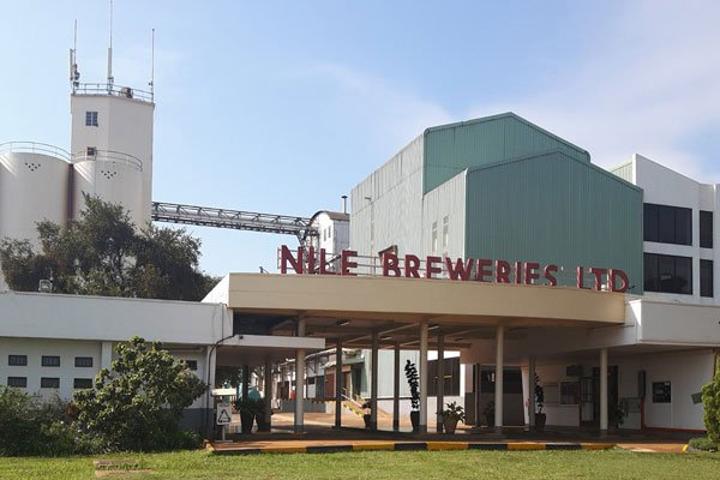
Some of the privatised firms1. Uganda Spinning Mills2. Nile Breweries Ltd3. East African Distilleries4. Uganda American Insurance5. Shell (U) Ltd6. Lake Victoria Bottling Co Ltd7. Uganda Securiko Ltd8. Agricultural Enterprises Ltd9. Uganda Tea Corporation Ltd10. GM Tumpeco Ltd11. White Horse Inn12. Blenders (U) Ltd13. Hotel Margherita14. Mt Moroto Hotel15. Rock Hotel16. Uganda Cement Ind –Hima17. Lira Hotel18. Soroti Hotel19. Hilltop Hotel20. Uganda Fisheries Enterprises21. Mt Elgon Hotel22. White Rhino Hotel23. Uganda Leather and Tanning24. Uganda Meat Packers Ltd25. Lake Victoria Hotel Ltd26. Uganda Hardwares Ltd27. Winits (U) Ltd28. Uganda Cement Ind- Tororo29. Mweya Safari Lodge30. Uganda Motors Ltd31. Kampala Auto Centre32. Uganda Hire Purchase Co33. Republic Motors 100 10034. African Textile Mills35. Total (U) Ltd36. Nyanza Textile Industries Ltd (Nytil)37. Fresh Foods Ltd38. Agip (U) Ltd39. Foods & Beverages Ltd40. African Ceramics Co41. Uganda Pharmaceuticals Ltd42. Motorcraft and Sales Ltd43. Stanbic Bank (U) Ltd44. Kibimba Rice Co Ltd45. Uganda Grain Milling46. Comrade Cycles (U) Ltd47. Uganda Meat Packers Ltd48. Uganda Crane Estates Ltd49. Uganda Ind Machinery Ltd50. Second National Operator51. Entebbe Handling Services52. Barclays Bank of Uganda Ltd53. Lango Dev Co54. PAPCO Industries Ltd55. Uganda Consolidated Properties56. Bank of Baroda57. BAT Uganda58. Uganda Clays Ltd59. NEC Pharmaceuticals Ltd60. Masindi Hotel61. Uganda Telecom Ltd62. Central Purchasing Company63. Kakira Sugar Works64. Steel Corporation of EA65. Uganda Garment Industries66. Apollo Hotel Corporation Ltd67. Transocen 1998 (U) Ltd68. Associated Match company69. Uganda Commercial Bank70. Rwenzori Highland Tea Co71. Nile Hotel International Ltd72. DFCU73. New Vision74. National Insurance Corp75. Uganda Railways Corp76. Dairy Corporation77. Kinyara Sugar