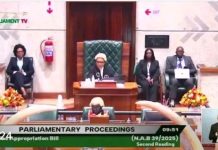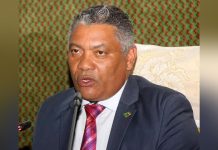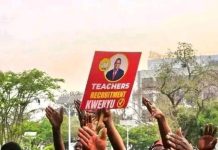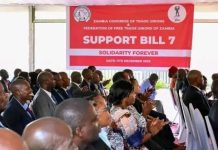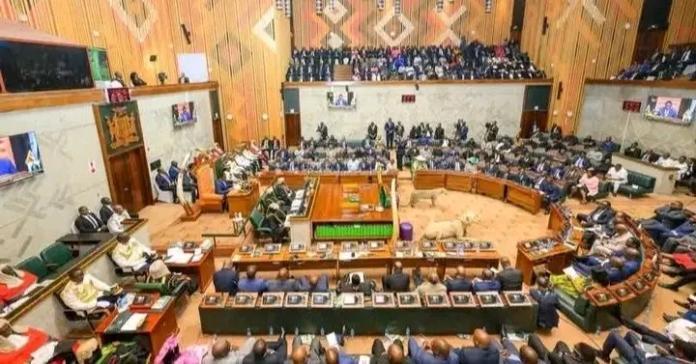
Africa-Press – Zambia. As Zambia’s National Assembly prepares to vote on Constitution Amendment Bill No. 7 today, the debate has shifted decisively from legal theory and street protests to arithmetic. At this stage, Bill 7 is less about who is loudest on social media and more about who controls the numbers on the floor of the House.
Parliament currently has 167 members in total, made up of 156 elected MPs, eight nominated MPs and three ex officio members, namely the Vice President, the Speaker and one Deputy Speaker. With the Chawama seat vacant, the effective voting strength stands at 166.
This means Bill 7 requires a two-thirds majority of 110 votes to pass, or 111 once the House is full again.
On paper, the ruling UPND enters today’s sitting with a strong base. The party controls 88 elected MPs. Added to this are eight nominated MPs and the Vice President, bringing the firm pro-government bloc to 97. Parliamentary convention also matters. Both the Speaker and at least one Deputy Speaker are widely expected to support government business.
This pushes the reliable “yes” column to about 99 before any cross-bench movement is counted.
This is where the tension now lies. To reach the two-thirds threshold, government needs at least 11 to 12 additional votes. Attention has therefore turned to two groups: independent MPs and dissenters within the Patriotic Front. Of the 10 independent MPs in the House, UPND sources indicate that at least six are expected to vote in favour of the Bill.
If this projection holds, the government tally rises to 105.
The remaining arithmetic is uncomfortable for the opposition. The PF, which has publicly announced a boycott of the second reading, still has 54 MPs on the books following the loss of Chawama.
Multiple parliamentary sources, including from within PF itself, suggest that between eight and a dozen PF MPs are likely to break ranks and vote with government. If even the lower end of that estimate materialises, Bill 7 crosses the line.
This numerical reality explains the sharp rise in temperature over the last 24 hours. Lists of MPs are circulating online, accompanied by calls for citizens to “warn” or “name and shame” those suspected of backing the Bill. Allegations of inducements and MP-buying are also trending, though no evidence has been presented publicly.
Government has dismissed the claims as panic politics, while opposition figures argue the numbers themselves prove something “unnatural” is happening.
What is clear is that the opposition has struggled to translate its loud moral objections into a blocking minority inside Parliament. Parties like Citizens First and the Socialist Party dominate online spaces and press briefings, but they hold no seats in the House. Their leverage depends entirely on PF discipline and independent MPs holding firm. This coalition has looked increasingly fragile as voting day approached.
For many MPs, the choice is no longer abstract. Constituency interests, especially around delimitation and proportional representation, are colliding with party instructions. As one MP privately put it over the weekend, “You can shout about illegality on Facebook, but tomorrow you still have to face voters who want more representation.”
As the House convenes, both camps are watching the same scoreboard. Supporters of Bill 7 believe the numbers are finally lining up after weeks of political noise.
Opponents are hoping absences, walkouts or last-minute shifts can still deny government its two-thirds prize.
By the end of today, Zambia will know whether Bill 7 survives its most difficult hurdle. At this point, the battle is not about slogans or court filings. It is about 110 hands in the air, and whether the arithmetic of power proves stronger than the politics of resistance.
For More News And Analysis About Zambia Follow Africa-Press