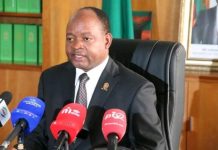
Africa-Press – Zambia. Brian Mundubile has become the latest high-profile opposition figure to challenge the government’s celebration of Zambia’s record US$5.2 billion in foreign reserves, triggering a wide political reaction and energising the Patriotic Front base.
Speaking this week, the PF presidential aspirant dismissed the reserves milestone as disconnected from daily hardship, asking bluntly, “What good is a vault of dollars when the majority of Zambians sleep hungry?” His remarks have circulated widely, provoking applause from street-level critics of the economy and rebuttals from economists and government supporters.
Mundubile’s core argument is that reserves do not translate into welfare. He insists that “64 percent of Zambians remain trapped in poverty,” that unemployment is “above 60 percent,” and that inflation remains “stubbornly in double digits.” The emotional force of this framing resonates in a country still recovering from debt distress. But the statistics require context.
According to the World Bank, national poverty remains high, though long-term structural drivers pre-date the current administration. Unemployment estimates vary widely depending on whether informal work is counted. Inflation has eased from peaks above 20 percent in 2022 to lower, though still elevated, levels in 2024 and 2025.
Mundubile’s language captures lived frustration, but compresses complex indicators into a single political verdict.
He further argues that reserves “may stabilise the kwacha on paper, but they do not put food on the table or jobs in the hands of our youth.” This is partly true and partly incomplete. Foreign reserves are not designed as direct welfare instruments. The Bank of Zambia uses them to smooth currency volatility, secure imports such as fuel and medicines, and signal creditworthiness to investors.
Economists generally view reserves as necessary but insufficient for inclusive growth.
The government has made this distinction itself. Finance Minister Situmbeko Musokotwane has repeatedly said reserves are “a buffer against external shocks,” not household income.
Mundubile strengthens his case through international comparisons. “Nigeria had over US$40 billion in reserves and people were still poor,” he said, adding that Italy’s youth unemployment shows reserves are no cure-all. The analogy highlights a real point: reserves alone do not solve structural inequality. But it also omits a key counter-fact. Nigeria and Italy did not suffer Zambia’s 2020 sovereign default.
For Zambia, rebuilding reserves from near-depletion was a prerequisite for debt restructuring, exchange-rate stability, and renewed access to concessional finance. Without reserves, inflationary pressure and currency shocks would likely have been worse, not better.
On policy, Mundubile outlines alternatives. He promises “direct investment in smallholder farmers,” “industrialisation beyond copper,” expanded social protection, and youth vocational programmes. Each proposal echoes mainstream development prescriptions and mirrors programmes already partly in place, including expanded cash transfers, fertiliser support, and industrial parks.
The difference lies less in concept than in sequencing and scale.
Notably absent from Mundubile’s critique is acknowledgement that the PF government he served under presided over a sharp collapse in reserves, rising debt arrears, and eventual default. Bank of Zambia data shows reserves fell below two months of import cover before 2021, constraining exactly the social spending he now advocates.
Politically, Mundubile’s intervention fits a familiar PF style. He frames macroeconomic recovery as elite “self-praise” and casts hardship as proof of failure. “Foreign reserves are a shiny trophy,” he said, “they impress outsiders but do little for the hungry child in Kanyama.” This rhetoric is effective in mobilising discontent, but risks oversimplifying trade-offs.
International Monetary Fund and World Bank assessments suggest Zambia’s stabilisation has reduced inflationary risk and restored investor interest, though growth and jobs lag behind expectations. Both realities can coexist.
The reaction to Mundubile’s remarks reflects this divide. PF supporters cite fuel and food prices to argue that “nothing has changed.” Government allies point to falling risk premiums, improved credit ratings, and rising reserves as groundwork for future gains. Neither side is wholly wrong. Reserves are not prosperity, but neither are they irrelevant. They are a means, not an end.
As Zambia moves toward the 2026 elections, the reserves debate has become a proxy for a deeper argument about economic literacy and political honesty. Mundubile is right that macro stability alone does not feed families. He is less convincing when he implies it is meaningless or cosmetic.
The central question for voters is not whether reserves matter, but how quickly and credibly stability can be converted into jobs, lower prices, and incomes. That conversion, more than the size of the reserve vault, will determine whether the government’s claims withstand electoral scrutiny.
For More News And Analysis About Zambia Follow Africa-Press