
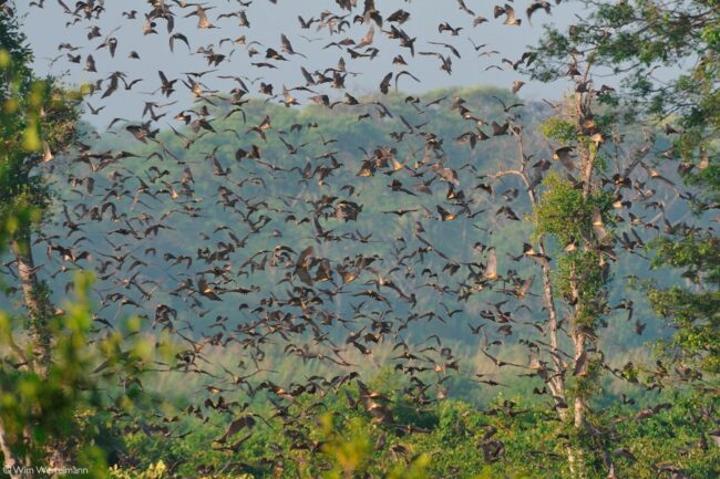
Africa-Press – Zambia. Between October and December each year, a remarkable natural phenomenon takes place as thousands of African straw-coloured fruit bats descend into a tiny patch of evergreen swamp forest within Kasanka National Park. These bats, known for their impressive wingspans of up to a meter and adult weights of up to 350g, flock to the area to feast on the delectable pod mahogany, musuku, mufinsa, and milkwood fruits that appear with the first rains.
The exact whereabouts of these bats during the rest of the year remain a mystery to scientists, though some are believed to reside in the rainforests of the Congo. In Kasanka, these bats represent a diverse mix of individuals, all at different stages of their breeding cycle, including mating, various stages of pregnancy, and caring for their young. This diversity suggests that they originate from various regions across Africa.
The Ministry of Tourism in Northern Province is now urging residents of Kasama, the district located in this unique migration path, to embrace and protect these magnificent creatures. The bats have taken refuge around the National Heritage and Conservation Commission offices in Kasama, where they have found relative peace and safety.
Ministry of Tourism acting Regional Coordinator for Northern and Muchinga Provinces, Kambole Sikate, emphasized that it’s crucial not to disturb the bats in their new home. He explained the reason for their relocation, stating, “The bats used to be found somewhere in Chishimba area, but the people used to stone them, so they shifted to National Heritage and Conservation Commission offices.”
Kasama residents have expressed mixed feelings about the presence of the migratory bats in their district. Drussilah Gondwe, who has observed the annual influx of bats, conducted research to confirm that these mammals are fruit bats. She explained, “I’m aware that the bats come here from Congo between October and December in search of fruits.”
Francis Mukuka, another resident, praised the bats for bringing a special spectacle to the area and suggested that this could be promoted as a tourism attraction. He said, “I would like to appeal to the Ministry of Tourism to protect these bats for tourism purposes.”
Frank Bwembya marveled at the sheer number of bats in Kasama and described them as a divine blessing. He suggested, “These bats are on a mission; I’m sure they have been sent by God, which is a blessing in disguise.”
As these winged visitors continue their annual migration to Kasanka National Park, the Ministry of Tourism’s call to safeguard and celebrate them highlights the potential for this natural wonder to become a unique tourist attraction, enriching the local community and fostering a deeper appreciation for the natural world.
For More News And Analysis About Zambia Follow Africa-Press