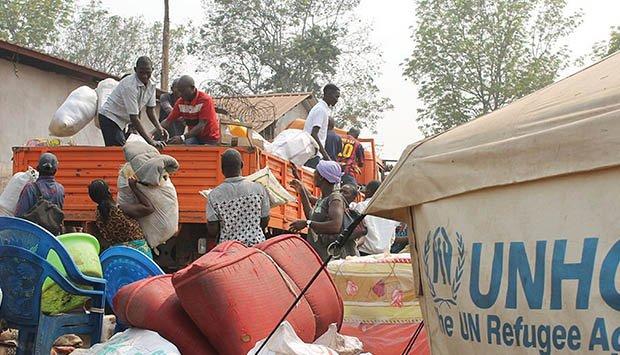
Africa-Press – Angola. The Angolan Executive and the United Nations High Commissioner for Refugees (UNHCR) are preparing the conditions for the resumption of the process of organized and voluntary repatriation of more than 600 refugees from the Democratic Republic of Congo (DRC) sheltered in the settlement in the municipality. of Lóvua, province of Lunda-Norte.
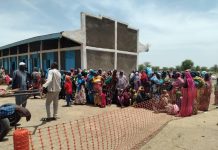
The information was provided, on Monday, by the head of the UNHCR office in Lunda-Norte, Chrispus Tebid, mentioning that of the 7,012 refugees who are in the Lôvua settlement, most have already expressed their desire to return.
The official who was speaking during the celebrations of the World Refugee Day, marked yesterday, said that, as in 2019, the Angolan Government and UNHCR want to see the best conditions created in terms of security, for the resumption of the organized and voluntary repatriation of the refugees. refugees.
In the act, witnessed by the deputy governor for the Political, Social and Economic sector of Lunda-Norte, Deolinda Vilarinho, the head of the UNHCR office recalled that in 2019, a group of 14,757 refugees decided to spontaneously return to the Democratic Republic of Congo, taking into account political stability in the Kassai region.
Furthermore, as a result of the tripartite agreement, signed in August of the same year, between the governments of Angola, the DRC and the UNHCR, three months later the voluntary and organized repatriation process began.
In 2020, repatriation was suspended, due to the closure of Angola’s land borders with the DRC, following measures to prevent the Covid-19 pandemic.
The number of returnees has been on the rise since 2021, to about 71 percent, Chrispus Tebid said.
All conditions are being created to avoid constraints during the process of voluntary return of citizens to their country of origin, especially with regard to international certificates for Covid-19 and Yellow Fever vaccines.
“Right now, what concerns us is the state of the bridge over the Kassai River, which is not in the best condition to carry out transit safely and comfortably, hence the need for government authorities to repair it as soon as possible”, he said.
The official explained that the refugees were included in agricultural and rural trade projects, in a program within the scope of generating income for families, developed by the institution in collaboration with other UNHCR partners.
He informed that the United Nations Agency for Refugees supports with agricultural seeds and technical assistance and, when possible, in the disposal of products.
Money For Small Business
Last year, the United Nations Development Program (UNDP) made available a fund of US$150,000 for refugees from the DRC in the Lôvua settlement and the local community to promote small businesses, with a view to mitigating the negative impact caused by the Covid-19 pandemic. 19.
On the occasion of World Refugee Day, the leader of ADPP (Aid for the Development of the People for the People) in Lunda-Norte, Rose Spelile Musonza, explained that the funding converted into the distribution of used clothing kits, food from the basic basket for the opening of canteens, mechanical workshops, bakeries, agriculture, livestock and sewing machines, is contributing to the social and productive insertion of refugee families, trained in entrepreneurship.
The official said that, of the people selected, 34 are Angolans from the neighborhoods surrounding the settlement.
Rosa Spelile Musonza assured that the project, funded by UNDP, started in 2019.
In addition to UNHCR, the training action for small entrepreneurs, according to the head of ADPP in Lunda-Norte, was promoted in partnership with the National Institute for Employment and Vocational Training (INEFOP), as well as the Jesuit Refugee Services (JRS).
In 2019, at the time of the announcement of the initiative by the UNDP, a mapping was carried out for the election of potential beneficiaries, said Rosa Spelile Musonza.
During the mapping, each of the beneficiaries defined the business area, having chosen the branches of precarious commerce, agriculture, livestock, mechanics, cutting and sewing, said the leader of ADPP.
The objective is to improve people’s standard of living and lay the foundations for mitigating the impact of the Covid-19 pandemic.
Rosa Spelile Musonza said that, in addition to the UNDP programme, among the actions aimed at creating livelihoods among refugees and Angolan communities in the municipality of Lôvua, are the Family Agriculture and Education programmes.
In the Agriculture sector, in particular, 200 peasants are identified, divided into 140 refugees and 60 Angolans who received seeds for the production of vegetables, onions, beans, corn and rice.
The peasants, organized in groups of 20 people each, including an ADPP mobilizer who transmits modern production techniques, also benefited from working tools, such as hoes and machetes, declared the ADPP representative in Lunda-Norte.
For More News And Analysis About Angola Follow Africa-Press