Africa-Press – Angola. President Agostinho Neto ordered the transfer of children from theaters of war to Luanda as a process of healing the profound traumas of violence. 240 children arrived in Luanda, scattered across different reception centers and in Barracão they had art classes.
Talking about Barracão implies talking about two distinct narratives. In the post-Independence period, more precisely at the end of 1976, by the National Council of Culture, the Barracão opened its doors to welcome war pioneers from the various regions of the country.
Thus, two classes of 120 students each were formed, divided into morning and afternoon classes, with a total of 240 children, working in the area between Coqueiros and Cidade Alta, where Rua do Sol and Rua do Cazuno were. .
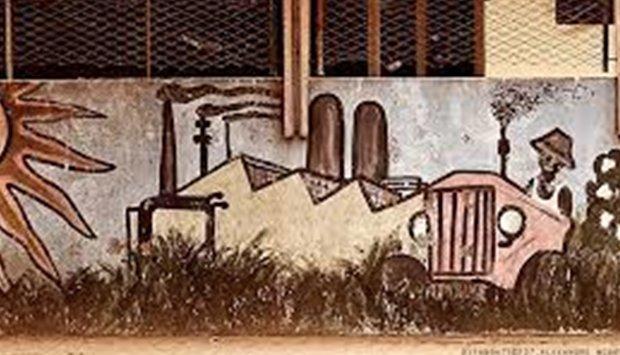
It consisted of 3 large rooms for drawing, painting and ceramics, as well as a library, a coordinator’s office and later, opened at the back, another small room for studies and projects by the plastic arts instructors.
This first narrative was guided by an activity aimed at the recovery of children, through art, whose experience in war scenarios left traumatic, fragile marks and great emotional upheavals.
The Barracão at that time was the testimony of a history of love and art that united us and helped to educate children, to overcome difficulties, to reinvent strategies, trusting in time and preparing the foundations with strongly constructive initiatives, intensified for the good of the pioneers of war, children so sensitive, so needy and so fragile.
I am convinced that Barracão was the greatest art workshop, which saved us all, teachers and students involved in this experience, due to the wonderful power that art has to transform!
The second phase
The second narrative of Barracão dates back to 1978, earning the name Barracão-School of Technical and Artistic Experimentation, open to a vast public of children and young people from the city of Luanda.
A group of plastic arts instructors teach classes and at the same time study art at the facilities, later at Rádio Escola and later at the UNAP facilities, courses given by Cuban teachers, great references in the Plastic Arts of Cuba.
The Barracão of this phase has a wide range of students and extends to other disciplines, such as photography, puppet theater and children’s cinema, in addition to the fixed disciplines of drawing, painting and modelling/ceramics.
A new time arises, a new art flows, a time of great artistic production, whether by students or instructors.
Services are provided to various cultural entities, execution of artistic elements alluding to special dates (Carnival of Victory, National Independence Day), students participate in artistic competitions abroad, winning prizes and an artistically active period is elapsed, rich in positive results .
Children’s cinema, the series “Boys around the fire”, with the participation of students, a teacher and the director. 3 films were made for TPA, from the aforementioned series. children, young people and senior citizens, in the city’s neighborhoods, communes and municipalities.
Barracão was undoubtedly a great school of arts, with its own life, full of art and learning.
It had a preponderant educational role in the society of the time, which was fruitful in the countless and unforgettable experiences during the time of its existence.
Thank you for everything unforgettable Barracão!
For More News And Analysis About Angola Follow Africa-Press