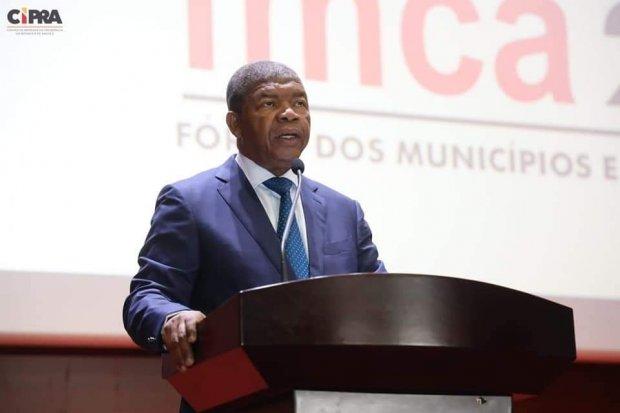
Africa-Press – Angola. Full speech by the President of the Republic, João Lourenço, at the opening of the Forum of Municipalities and Cities of Angola, delivered this Thursday, December 1st.
– Excellency Minister of Territorial Administration;
– Honorable Governor of the Province of Luanda, host of this Forum;
– Distinguished Members of the Executive,
– Distinguished Provincial Governors,
-Dear City Managers,
-Worthy Guests,
-My Ladies and Gentlemen,
The balance of government action for the 2017-2022 term showed that the set of initiatives taken by the Executive, especially in the areas of local development, generally corresponded to the aspirations of the population, although not all projects were completed.
For this reason, we deserve the vote of confidence of the majority of voters who went to the polls, so that we can continue to direct the country’s destinies during the present mandate.
This vote of confidence should result in greater readiness for work, more audacity and insight in the search for solutions to solve the problems of the population, as well as better interaction and communication with citizens, with civil society organizations, with churches , with businessmen and other private institutions, listening to them and welcoming their ideas and initiatives that contribute to guaranteeing social peace and the economic and social development of communities.
Dear participants,
The challenges of local governance in the current context call for a new way of being for the State. For this reason, we are working towards having a more agile, more decentralized public administration so that we can better manage the territory and implement projects that are more suited to the real needs and priorities of the provinces and municipalities.
In this perspective, the Ministerial Departments must focus more and more on their mission of designing and proposing public policies, training local bodies to execute them, supervising their implementation, ensuring compliance with the established objectives and limiting themselves to executing only those projects whose dimension and complexity so justify.
The time has come to implement an effective administrative and financial deconcentration, which transforms municipalities into the center of national development, which will become a reliable and safe antechamber for the institutionalization of local authority.
The process of administrative and financial deconcentration has seen considerable gains, namely in terms of the financial autonomy of municipal administrations, through the collection mechanism and quick return of revenue through the Portal do Munícipe, with the return of Property Tax to municipalities being in progress, under the terms of the new Property Tax Code.
The main instrument in which the strategic vision of a broad deepening of administrative and financial deconcentration should be reflected should be the General State Budget for the financial year of 2023, as well as in the budgets of the following years.
Financial deconcentration is an essential condition for municipalities to have a real capacity to respond satisfactorily to the needs of citizens and companies. We need to work harder on the municipal revenue collection process, exploring the enormous potential that exists in all municipalities.
Municipalities have to do more and not just wait for revenue from the Central Administration, they must promote effective local development, provide better services and create conditions to attract private investment.
When we launched the Integrated Program for Intervention in Municipalities (PIIM) in 2019, skepticism reigned about the technical capacity and degree of preparation of municipal administrations to satisfactorily implement the plan.
The 2689 projects, of which 869 are concluded and 669 with a physical execution above 70%, the more than 30,000 temporary jobs created, only confirm how unfounded our reluctance was in not transferring, for a longer time, more powers to municipalities.
The PIIM has been a true school for learning values for municipal administrations, with regard to the rigor of budget execution, to the point that we have no doubts regarding its continuity, with the Executive currently seeking secure financing solutions for the II Phase of the Integrated Plan for Intervention in Municipalities, which is expected to be more focused on supporting infrastructures for local production and urban development, depending on the profile and potential of each municipality.
The Integrated Program for Local Development and Combating Poverty and the Kwenda Social Protection Strengthening Program are today a reference for programs to combat situations of social vulnerability and promote local development.
So far, we have registered 835,365 households in 56 municipalities and 8,396 villages, having disbursed more than thirty billion kwanzas to date.
Kwenda should not be seen as a mere state welfare program tending to make beneficiaries dependent on the state. Practice has shown that beneficiaries invest part of the money from social cash transfers in small local businesses.
Depending on the results obtained, the Executive affirms its commitment to the continuity of the program and its extension to more municipalities, giving greater relevance to the component of productive inclusion.
My Ladies and My Gentlemen
This development dynamic is only possible if we all understand the imperative need to make the Municipality the center of national development and the primary unit of organization of the territory, increasing its capacity for intervention in such a way that local issues are resolved locally.
It is with this vision that the Executive decided to submit to the National Assembly the bill for the new political-administrative division of the country, whose approval will result in the creation of two more provinces, arising from the division of the current provinces of Moxico and Cuando Cubango.
The country will have a number of municipalities much higher than the current 164, which we think is recommendable taking into account the large extension of the national territory and projections on population growth.
With these adjustments in the political-administrative division of the country, it is intended to promote the harmonious development of the national territory, reduce local asymmetries and manage each part of our country in a more effective and full way, placing the management bodies of the municipalities closer to the citizens.
Citizens demand more and better services, and it is our duty and obligation, as public servants, to understand their legitimate aspirations and adapt our style of work and organization to better respond to challenges, seeking solutions to different problems, if we want to respond positively to the aspirations of the populations.
Parallel to this work of organizing the territory, it is imperative that we take care of the most precious resources we have in the Civil Service, ensure the continuous training of staff and create incentives to attract the best to the municipalities.
It is imperative and urgent that work be completed on differentiated remuneration for officials placed in less attractive municipalities, through the attribution of subsidies that encourage them to settle in these territorial circumscriptions, contributing to their development.
Dear participants,
Improving the human development index of the population largely depends on the investment we make in education and health. For this reason, despite the financial difficulties that the country has been going through, the Executive continues to invest in the admission of health and education professionals. This effort will continue, just as we must continue to invest in the construction of schools and health units in close proximity.
Meanwhile, our big bet in these two very important sectors for the country’s development must continue to be the initial and continuous training of teachers and health professionals in specialized centers of reference and the continuous improvement of their working conditions so that they can provide your work with more pride.
It is also essential that we dedicate special attention to the management of cities, neighbourhoods, towns and villages and to promote the urban development of the Municipalities, starting with the preparation of Municipal Master Plans, in order to discipline the use of land for different purposes, but particularly for housing and for the production of food products.
The Executive has several ongoing initiatives aimed at increasing the internal capacity for the production of goods and services, as is the case of PLANAGRÃO. However, there are still some barriers in the implementation of private investment projects that must be removed so that we can promote employability in rural communities and beyond.
Provincial Governments and Municipal Administrations must be the main facilitators of private investment in their territories, creating the objective conditions for private entrepreneurs to be able, with observance of the law and respect for the Environment, to implement projects that contribute to the increase of internal production of goods and services and the supply of jobs.
Provinces with agricultural potential must have a strategy to optimize idle land and facilitate access to it by investors who have viable projects for food production, especially for growing grain and raising cattle.
Only by acting consistently will we be able to guarantee the population’s food and nutritional security and balance the country’s balance of payments.
Dear guests,
The Forum of Municipalities and Cities of Angola is a collegiate consultation body of the President of the Republic, which aims to promote and streamline the country’s community development. It is an opportunity for dialogue and exchange of experiences between public managers at central and local levels, which serves to regularly assess the implementation of policy measures adopted within the scope of the reform of the State’s local administration.
I congratulate all the employees involved in the organization of this VIII edition and encourage the guests to participate actively in the discussion of the points included in the work agenda.
This Forum takes place at a time when municipalities occupy more space in political, economic and social life, when they have more intervention and are effectively contributing to change our governance paradigm, stimulating greater participation of Local Administration and a reduction, to the extent recommended, the intervention of the State’s Central Administration.
The Forum’s motto is quite happy: “life is made in the municipalities”. doubts that certain tasks are better carried out when carried out by those who are closest to the population and directly experience their problems.
Within the framework of our “Work More and Communicate Better” strategy, the Executive will increase the mechanisms for dialogue and citizen participation in the analysis of major national issues and in identifying the best solutions to resolve them. This is an initiative that aims to democratize more governance and promote active and participatory citizenship among citizens.
In order to stimulate healthy competition between those who manage to have less rubbish, streets and sidewalks in good condition, attractive public squares and gardens, painted buildings, sports courts and other spaces for sports and leisure for citizens, among other items to be defined, I launch the challenge of institutionalizing the Best City, Best Municipality Award, a way of promoting and recognizing merit and excellence in the management of Municipalities and Cities in the country.
With these words I declare open the VIII Edition of the Forum of Municipalities and Cities of Angola 2022 and I wish you the best success in the work.
Life is made in the Municipalities!
Thank you for your attention.
For More News And Analysis About Angola Follow Africa-Press