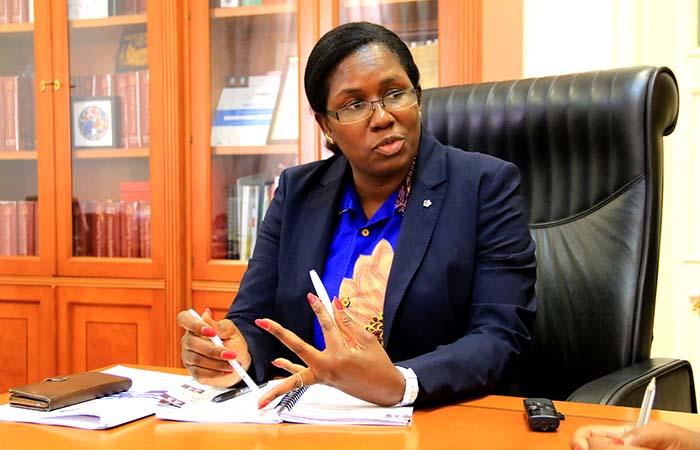
Africa-Press – Angola. About 200 people have been, in the last five years, victims of human trafficking in the country, a phenomenon that occurs, in a more accentuated way, in the border provinces, in Luanda, the Secretary of State for Human Rights Humans.
Ana Celeste Januário referred that this phenomenon occurs, fundamentally, in the provinces of Luanda (capital of the country), Cunene, Lunda-Norte and Malanje, involving adults and children, for forced labor internally or abroad.
He recognized, however, that the cases reported and entered in the national database do not reflect the reality of the country.
He pointed out that the most frequent types of human trafficking were child exploitation, domestic servitude, begging and sexual exploitation, with economic and cultural motives as the main reasons.
“Women and children are the main victims, because it seems to be easier to deceive them, (…) and, when there are women, it is easier to take a child and sell it, use it for forced labor, sexual exploitation and also girls. and babies for adoption”, he clarified.
The Secretary of State explained that, of the total number of victims, ten percent are foreigners and, among Angolans, many are sent abroad, especially to Namibia and Portugal, after passing through the Democratic Republic of Congo (DRC).
To try to reverse the situation, the Government has carried out education campaigns, working with schools, young people, children, transporters, with the Customs and Border Guard Police, airport personnel and everyone who can help signal occurrences.
He considered that the proportion of cases denounced was much higher than those judged, but there is already a large number of cases judged that do not come to the public for various reasons, for some of which he made “half blame”, without much detail.
“Unfortunately, not all cases reach the authorities, but of those that came to our attention, twenty-seven percent became final and with accountability”, he said.
The Secretary of State alerted society to denounce the authorities whenever there are situations or signs that indicate possible victims or traffickers, such as absolute control over their movements, limited contact with family or friends, injuries resulting from aggressions or when victims act as if they were instructed, among others.
He also referred to false “scouts” who, from abroad, “probe” the most unwary with promises of a grand future for their children as a fashion model or footballer, but, posted abroad, no one ever hears about them.
In order to discourage this practice in the country, the Government proceeded, in 2021, to increase the penalty, which ranges from two to eight years in prison, and may be increased depending on the situation.
“Trafficking in human beings is, on an international level, an increasingly fine-tuned global component. Therefore, we have to be attentive, connected and denounce, so that people do not fall into the traps ”, she concluded.
Human trafficking is a violation of human rights and, as a result, the United Nations General Assembly adopted, in 2010, the Global Action Plan against this scourge.
For More News And Analysis About Angola Follow Africa-Press