Africa-Press – Angola. The Angolan government announced, this Friday, in the National Assembly, the approval of an Integrated Plan for the Institutionalization of Local Authorities during the first quarter of this year.
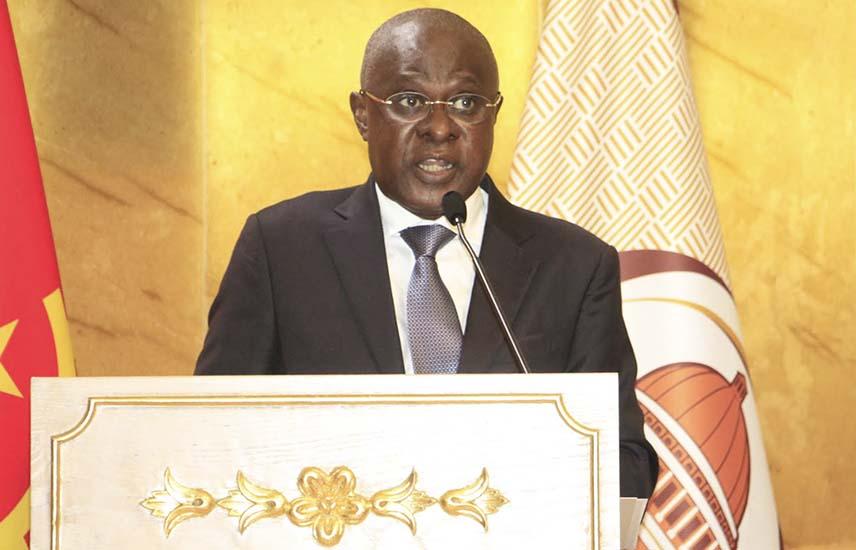
The information was provided by the Minister of State for Economic Coordination, Manuel Nunes Júnior, who proceeded, in the hemicycle, to read the message from the Holder of Executive Power, on the occasion of the discussion and approval of the General State Budget for the financial year 2023.
Before the Plenary, the Minister of State revealed that, for this purpose, an Interministerial Commission was created through a Presidential Dispatch.
He informed that the 2023 State Budget Proposal provides, in a satisfactory manner, the resources for the Reform of Local Administration, specifically the Institutionalization Program for Local Authorities.
He declared that the resources foreseen in this budget for the implementation of the Integrated Plan for the Institutionalization of Municipalities safeguard the construction and rehabilitation of administrative and municipal infrastructures for the functioning of the future city councils and assemblies of the municipalities.
It also contemplates carrying out the voter registration with characteristics of proof of life, the reinforcement of administrative deconcentration, the alteration of the political-administrative division, the dynamic municipal diagnosis, the communication strategy, as well as the conclusion of the municipal legislative package.
Commercial debt
Manuel Nunes Júnior highlighted the fact that the 2023 OGE Proposal includes a financial package of 429 billion kwanzas for the payment of arrears on the commercial debt of companies that supply the State.
New growth paradigm
The message from the President of the Republic, addressed to Parliament, emphasizes the fact that, both in 2021 and in 2022, the growth rates of the non-oil sector were higher than those of the oil sector.
According to Manuel Nunes Júnior, Angola is starting a new growth paradigm, which is based on the non-oil sector driven by entrepreneurship and the creativity of the private sector.
“It is on this trajectory that we must maintain so that we have a strong economy, supported by solid foundations that make it resilient to external shocks”, he pointed out.
He maintained that, with this budget, the Executive will implement a set of measures to facilitate the access of the private sector to productive financing, through the Development Bank of Angola (BDA), which will provide financing within the scope of the National Plan for the Promotion of Grain Production (Planagrão).
The object of the programme, said the Minister of State, is to increase the country’s capacity to produce grains, namely wheat, rice, soybeans and corn, with a focus on the east of the country.
He informed that the resources applied are equivalent, in kwanzas, to USD 5.7 billion, of which USD 3.3 million are for financing the private sector and the remainder for public investments related to this project.
He added that, in terms of the economic sector, agriculture gained particular prominence in the economy’s diversification agenda, with direct resources amounting to AOA 412.3 billion.
With this OGE Proposal, he said that the Executive intends to boost structuring public investment in the fields of energy, water, roads, ports, airports, railways, among others, which contribute to the productivity of the national economy and to the good -being of the population.
He referred, on the other hand, that the 2023 State Budget Proposal also includes measures to mitigate the risks of oil price fluctuations in the international market.
“We are, therefore, determined in the general policy that we are following and convinced that this is the right way to strengthen our economy, giving back to Angolans the jobs and lost income and the purchasing power that was diminished with the long recession in which we were immersed for five years”, he emphasized.
He noted that, with this OGE, the Executive intends to safeguard the sustainability of public finances and reduce the structural fiscal deficit, that is, the primary non-oil deficit of 7.7% of GDP, according to the closing estimates for the year 2022 for 6.5% of GDP.
As the Minister of State said, the non-oil primary deficit is an important indicator “that shows us how we are diversifying our tax revenues, excluding revenues from the oil sector.
On behalf of the Head of Executive Power, he also underscored the reinforcement in improving the socio-economic conditions of the populations, with emphasis on expenses in the social and economic sector.
He explained that, in terms of overall expenditure, social expenditure is the second largest after debt service, with a weight of 23.9 percent and is the largest share of fiscal expenditure, representing around 43.5 percent of expenditure. total tax.
In terms of the portfolio of public investment projects, he revealed that the Executive will continue to implement the Municipality Implementation and Intervention Program (PIIM) and complete the various works included in the construction and rehabilitation program of road infrastructures and other projects, within the framework of public-private partnerships.
He recalled that the 2023 OGE was prepared on the basis of an oil price of US$75 per barrel and an oil production of one million and 180 thousand barrels per day.
For 2023, he said that the Executive foresees a growth rate of 3.3%, as a result of the positive growth prospects of the oil Gross Domestic Product (GDP), including gas production and non-oil GDP.
The informed that an inflation rate of 11.11 percent is expected for the year 2023, noting that the Executive is working to achieve single-digit inflation rates in the coming (years).
For More News And Analysis About Angola Follow Africa-Press