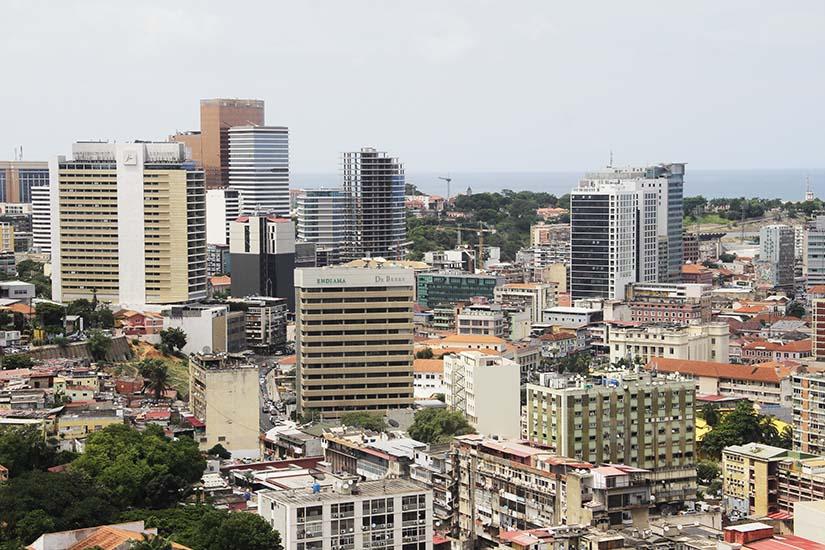
Africa-Press – Angola. The Angolan capital, Luanda, which in a few days will complete 447 years of existence, continues to register a high rate of illegal occupation of land, the emergence of new neighborhoods without basic services and the construction of houses without a Master Plan.
At a time when there are 53 years left to complete 500, Luanda is registering a true metamorphosis in architectural terms, with the deactivation of dozens of historic buildings and the emergence of hundreds of modern ones.
In recent decades, the colonial architectural pattern of the city has been overshadowed by the appearance of new “skyscrapers” (buildings), mostly built in the lower zone of the most populous province of Angola, with approximately 10 million inhabitants.
Currently, the city has nine municipalities and several urban districts, which extend outside the localities, bringing a reality of very challenging contrasts.
If, on the one hand, hundreds of disorganized neighborhoods are born overnight, on the other hand, there is an increase in modern housing projects throughout the province, which “absorb” a mixture of architectural matrices, from the western to eastern.
Nowadays, it is almost impossible to even identify the pattern of the colonial structure, which makes room for debates on the new architectural matrix of the city and the imperative need to adopt and implement a Master Plan.
Faced with these two scenarios, architect Elias Lucas essentially points to the practical implementation of master plans as one of the solutions to minimize disorderly urban growth in Luanda, in particular.
According to the specialist, who was speaking to press on the subject of Luanda’s 447th anniversary, to be celebrated on the 25th of this month, the master plans are fundamental instruments that help to carry out preliminary studies for the construction of a city in a sustainable way.
The architect, who has 30 years of professional career, says that with the use of these instruments it will also be possible to urbanize informal neighborhoods, creating basic infrastructure and essential services for the population.
To this end, it suggests that these plans be drawn up jointly by the municipal administrations, the Geographical and Cadastral Institute of Angola (IGCA) and the Ministry of Public Works, Urban Planning and Housing, with a view to harmonizing urban projects.
He recalls that, from 1980 to 2000, urban projects in Luanda were carried out according to the Master Plan from the colonial period, an instrument that was no longer used years later, allegedly because it was outdated in time.
With that, he says, the urban transformation of the city continues to be carried out in a disorderly way and with records of the appearance of new buildings in areas with single-story houses.
From his point of view, this takes away the privacy of citizens who live in houses, in addition to the urban aesthetics of the city.
“The emergence of buildings in areas with single-story houses restricts the rights of citizens and exposes the privacy of people who want to take a shower in the backyard, for example”, warns the expert.
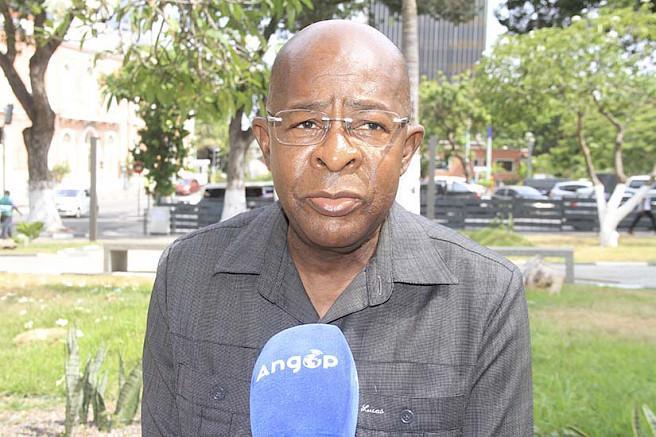
According to Elias Lucas, the emergence of informal neighborhoods or disorderly constructions, basic sanitation and macro drainage in the country’s capital, particularly in peripheral neighborhoods, are increasingly chaotic, especially in the rainy season.
Despite acknowledging evolution in the appreciation of national professionals, he advocates a greater participation of Angolan architects in the elaboration of urban projects, with the inclusion of various technicians, such as historians, anthropologists and environmentalists.
It also considers it necessary to create housing centers with basic infrastructure, to bring services closer to residential areas and decongest the urban center.
Still in relation to the construction of informal houses, who also defends the use of master plans is the architect Helvécio da Cunha, who considers crucial instruments for defining the orderly and calculated growth of a given city.
Until 1975, urban projects were managed by master plans from the colonial era, but after that period, government authorities were unable to actually implement these plans, due to various vicissitudes”, he underlines.
Still in the same domain, the specialist suggests the need to continue to invest in urban requalification in certain areas, while the master plans are not implemented, so that the urgent problems of urban areas and the outskirts of Luanda can be solved.
Alongside this, the professional also chooses the construction of new cities in the remaining provinces, as another alternative to relieve the country’s capital.
Another specialist who shares the same thought is architect Vity Nsalambi, for whom the solution to Luanda’s problems fundamentally involves slowing down the flow of migrants from other provinces to the Angolan capital.
As an example, he recalls that Luanda was designed to accommodate approximately 500,000 inhabitants, but currently has more than eight million people, a fact that makes it difficult and unsustainable to manage a territory whose orderly urban growth is much lower than the population.
With this framework in mind, the also vice-president of the Order of Architects of Angola (OAA) defends the improvement of territory management instruments, creating an aligned and solid base, to avoid disorderly urban growth in Luanda.
It also considers it necessary to draw up quality public policies, so that citizens choose to settle in their areas of origin or residence.
Another solution that the architect points out is the sharing of knowledge between various technicians, for the correct application of the instruments that make it possible to better manage and guide the urban growth of the territory.
According to Vity Nsalambi, the current urban transformation of Luanda “is not being done well”, as it is irregular and disorderly.
Urban mobility lacks alternative routes
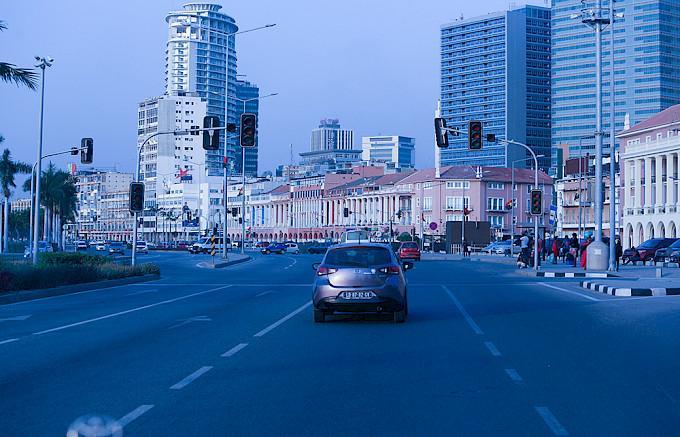
Alongside informal construction, Luanda also faces the “chronic” problem of urban mobility, which is more visible in the rainy season, due to the “blockage of secondary and tertiary roads”, which serve as alternatives for motorists in dry weather.
According to the architect Elias Lucas, this scenario can be improved with the rehabilitation of secondary and tertiary roads, as well as with the increase in means of road, rail and sea transport.
The specialist recognizes, however, that the government authorities are taking significant steps towards improving the movement of people and means of transport, with the rehabilitation of some structural roads and the increase in the offer of public transport.
With the aim of making the city more livable, integrated and international, in 2015, the General Metropolitan Master Plan of Luanda (PDGML) was launched, which, from a practical point of view, “stopped in time and was not implemented”.
After this period, the PDGML was approved by the Council of Ministers in 2018, constituting a “planning instrument that integrates the map and ordering of growth and transformations to be carried out in the province of Luanda”, according to the communiqué issued from this Organ at that time.
Despite this step, architect Elias Lucas claims that the plan is not being implemented.
Population exodus accelerates disorderly growth
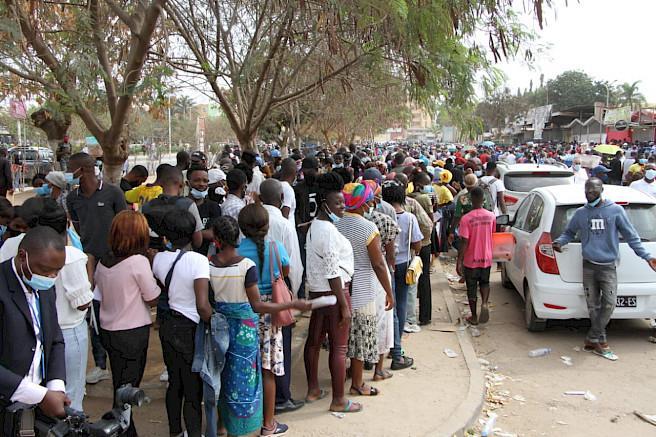
Among the various obstacles that hamper the harmonious and orderly urban growth of Luanda, the vice president of OAA highlights the migratory flow of citizens from other provinces to the capital and the lack of concrete measures that put an end to disorderly constructions, in a timely manner.
Vity Nsalambi recalls that the displacement of thousands of citizens from their areas of origin to Luanda derives from the historical process that the country went through, with emphasis on the war.
This migratory process, he continues, caused the irregular and unbridled occupation of land and, consequently, the disorderly urban growth of the Angolan capital, a fact that created a deficit in the management of the territory by the municipal administrations.
Another factor that has also accelerated the urban disruption of the city is the lack of instruments for land use planning, such as more accurate urban management planning, according to the technician.
The architect Elias Lucas points out, in addition to the lack of feasible master plans, the concentration of essential services in the urban area as one of the causes of the growth of informal constructions in Luanda.
He recalls that, before national independence, the capital of Angola was a small city, with at least 600,000 inhabitants, but, currently, it has become a mega-metropolis, as a result of the armed conflict.
With this, the press source refers that the city’s population rate evolved very quickly, compared to the creation and construction of orderly urban infrastructures, such as housing and communication routes, which “did not keep up with population growth”.
He considers that this exponential population growth served as a gap for citizens to appropriate the spaces and realize the dream of home ownership, without complying with the rules, nor obeying the architectural standard of the city.
“Some people take advantage of the lack of state administration or local supervision to obtain easy profit, through the invasion of land, a situation that aggravates the increase in disorderly constructions in the city of Luanda”, underlines the specialist.
Post card from luanda
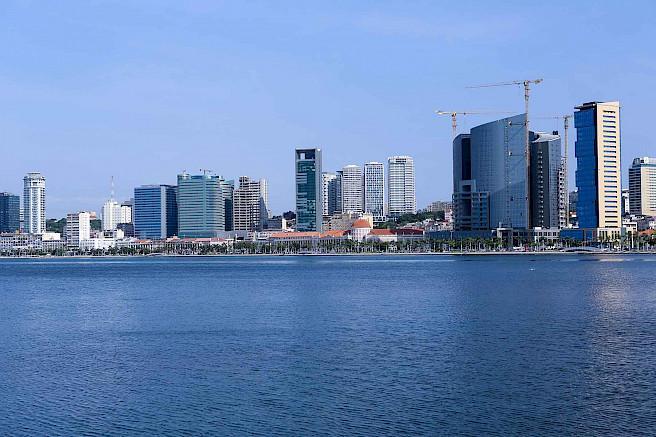
Founded in 1576, when the Portuguese Paulo Dias de Novais and his supporters anchored on Ilha das Cabras (currently Ilha do Cabo), Luanda is located in the center-north region of the country, on the Atlantic Ocean coastal zone, with a territorial extension of 18 thousand 826 square kilometers.
According to the projection of the National Institute of Statistics (INE), made at the end of 2018, Luanda remains the most populous province in Angola, with 8.2 million inhabitants (estimate for 2019), which, at the time, represented 27 .3% of the more than 30 million Angolans residing in the country.
This population is distributed across the nine municipalities that make up the province of Luanda, namely Cacuaco, Kilamba Kiaxi, Cazenga, Luanda, Viana, Ícolo and Bengo, Quissama, Talatona and Belas, comprising several urban districts and several communes.
As for the habits and customs of its people, the highlight is the carnival parade, held annually on the Marginal de Luanda, as well as the music, with the rhythms/styles kizomba, semba, rivet, cabetula, kilapanga, kuduro and zouk.
With a hot season, which runs from October to May, and cold and dry (cacimbo), from June to September, Luanda is the main economic and political center of Angola, whose population is mostly Christian.
His references include the museums of the Angolan Armed Forces, Slavery, Natural History and Anthropology, as well as the National Bank of Angola (BNA), the Iron Palace, the Provincial Government Headquarters, churches, among other monuments and sites. .
The Marginal and the Island of Luanda or Cabo, the Miradouro da Lua, Cabo Ledo and the Quiçama National Park also stand out among the main visiting cards.
Meanwhile, the 4 de Fevereiro International Airport, the Port of Luanda, the Luanda Railway and national roads are the main entry and exit ports for people and goods at national and international level.
For More News And Analysis About Angola Follow Africa-Press