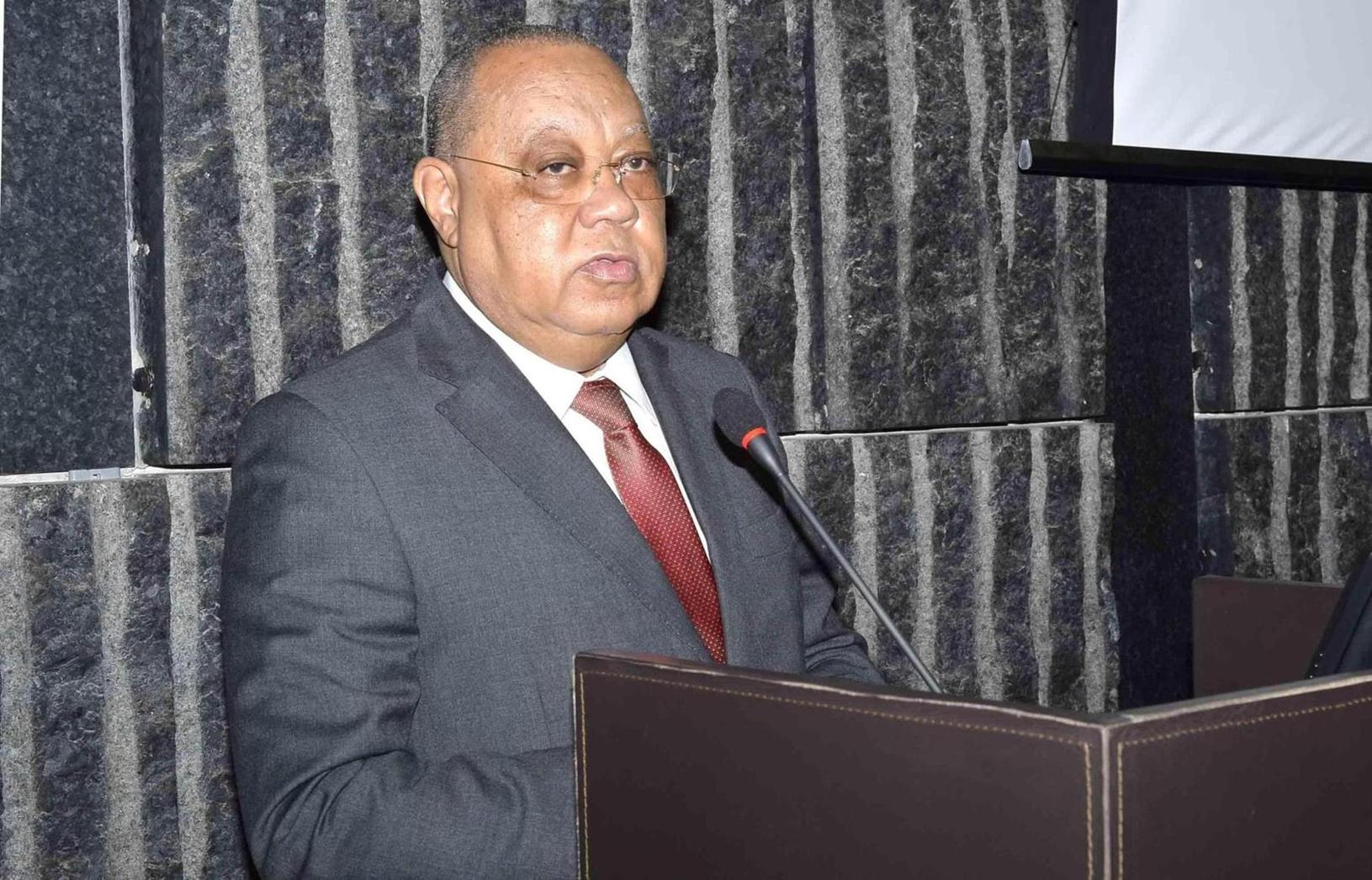
Africa-Press – Angola. The Attorney General’s Office (PGR) is struggling with scarce funds to properly carry out its work, said this Wednesday, the head of this body, Hélder Pitta Groz.
The Public Ministry magistrate (MP), who responded to the concerns of deputies, in Parliament, within the framework of the discussion of the General State Budget (OGE) 2023, said that there was a great disparity in funds between the PGR and the courts.
“The PGR has more magistrates than the courts, this means that it needs more money”, said Pitta Groz, for whom while judges only work in the courts, MP magistrates are in different areas such as the Criminal Investigation Service (SIC) , Migration and Foreigners Service (SME), Penitentiary Service.
According to the source, as the courts have a budget greater than that of the PGR, it means that court employees have other perks that the Public Prosecutor’s Office (MP) cannot have, due to limited resources.
“What could happen, for sure, is that in a little while the MP magistrates start to work less and, afterwards, those who have more benefits will not work because the processes will not reach them (…)”, he stressed.
With few resources “it will be very difficult for us to continue to provide the services that the population expects from us and that they have already become accustomed to”, stated Hélder Pita Groz.
Deputy proposes budget increase
The president of the 10th Commission of the Parliament (Human Rights, Petitions, Complaints and Suggestions of Citizens), Virgílio Tiova, defended, recently, in one of the hearings, in the Parliament, the increase of the resources of the Attorney General of the Republic (PGR) in the OGE, for its specificity.
According to the deputy, a prosecutor often assists three judges or more than two squads, while the judge is only deployed in a single court, but the PGR unfolds not only in the courts, at all levels, and in several institutions, “for this has to have more resources”.
BI massification
The Ministry of Justice and Human Rights will intensify the massification of birth registration and the attribution of the Identity Card (ID) in the country, to benefit a greater number of citizens, informed yesterday the Secretary of State for Justice, Evaristo José Solano.
According to the official, the Executive’s perspective is to reduce or even eradicate the problem of citizens still without identity.
He recalled that a Multisectoral Commission was created, by Presidential Decree, headed by the Minister of State and Chief of Staff of the President of the Republic, which brings together various sectors committed to the massification of BI.
“We will then have the possibility of seeing a greatly reduced number of individuals who do not have an Identity Card (BI).
Regarding civil registration in maternity hospitals at provincial level, he said that the same has been observed in some cases.
However, he noted that curious facts have occurred in maternity hospitals, namely when the public servant, when registering, is prevented by the parents for cultural reasons.
In certain families or regions, civil registration at birth is not possible, and you must wait for a certain period for the child to be registered. “Anyway, each culture is a culture and we have to respect (…)”, she pointed out.
For More News And Analysis About Angola Follow Africa-Press