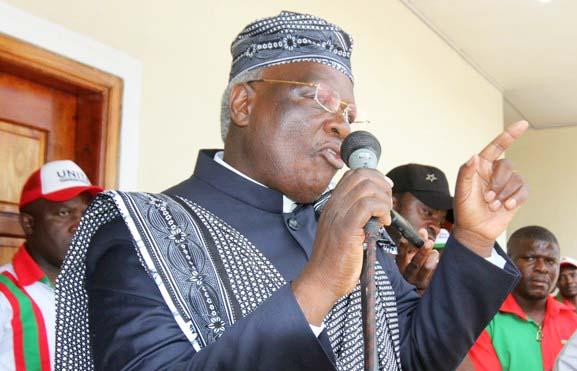
Africa-Press – Angola. The secretary of UNITA in the province of Huambo, Apolo Yakuvela, reiterated, Saturday, the commitment of the party organization to continue working towards the realization of the challenges of preserving peace and consolidating democracy in Angola.
The politician reassumed this desire, when speaking at the provincial act of commemorations of the 49th anniversary of the extinct Armed Forces for the Liberation of Angola (FAFA), former military arm of UNITA, marked on the 24th of this month.
On the occasion, he said that UNITA in Huambo reiterates its conviction to continue to cement the sources for the reinforcement of dialogue at the level of communities and institutions, so that democracy, freedom of expression and opinion, popular sovereignty and citizenship are “a true fact” in the province of Huambo.
Apolo Yakuvela also said that the party-political organization is available to contribute, patriotically, to the sustainable development of this region of the Central Plateau, as a critical and constructive opposition, capable of exercising the function of political supervision and control under the terms of the Constitution. of the Republic and the law, with alternative proposals to the Government’s public policies.
The politician praised the maturity shown by the population of Huambo during the general elections of August 24, 2022,
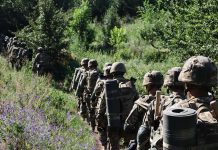
The FALA, founded on January 24, 1974, one of the three armed movements that fought for National Independence, achieved on November 11, 1975, were extinguished in 1991, as a result of the Bicesse agreements, as well as the Popular Armed Forces of Liberation of Angola (FAPLA) from the MPLA and the National Liberation Army of Angola (ELNLA) from the FNLA
The Bicesse Accords were signed on May 31, 1991, in Estoril, Portugal, by the then President of the Republic, José Eduardo dos Santos, and the former leader of UNITA, Jonas Savimbi, in the presence of representatives of countries of the Troika of Observers , namely Portugal, Russia and USA.
Essentially, the Agreements aimed at ending the war in Angola, implementing a multi-party democratic system and holding free and fair elections, as well as demobilizing the armed movements of each political party, giving way to the Angolan Armed Forces (FAA).
Although it was short-lived and did not prevent the escalation of the war, the text determined, among other points, a cease-fire between the military forces of the Government and UNITA.
For More News And Analysis About Angola Follow Africa-Press