Africa-Press – Angola. The President of Gabon, Ali Bongo, assumed the rotating leadership of the Economic Community of Central African States (CEEAC), replacing his counterpart from the Democratic Republic of Congo (DRC), Félix Tshisekedi.
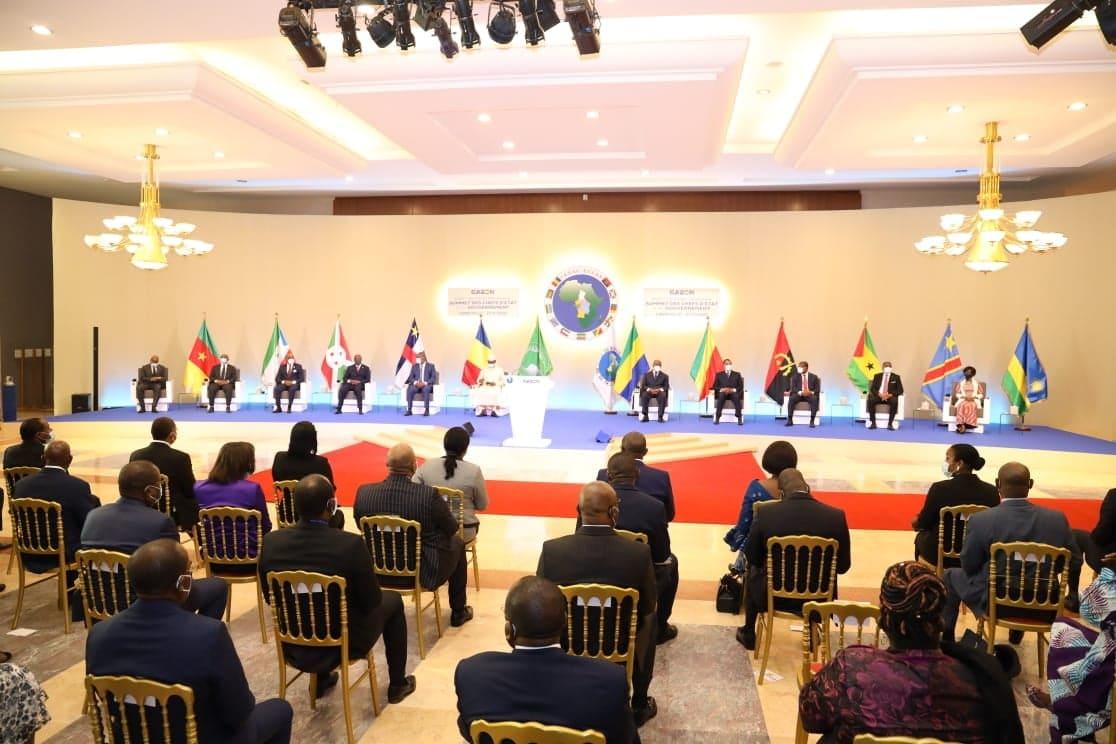
The succession took place during the 22nd Ordinary Session of the Conference of Heads of State and Government of ECCAS, which ended this Saturday, in Kinshasa, capital of the DRC, informs the Angolan Ministry of Foreign Affairs (MIREX).
The MIREX document stresses that Angola was present with a delegation headed by the Minister of Foreign Affairs, Téte António, representing the Angolan Head of State, João Lourenço.
The closing ceremony was marked by several speeches, namely by Ambassador Abdou Abary, Special Representative of the UN Secretary General and Head of the United Nations Office for Central Africa (UNOCA).
The note also highlights the interventions of the president of the CEEAC Commission, Gilberto Veríssimo, of the President of the DRC and outgoing CEEAC, Félix Tshisekedi.
During the Summit, advances the MIREX, the Heads of State and Government, as well as the respective representatives analyzed and adopted several documents, among which the Report of the Council of Ministers.
The meeting also analyzed the Annual Report of the President of the Commission, the Report on the ECCAS facilitation period, within the framework of the transition process in the Republic of Chad and the Protocol on the Strategy for the Development of a Sustainable Blue Economy in Central Africa.
Among the documents analyzed are also the Decision on the approval of the Plan of Priority Actions for the year 2023 and the Decision on the approval of the Memorandum of Understanding between ECCAS and the Member States on the capabilities promised to the Multinational Force of Central Africa ( FOMAC).
The Heads of State and Government also signed the protocols relating to the revised strategy on the Protection and Security of vital interests at sea and in continental waters shared by ECCAS Member States.
The documents analyzed at the Kinshasa meeting are completed by the Strategy on the Development of a Sustainable Blue Economy in Central Africa, as well as the Decision on the approval of the armament cycle for the posts of the Regional General Staff of FOMAC for the horizon of 2050.
The Economic Community of Central African States (ECCAS) was created in Libreville, Gabon, in December 1981, becoming operational only in 1985.
ECCAS aims to promote cooperation and self-sustainable development, with particular emphasis on the stability and economic integration of Member States and contribute to improving the quality of life of the respective populations.
The Community is made up of Angola, Burundi, Cameroon, Central African Republic, Chad, Congo, Equatorial Guinea, Gabon, Rwanda, São Tomé and Príncipe and the DRC.
For More News And Analysis About Angola Follow Africa-Press