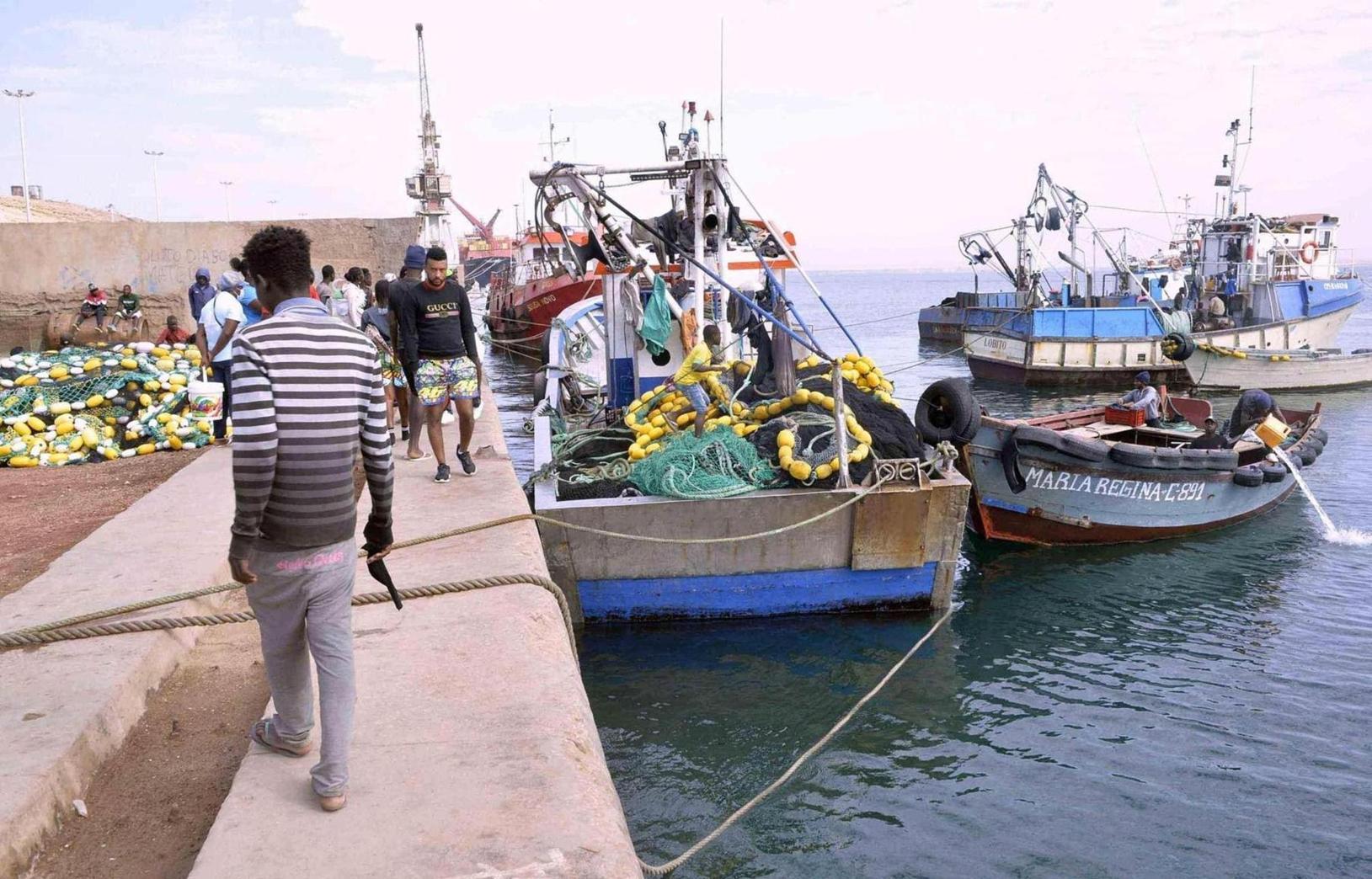
Africa-Press – Angola. Fishing shipowners in Benguela are asking the Government to strengthen control measures on trawling on the Angolan coast, as it is affecting the preservation of fish species.
Banned in many countries due to the long-term consequences resulting from the capture of large numbers of non-target species, trawling emerged in the early 14th century and is a practice carried out by the fishing industry worldwide.
In trawling, a large, heavy net, nearly the size of a city block, is dragged along the ocean floor to scoop up anything that gets in its way.
And Angola is no exception to the rule, warns the vice-president of the Benguela Fisheries Association, Álvaro Eugénio, admitting that trawl fishing, although legal in our country, is increasingly compromising fishing resources, due to the intense practice.
“We have to change certain practices right now, so that tomorrow is not painful”, warned Álvaro Eugénio, in a debate on Rádio Benguela.
With this scenario, he suggests the possibility of closure of companies that have existed for 40 years, in the municipality of Baía Farta, given the difficulties they are experiencing in terms of catches.
Therefore, it defends serious measures, so that the fishing resources grow, to guarantee the sustainability of the companies, providing them with conditions to honor the commitments with the bank.
He adds that the association, with 25 companies, has been trying, for over 20 years, to alert the Ministry of Fisheries and the Sea to the consequences of trawling on pelagic species, including horse mackerel and sardines.
The official, who also owns the fishing company “Alva Fishing”, recognizes that illegal fishing has had a huge impact on the sharp decline in catch levels in recent years.
With the drop in catches at alarming levels, companies have extreme difficulties regarding bank commitments, with the shipowner pointing to the case of horse mackerel which, despite being preferred by the population, has become a vulnerable species.
It also alleges the disappearance of a species of sardine, popularly known as lambula, due to intense trawling on the coast, motivated by inefficient inspection.
“Until the arrival of trawlers, we had a perfectly healthy resource of this species (horse mackerel),” he said, recalling that, 25 years ago, 20-meter wooden boats and small nets caught more fish than current vessels with cutting-edge technology.
“I had two wooden boats and I had fish every day”, he recalls. And he adds: “Today, there are months when we are stuck waiting for the boats to arrive just for maintenance”.
Coastal trawlers are illegal
In favor of increased supervision combined with the rational management of resources, Álvaro Eugénio made it known that there are, at the moment, a large number of legal trawling vessels, as they are fishing with a license issued by the competent authorities.
Instead of fishing in the miles, the shipowner denounces that, many times, these trawls are seen by the seine vessels of the Baía Farta companies collecting quantities of species on the coast, which is illegal.
“This fact is verified (…). It is not a simple sentence that is thrown out here”, he maintains, adding that these vessels fish at will in areas where they should not be trawling.
“I simply don’t think they should be here”, he asserts, highlighting the seizure, last year, of a trawler boat at a time when the capture of horse mackerel was prohibited, which, in the port of Lobito, declared 800 tons, when it had the triple that amount.
Hence Álvaro Eugénio insisted on pointing the finger at the blatant lack of inspection means, since, in his opinion, it has contributed to the high rates of trawling on the coast.
Normally, these trawls have so closely monitored the schools that they harvest certain species, a worrying scenario that the Government must put an end to, as the vice-president of the Benguela Fisheries Association concludes.
For More News And Analysis About Angola Follow Africa-Press