Africa-Press – Angola. “There is no development in the commune of Sacandica”, was this the reaction of young Manuel Ngongo, 19 years old, a 9th grade student at the only school in that community.
Manuel says he will be forced to leave the region as he no longer finds any attractive reason to continue living there.
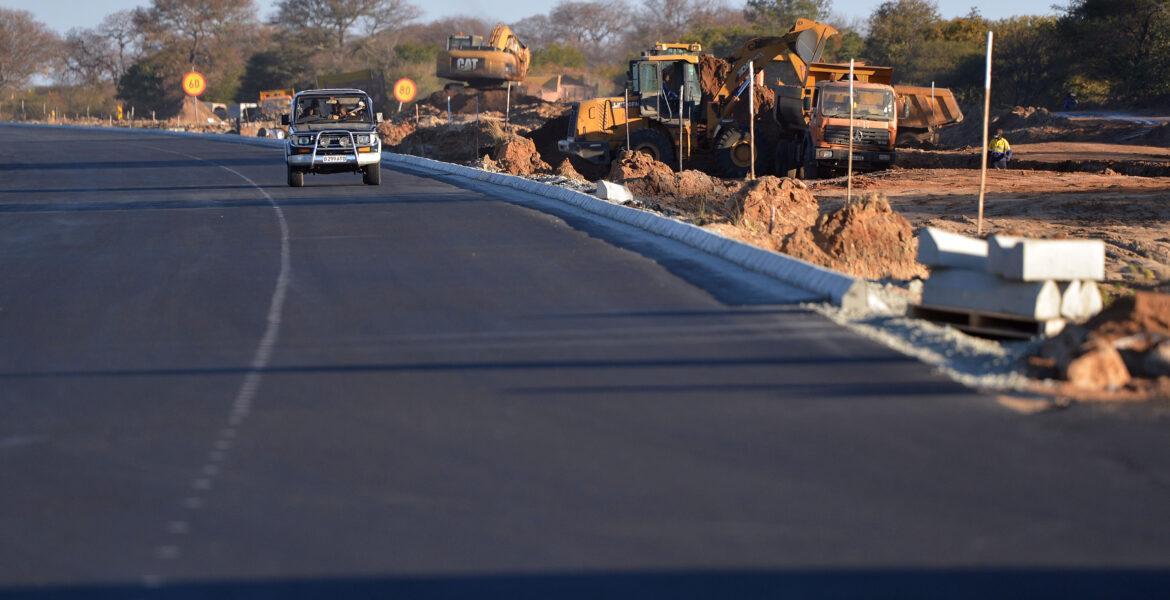
“The underdevelopment of our commune is exacerbated, day after day, by the poor state of our 185 kilometer road. end of the following day. This discourages public and private entities from carrying out social projects and investing in the most diverse sectors of the economy that could lead to the development of the region”, lamented Manuel Ngongo.
For the young man, the inhabitants of the commune of Sacandica are isolated from the rest of the country and the world due to the fact that they do not have access to the means of social communication and new communication and information technologies.
Manuel Ngongo also lamented the fact that in the region, mainly in the communal seat, there is no radio, television or mobile phone network. “If light vehicles could access our commune, I have faith that we could move frequently and quickly to the large shopping centers to acquire those goods that we need”.
Kunda Yave Estani is another young man who laments the way of life of the people of Sacandica. He referred that the region is facing many difficulties, even after 23 years of peace, which makes that youth live without hope. He appealed to the municipal administrator of Maquela do Zombo to implement projects that lead to progress in the region.
“There are many difficulties, from the poor state of the road to unemployment, as there are many young medium technicians who still have no job opportunities”, he said.
Administrator promises to find solutions
The municipal administrator of Maquela do Zombo, Samalando Muginga, acknowledged the difficulties faced by the population of Sacandica, from the poor condition of the road, the lack of schools and health units, lack of teachers, doctors and nurses, lack of information, employment and other basic services.
“We traveled 185 kilometers and we noticed that it is a journey with many difficulties, made in a long time and does not allow us to specify how long it can last, taking into account the constraints that may arise due to its high degree of degradation. suffering and, at our level and that of the provincial government, we will try to find solutions for them”, he said.
Samalando Muginga underlined that the trip to the Sacandica commune is the beginning of the journey he is taking to the interior of the municipality to see and experience the main problems of the population and find solutions for them, despite the financial limitations. He recalled that Sacandica’s problems are identical to those of Beu and Kuilo Futa.
“For our young people to prosper and feel fulfilled, they must invest in academic and technical-professional training. children to school and not to the fields for the growth of families and the community”, he appealed.
lack of infrastructure
The communal administrator of Sacandica, Filipe André, said that in addition to repairing the road, it was necessary to build bridges and bridges over the Mbimbila I and Mbimbila II, Benga, Nkulungu, Funvu and Lusuasu rivers, as they currently represent a danger to road traffic, especially at night.
Filipe André also requests the increase of new school, health, public administration support and other socio-economic infrastructures to improve the living conditions of the population.
“There is an old adage uttered by a former governor of the Province of Angola, in the colonial period, which says that ‘where there is a will, there is always a way’. With this, the population of Sacandica praises this visit for the fact that, in less than a year in the management of the municipality, you have already managed to get to know how we live and find solutions”, he said.
Delivery of goods to the community
The administrator delivered medicines to the Kuximane health post, three kilometers from the communal headquarters of Sacandica, the place where the memorable Friar Bimpa was born, who became popular for curing various illnesses.
After a meeting with the local community, Samalando Muginga delivered medicines to the communal health centre, inputs and agricultural inputs, food, teaching and sports material, used clothes and a mill for the transformation of cassava into bombó fuba.
“We know it’s not enough. But we must highlight the mill that will allow our mums to stop using the pestle and mortar to get cornmeal and sports equipment, which will allow young people to promote sports and recreation and leisure”, he maintained.
Education and health
In the commune of Sacandica there are 10 schools, including seven primary schools, two colleges and a high school. Of this number, nine are of wattle and daub construction and only one of permanent construction.
In the school year just ended, 6,390 students were enrolled, whose teaching and learning process is ensured by 62 teachers, a number considered insufficient by the communal administrator, Filipe André, taking into account the increase, each year, in the number of children of school age.
Filipe André said that health coverage in the commune is inadequate, taking into account the number of inhabitants estimated at 26,429 inhabitants. The region has only two health units, one health post in the Cuximane district and the health center at the communal headquarters.
Each health unit works with only two Nursing technicians, which overloads professionals, taking into account the population density of the region, whose main diseases are malaria, scabies, conjunctivitis, high blood pressure, acute diarrheal diseases and acute respiratory diseases (ARD). .
Filipe André said that in order to improve the functioning of the Health sector, the number of nurses should be increased and health posts built in the villages of Kingala, Kibange, Kintima Mosi and Kipaxe.
Agricultural production
The communal administrator of Sacandica, Filipe André, said that the population of the municipality is mainly dedicated to agriculture, producing manioc, ginguba, sesame, pivide, gindungo, beans, yams, tomatoes, corn in a considerable way and is also dedicated to the extraction of Palm oil.
In the field of defense and security, the communal administrator said it was a concern due to the reduced number of National Police agents to deal with the 26,429 inhabitants cataloged by the National Institute of Statistics in the 2014 census.
A breathtaking journey
The 105-kilometre trip to the town of Sacandica, departing from the town center of Beu, started at 6:30 am, on a route dominated by ravines, deep craters and long stretches of sand that, even with bumps, it is forbidden to reduce speed, otherwise the vehicle will become bogged down.
The river Tau, between the villages Kimbualau (last of Beu) and Kipasi (first of Sacandica) symbolizes the administrative division of the two communes. Only after seven and a half hours we reached the destination, which is 12 kilometers from the border line with the Democratic Republic of Congo.
At the entrance to the village of Sacandica, the old houses built in the colonial period share, in a small percentage, the scenery with the modest houses made of wattle and daub and covered with grass. At the end of the main street lined with palm trees, there is, in a state of disrepair, the building of the former administrative headquarters built by the Portuguese settler, whose structure needs extensive rehabilitation to return to serving the community.
In the courtyard of this “sleeping monster” you can see a 50 kva generator donated by the United Nations High Commissioner for Refugees (HCR) UNHCR and another 250 kva generator, both inoperative, with some parts removed, but which, if they are repaired can light up the village again.
The commune is located 185 kilometers northeast of the city of Maquela do Zombo. It has a territorial extension of 2,740 Km2, with a population of 26,429 inhabitants, distributed in four districts (Cassangani, Cuximane, Kinhete and Muana Kulumbu.
For More News And Analysis About Angola Follow Africa-Press