Africa-Press – Angola. The appointments of the first Angolan ambassadors to Australia, Indonesia and East Timor, as well as the meetings of President João Lourenço with representatives of the business class, marked the political news released in the week.
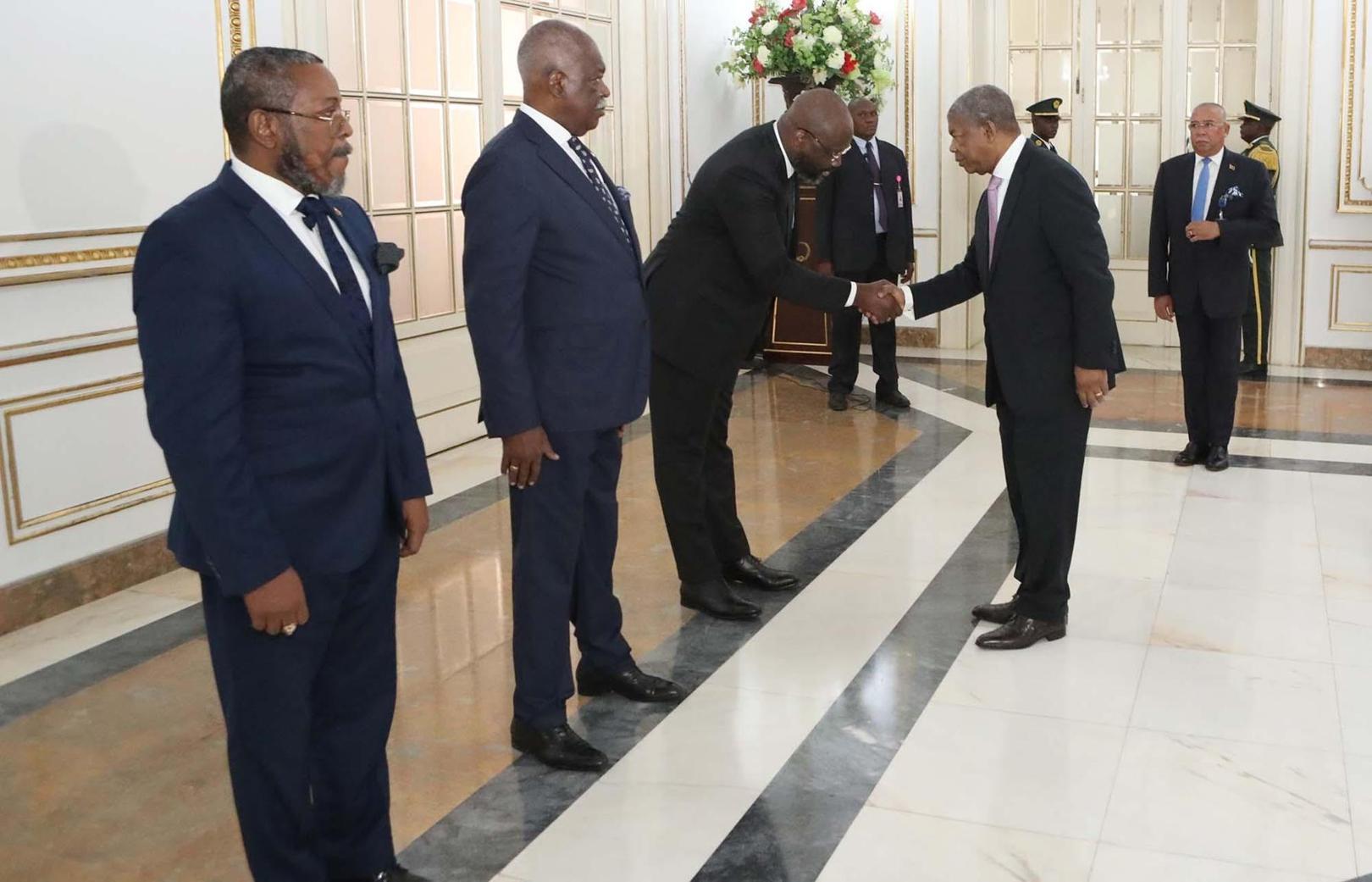
To assume the functions of ambassadors in the three countries, the Angolan Head of State appointed and swore in António Luvualu de Carvalho, for Australia, Florêncio da Conceição e Almeida, for Indonesia, and José Andrade de Lemos, for East Timor.
Also within the framework of presidential activities, João Lourenço met, in separate audiences, with representatives of the main business associations in the country.
The meetings had as a “backdrop” the exchange of views and the search for consensus to project actions that aim to mitigate the negative effects of the financial and economic conjuncture that the country faces.
In the last seven days, the Angolan Parliament debated and approved, in particular, the joint opinion report of the Proposed Law on the Statute of Former Presidents and Vice-Presidents of the Republic.
The Diploma, approved without a vote against, is a Legislative initiative of the Holder of the Executive Power. It goes to the final global vote at the Plenary meeting of the National Assembly, scheduled for the 14th of this month.
The Document provides, among other rights, a lifetime monthly subsidy corresponding to the base salary of the President and Vice-President of the Republic in office and cumulative with the retirement pension to which they are entitled.
In the partisan political segment, UNITA insists on holding the President of the Republic accountable, alleging alleged violations of the Constitution and interference in the legislative and judicial powers.
Allegations that the MPLA disagrees with and considers “a strategy to take power outside the institutional and formal political framework”, “subversive agenda” and “political immaturity” to “create chaos in State institutions”.
The Convergência Ampla de Salvação de Angola – Electoral Coalition (CASA-CE) defended the revision of the plan to withdraw the fuel subsidy, given its considerable impact on the economy and society.
The political force, without a seat in the National Assembly, suggested reducing the percentage of the Income Tax (IRT) and Value Added Tax (VAT) on all products, among other measures.
During the week, Luanda hosted a meeting of the general secretaries of the parties that were liberation movements in the Portuguese Speaking African Countries (PALOP).
Among several actions, the general secretaries of the MPLA, FRELIMO, MLSTP/PSD, PAICV and PAIGC parties decided to maintain political consultation, for a more effective action in favor of the development of the respective countries.
The week’s political headlines were also dominated by the marking of the World Day against Trafficking in Human Beings, adopted by the UN General Assembly on 18 December 2013.
In the specific case of Angola, in the last eight years the country began to feel, in practice, the consequences of this phenomenon.
In the period in question, according to the national director of Human Rights, Yannick Bernardo, the country recorded “142 cases of trafficking in human beings”, which corresponds to an average of 17.7 per year.
To contain the phenomenon, the Angolan Government created an Interministerial Commission to Combat Trafficking in Human Beings, which approved, in 2020, its first National Action Plan.
For More News And Analysis About Angola Follow Africa-Press