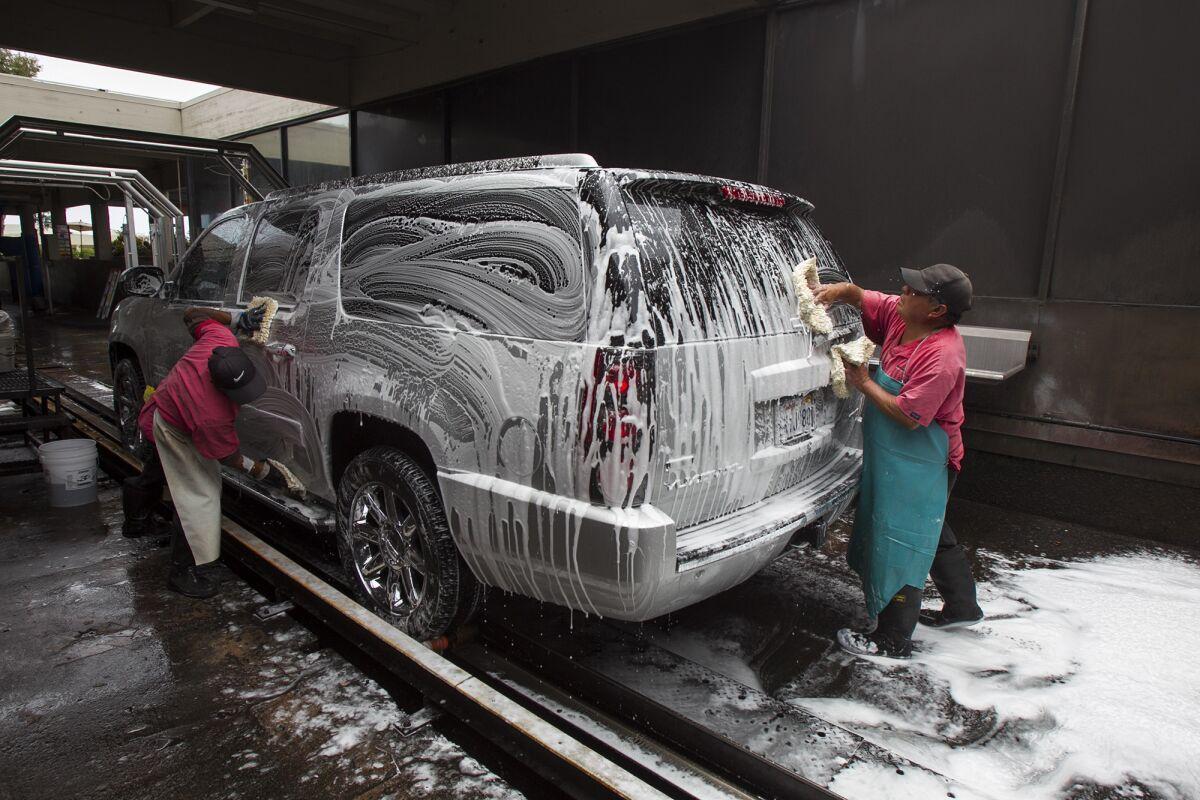
Africa-Press – Angola. Car washing in the capital of Lunda-Norte began to gain space in the early 2000s, when a restricted group of teenagers made this activity, carried out next to the Cundueji river, their bread and butter. At the time, that river was a tourist spot that attracted many people on weekends.
As it is a popular tourist spot for swimming in the river and having fun, some young people took advantage of the occasion to provide car and motorcycle washing services.
The practice began to attract other young people and the number of launderers increased. The initiative led to the emergence of other car wash places, such as the one located next to the Camundembele river, along National Road 180, which connects the municipalities of Chitato and Lucapa.
Over time, the washing point next to the Camundembele river gained greater “prominence”, with the adhesion of more customers, relegating the tourist point of the Cundueji river to the background .
Gradually, the car wash was spread to other tourist spots. This is how the washing point next to the Luachimo river came about, specifically on the famous metallic bridge of Estrada Nacional 180-A, between the municipalities of Chitato and Cambulo, which, little by little, was also very sought after by vehicle and motorbike owners.
Of the various car and motorcycle washing points in the city of Dundo, in addition to those mentioned above, we highlight the one located next to the Dundo river, on the road leading to Hospital Sanatorio do Sacavula, which in the past was also a very popular tourist spot for visitors. weekends. The one in the Maboi neighborhood, on the road that goes to the Cacanda neighborhood and the one in the Carinhenga area, close to the Chitato municipal market, are also worth mentioning.
Importance in family income
Xieto Tambué, 21 years old, student in the 10th grade of the Economic and Legal Sciences Course at Liceu do Dundo, has been a car wash for four years in the Maboi neighbourhood. The young man revealed that thanks to the work he does, he has been able to sustain his training and meet other needs. “It’s a way I found to earn money to support my studies and ensure food at home,” he said.
The young student does the work of washing cars from seven to four o’clock, in order to prepare himself to go to school at night. He explained that the needs he faced every day to feed himself, buy clothes and school supplies and pay for the taxi, led him to embrace this work, which, he said, has yielded positive results. “I found my livelihood here. Today I can meet my needs with the money I earn a day, which ranges from five to six thousand kwanzas”.
Xieto Tambué underlined that daily earnings vary depending on the number of customers.
João Medar Fernando, who works on the road leading to the Hospital Sanatório do Sacavula, said that he started washing cars due to the difficulties he was experiencing with his family. This situation led him to drop out of school, where he attended the 7th grade, to embrace an activity that, according to him, has helped him a lot with his daily expenses. He even claims that, despite the current cost of living, there is no shortage of bread at home. Every day he gets at least three thousand kwanzas from washing cars and motorcycles. “It’s decent work. I could opt for other things to earn a lot of money, but I’m happy with what I do. I can now go back to school, because I have a guaranteed income to support my studies”.
João Fernando highly values the good working relationship with his colleagues. “When there are few customers, we wash the cars with two people so that each one takes some value home”.
Jorge Chibichica, a car washer next to the metallic bridge over the Luachimo river, said that he charges 1,500 to 2,000 kwanzas for each light vehicle, 500 to 1,000 kwanzas for each motorcycle, while washing a truck varies from 10,000 to 16,000 kwanzas and a bus from 5,000 to 6,000 kwanzas. Because it’s a team effort, he manages to take home 5 to 6 thousand kwanzas a day.
The young man revealed that he has been working as a car washer since 2005 and managed to build his house with the money he earned. Now he intends to go back to school. “Thanks to this job I got a residence and I’m creating my living conditions. I don’t go hungry anymore”.
most profitable methods
Despite the existence of identified places for washing cars, many young people, attracted by the profession and in the desire to earn money, try to establish contracts with the owners of the vehicles, mainly the residents of the Centrality of Mussungue, in order to be paid at the end. of the month. Others prefer to offer their services, even to be paid at the time, in the car park of the buildings of that Centrality. A situation that for some has proved to be more profitable, taking into account the greater number of cars that can be washed during the day.
The price practiced by the informal washers that circulate around the city or that are in the places identified above (1,000 to 2,000 kwanzas), has attracted many motorists, who refuse to go to a service station where they are charged amounts ranging from 5,000 kwanzas onwards for the complete work, taking into account the size of the vehicle.
João Chicolassonhi, a car driver, recognized the quality of washing done by young people in different parts of the city of Dundo, which leaves nothing to be desired compared to that done at service stations. “Washing is good. Young people are good, they have been doing a good job, which makes us satisfied. That’s why we prefer them”, he maintained, stressing that many of the young people who currently work in service stations started in places where car washing vehicles is done informally.
António Joaquim, another driver, said that washing a car at the service station is very expensive, despite the fact that the work done there is complete. “In addition to the good work that young people do with washing cars, it is also a way for us to help them. They need to earn decent money to meet their needs”.
Cidade do Dundo currently has four service stations, which are insufficient to meet demand, taking into account the number of vehicles and motorcycles available in the city. The ones in the Centrality of Mussungue and the ones in the Primeiro de Maio area are the most popular.
jornaldeangola
For More News And Analysis About Angola Follow Africa-Press