Africa-Press – Angola. The simultaneous cutting of three main submarine telecommunications cables, which connect the west coast of Africa to Europe, constituted one of the most striking facts in economic news during the week that ended.
This is the West African Cable System (WACS), SAT3 and ACE, whose location and causes for the cut have not yet been identified, according to Angola Cables, a leading company in connectivity solutions and telecommunications infrastructure. .
As a result of that incident, all international communications between the countries south of the Democratic Republic of Congo (DRC) and the European continent were affected.
On the other hand, it was also relevant news, the act of signing a Joint Declaration between the Governments of Angola and Japan, with a view to improving the investment environment and economic relations of both countries.
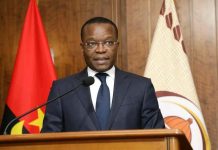
The document, signed by the Angolan Minister of Economy and Planning, Mário Caetano João, and the Minister of Economy, Trade and Industry of Japan, Nishimura Yasutoshi, also serves to liberalize, promote and protect investments, in addition to reinforcing the commitment between the two countries.
Another subject, which also dominated the news this week, was Angola’s participation in the Second Summit of the Group of 25 African coffee producing countries (G25), which took place in Kampala, the Ugandan capital.
On the occasion, the Minister of Agriculture and Forestry (Minagrif), António Francisco de Assis, recalled that the Angolan Government has seriously invested in revitalizing the national coffee sector, based on the promotion of production promotion programs aimed at the family sector.
Still on this branch of economic life in Angola, the Minister of Mineral Resources, Oil and Gas, Diamantino Azevedo, announced
that the country will be able to sustain its fertilizer needs in the medium term.
In the same vein, the holder of the Mineral Resources, Oil and Gas Portfolio advanced Angola’s intention to establish a partnership with Brazil in the field of fertilizer production, taking into account its experience.
Another highlight was the announcement of the transfer of the Informal Economy Reconversion Program (PREI) to the responsibility of provincial governments and municipal administrations, under the operational coordination of the National Institute of Support for Micro, Small and Medium Enterprises (INAPEM).
The decision, taken by the Program’s Multisectoral Commission, aims to guarantee the sustainability of the PREI and encourage business growth so that they can be eligible for other Government programs.
As a result, the formalization process is now divided into stages, while the process of granting micro-credit is now divided into stages that suit the level of economic activity to be formalised.
Prior to this measure, PREI was under the direct responsibility of the Ministry of Economy and Planning (MEP).
As for the financial sector, the highlight was the start of the certification process for the commercial banks that will issue and make available the multi-brand debit card called “Multicaixa/Mastercard”, which will allow customers to make payments in Angola and abroad.
According to the Empresa Interbancária de Serviços (EMIS), this card aims to provide a more comfortable and convenient payment instrument for traveling Angolan citizens, bringing added value in relation to prepaid and credit cards.
Among other advantages of the multi-brand or “co-badged” debit card, EMIS also points out the convenience for the bank customer and the cost reduction for the issuing bank of this device.
In the field of maritime transport, highlight was the reopening to the public of ticketing services at the Passenger Terminal (TP) at the Port of Luanda, suspended four months ago.
The Passenger Terminal of the Port of Luanda was consumed by a fire following a road accident, caused by the skidding of a light vehicle on Avenida 4 de Fevereiro, on April 8 of this year.
For the energy sector, the interest of the Republic of Namibia in importing electricity from Angola, due to its production being on a small scale, stood out.
The fact was expressed by the chairman of the Parliamentary Commission for Economy and Public Administration of that neighboring country, Hon Natangue Ithete, who recognized that Angola is very close to reaching 7,000 megawatts, hence Namibia’s interest.
Recent data indicate that Angola is part of the top 10 in the world ranking of countries that have contributed most to the generation of energy from hydroelectric plants, as a result of the investments made in the Laúca Hydroelectric Facility over the last eight years.
For More News And Analysis About Angola Follow Africa-Press